


Ribe was one of the highlights of my train journey through Jutland. What a beautiful town. In fact, it is the oldest town in Denmark. Ribe breathes history and charm, as if you are walking through an open-air museum. And in December, during the Christmas season, it felt truly magical. I had the chance to enjoy everything Ribe has to offer for four nights. In this article, I’ll tell you all about it: a bit of history, the main sights, restaurants, the surrounding area, and other things to do.
Table of contents
Ribe: the oldest city in Denmark
Ribe is steeped in history. The origins of Ribe lie around the year 700 to 710, when the area grew from a marketplace for Frisians and Norsemen into a permanent settlement, becoming an important trading post in the early Viking Age. This makes it not only the oldest city in Denmark, but in all of Scandinavia.
Until the 16th century, Ribe was an important trading city. The river Ribe Å connected the city with the surrounding area and the Wadden Sea, an area that for centuries defined trade, fishing, and life along the coast. But due to the silting up of the river, the city fire of 1580, floods, wars, and the plague, this changed. From the 17th century, the city’s economic importance declined. There was no longer money for new construction nor a need for new housing, and partly because of this, Ribe was able to maintain its historical character.
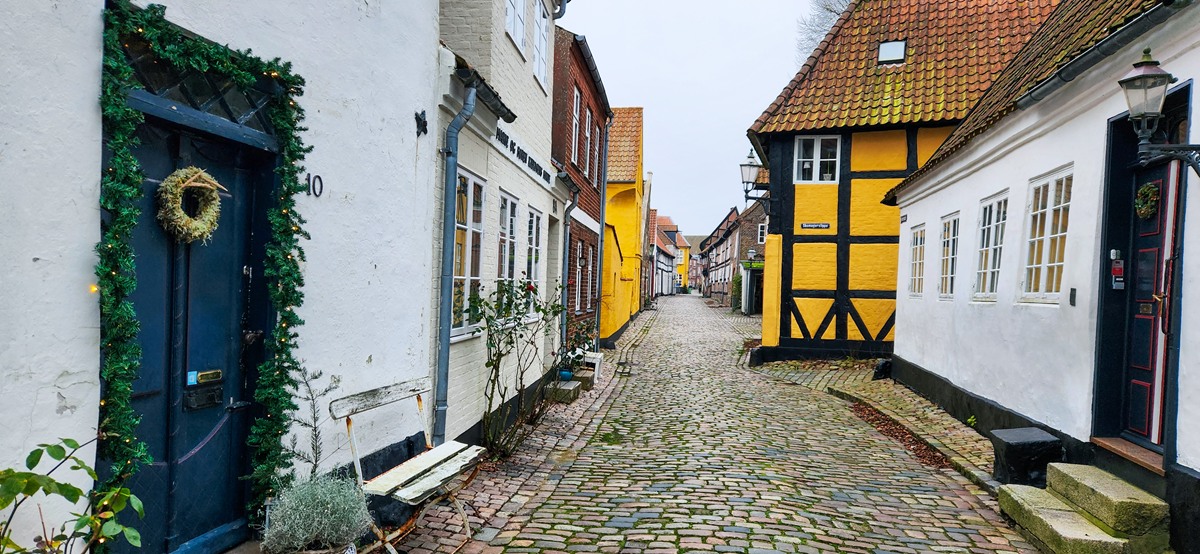
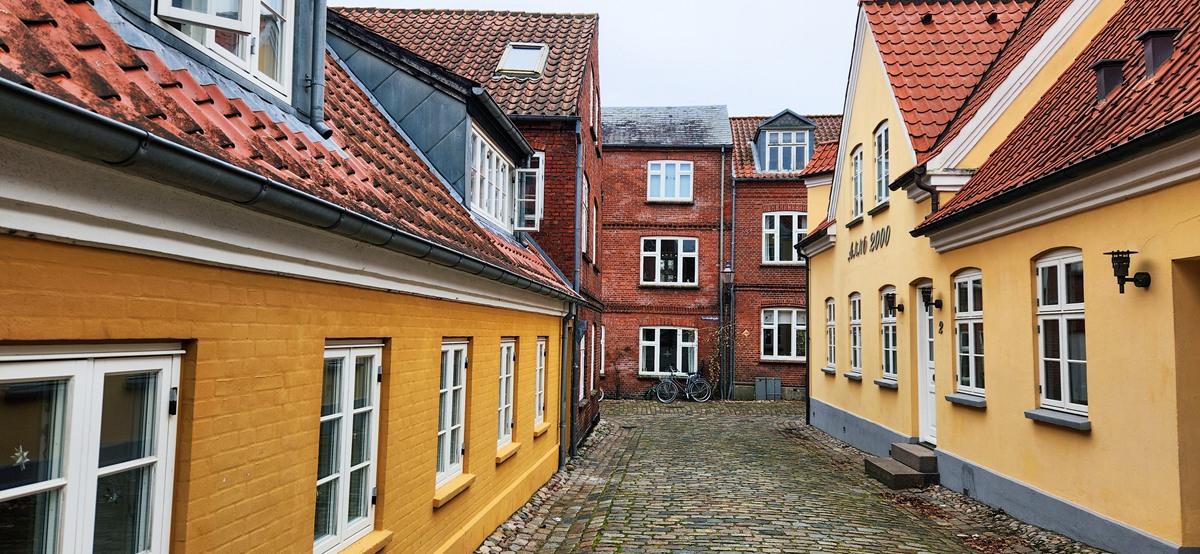
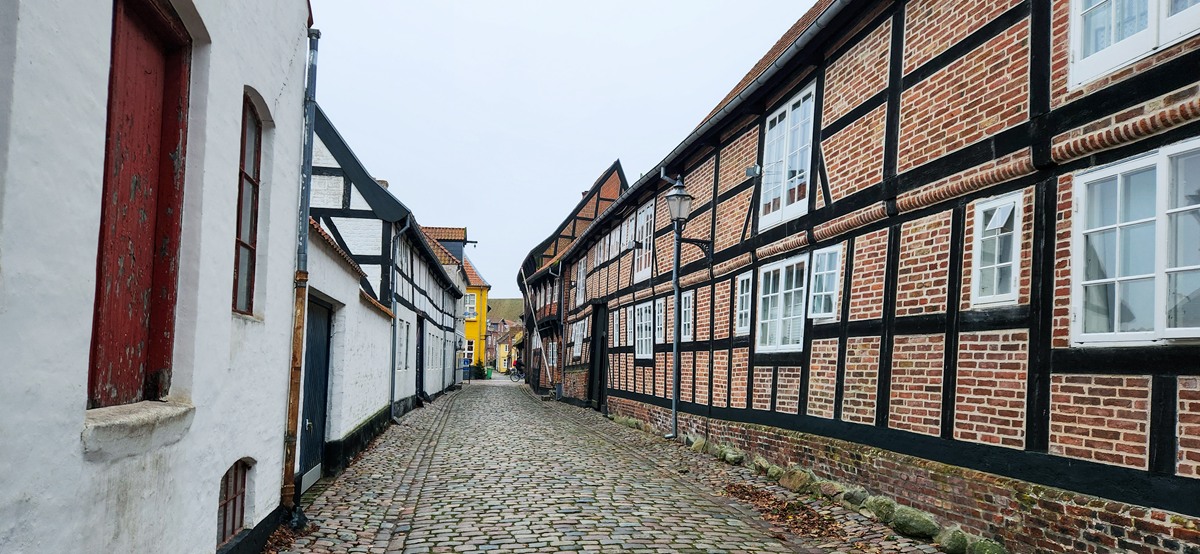
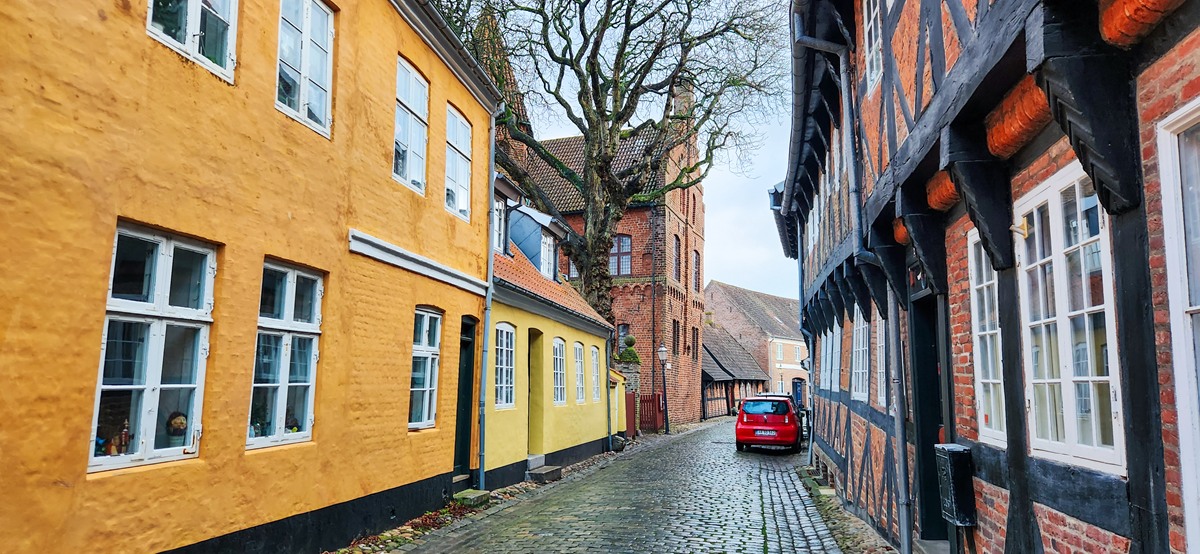
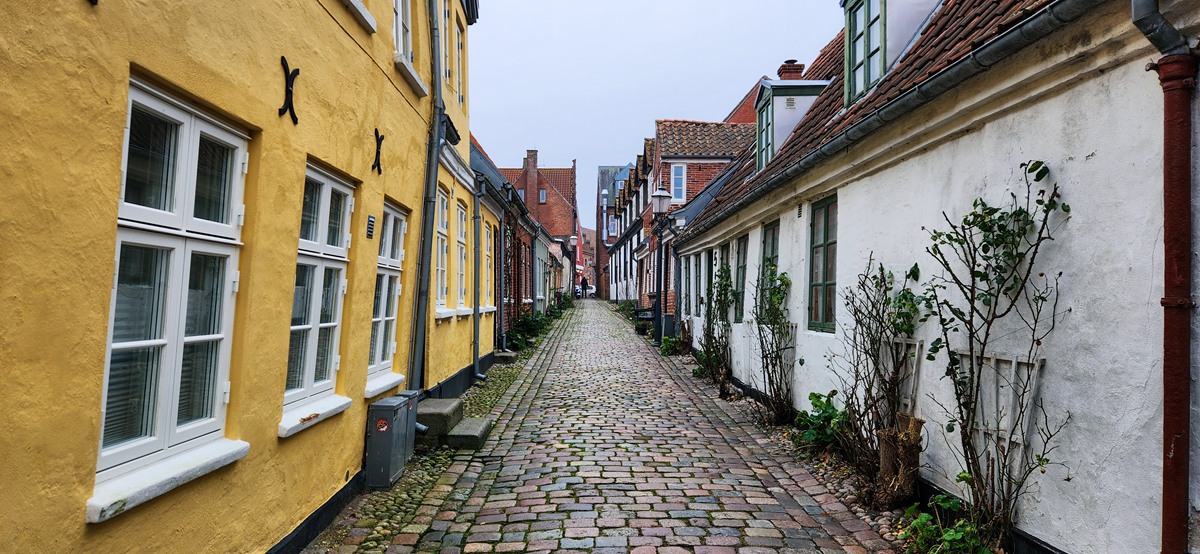
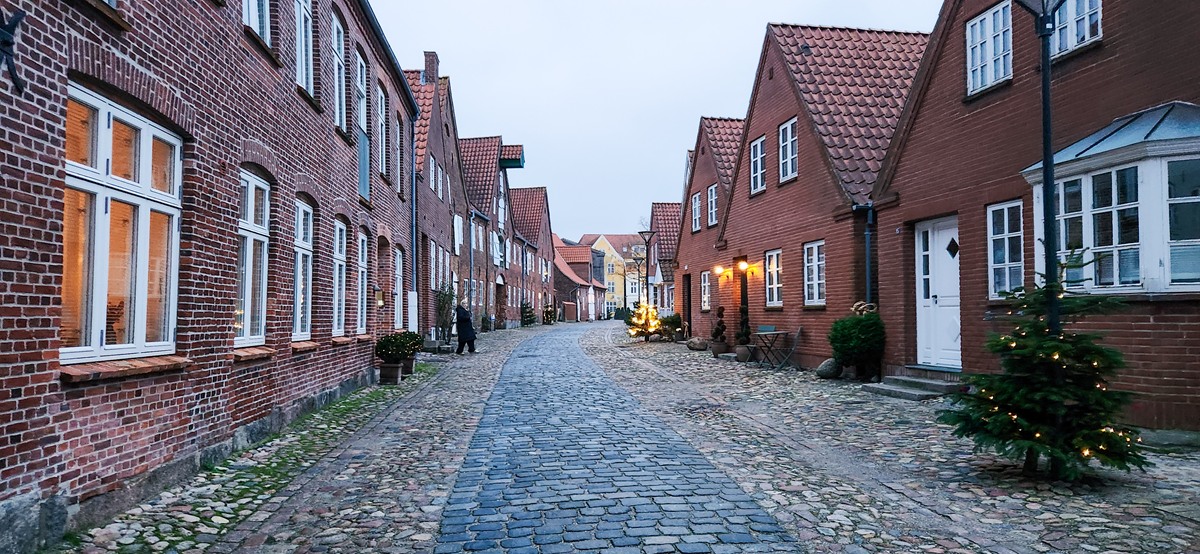
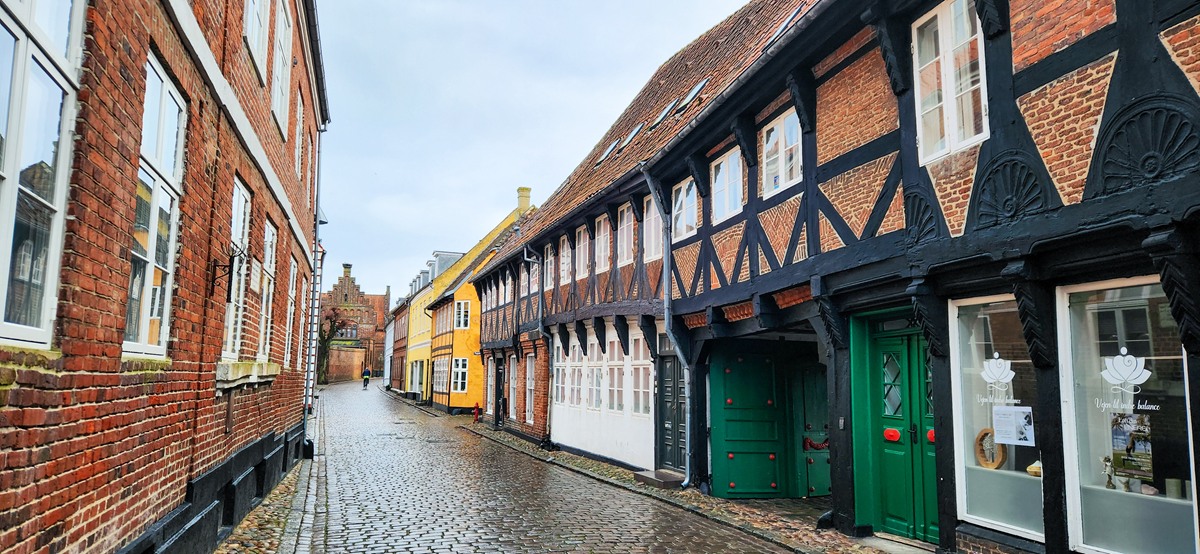
And that is what still makes Ribe so attractive today: the history. The impressive cathedral, old half-timbered houses, leaning facades, colorful details, and small windows. Ribe is a joy to walk through, as if you’ve stepped back into the Middle Ages.
Today, fewer than 9,000 people live in the city of Ribe. A small town, but grand in how it moves you.

What is there to do and see in Ribe? 14 tips
Although Ribe is only a small town, there is a surprising amount to do. Here are my best tips.
1. Ribe Cathedral: the city’s main eye-catcher
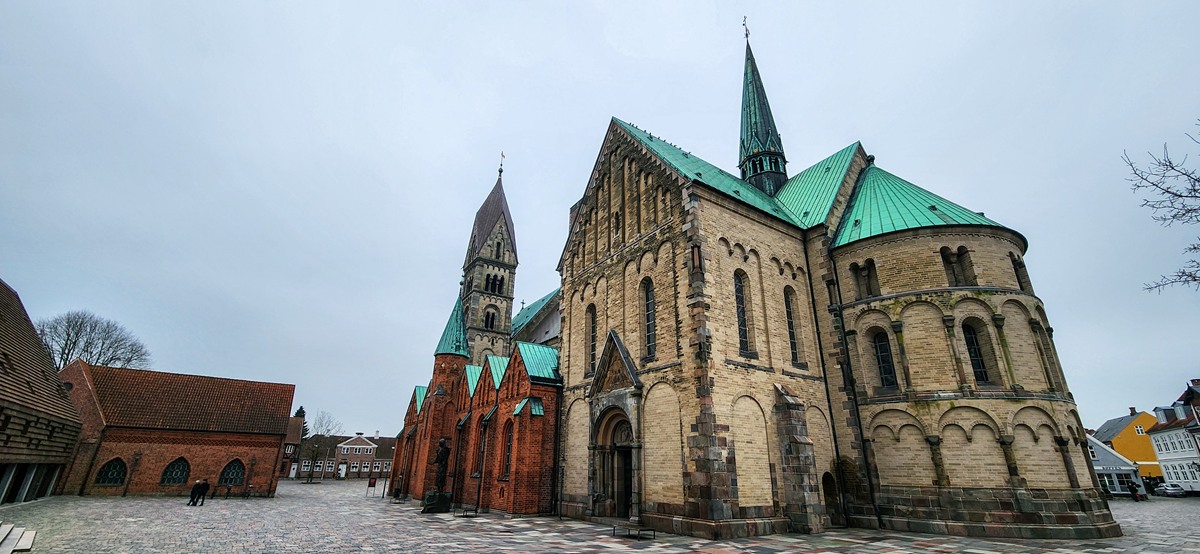
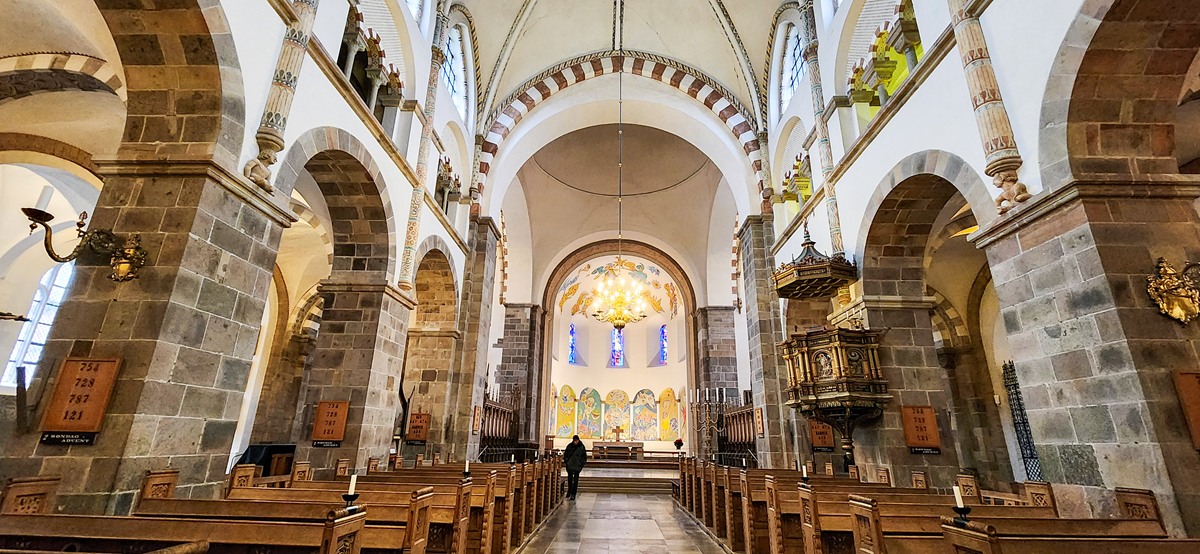
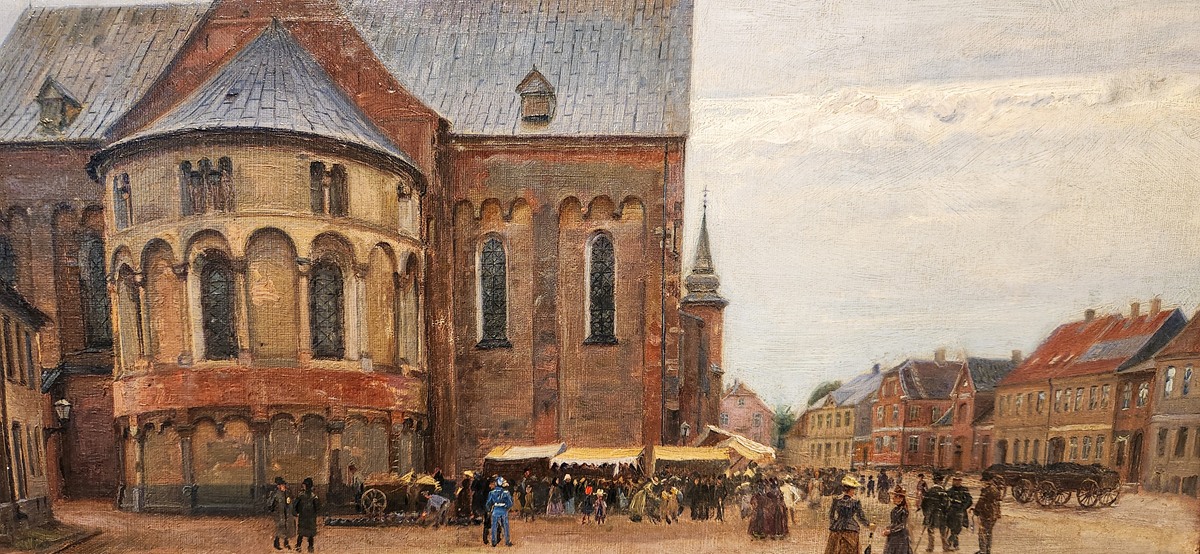
The Domkirke is a must-see if you go to Ribe. Not only beautiful from the outside, but the interior is also impressive. And I haven’t even mentioned the stunning view from the tower yet…
The cathedral was built in stone between 1110 and 1134 by Bishop Thure. The church is largely Romanesque and is considered the best-preserved Romanesque Cathedral in Denmark. It is the only church in Denmark with five aisles. The church is 63 meters long and 36 meters wide and has three towers.
The Borgertårnet tower was built in 1333 and you can climb it. The tower is 52 meters high and has 248 steps to the top. This tower was originally 65 meters high with a spire, but it collapsed in 1534. The tower was renovated, but due to a lack of funds, the spire was replaced by a flat roof. As a result, the tower is now quite a bit shorter, but perfectly suited as a viewpoint.
You can enter the church for free, but you have to pay for the museum and the viewpoint. I was curious and bought a ticket, and I can heartily recommend you do the same. The museum is not only interesting but also gives a different perspective into the church from above. You see more details and learn about the history.
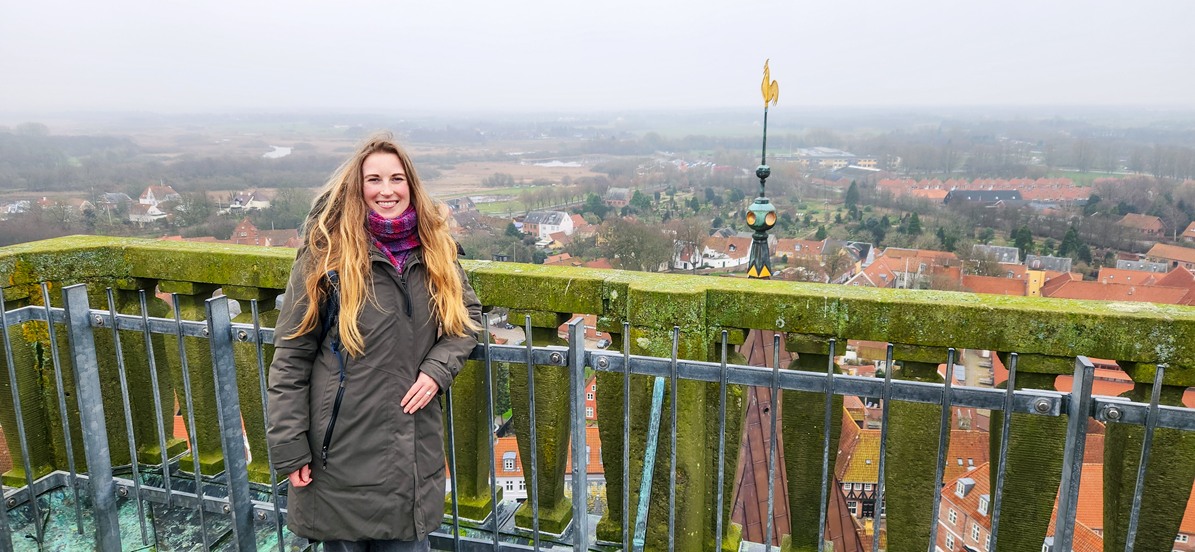
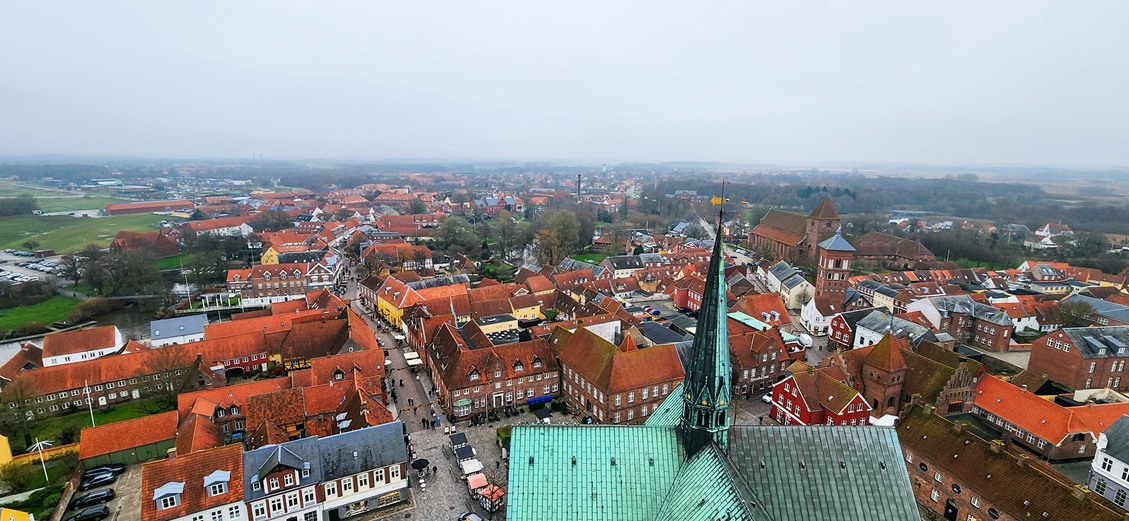
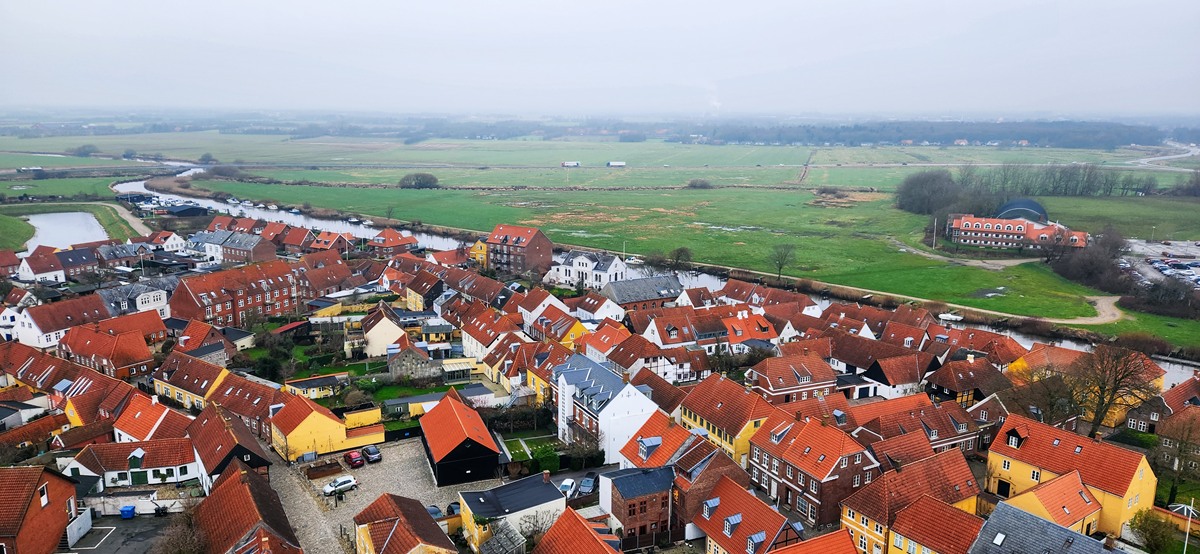
But the real highlight was, of course, the view. You walk up via narrow, steep stairs to the flat roof of the tower. From there, you look out over Ribe and the Wadden Sea landscape. Wonderful!
You can find Ribe Cathedral on the map here.
Click here for current opening hours and entry fees for the tower.

2. Ribe VikingeCenter
The Ribe VikingeCenter is a reconstructed Viking settlement and for many travelers the reason to come to Ribe. It is a large heritage center (about 12 hectares) with reconstructions based on archaeological research, where you can see what life was like around the years 700 – 1000. Walk past old buildings, discover Viking Age crafts, and learn what daily life was like back then.
Fun for children and adults alike.
Unfortunately, I didn’t visit this myself because the VikingeCenter is closed during the winter months. Check the current opening hours and entry fees here in advance.
Don’t confuse the VikingeCenter with the Ribe Viking Museum (number 3); I did visit that one, and it’s a good alternative if the VikingeCenter is closed during your visit.
You can find the Ribe Viking Center on the map here.
3. Ribe Viking Museum (Museet Ribes Vikinger)
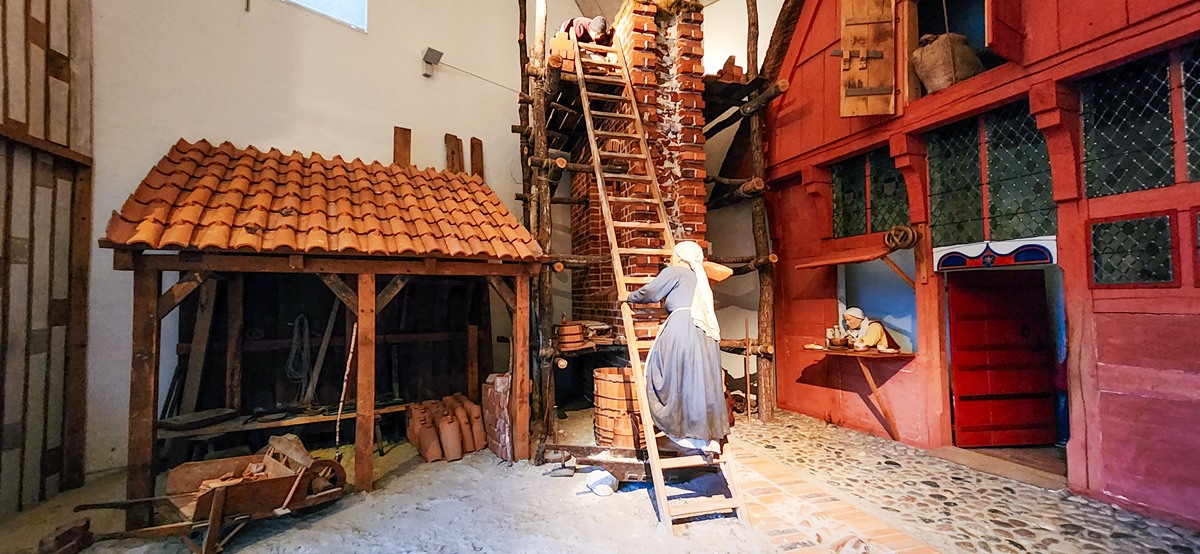
You’ll find the Ribe Viking Museum near the train station right as you enter Ribe. It is an interesting museum that takes you through history from the beginning of the 700s, through the Viking Age and the Middle Ages, up to about 1700. Contrary to what the name suggests, this is not strictly a Viking Museum, but more of a museum about the entire history of Ribe. If you only want to learn about the Viking Age, visit the VikingeCenter (no. 2).
The collection in the museum consists of archaeological finds from Ribe itself. So you really discover traces from Ribe, which is very interesting.
I found the museum definitely worth the effort, though a bit on the expensive side. The museum isn’t very large, but it is interesting.
You can find the Ribe Viking Museum on the map here.
4. Jacob A. Riis Museum: the story of a Danish journalist and photographer in New York
Riis was a Danish journalist and photographer who became famous for his work on poverty and living conditions in New York. This museum tells his story. With impressive photography and interesting history about his life and mindset. I thought this was a really beautiful museum and not to be missed when you’re in Ribe.
You can perfectly combine the Jacob A. Riis Museum with the HEX! Museum of Witch Hunt; they are in the same building and you can buy a ticket for both museums.
You can find the Jacob A. Riis Museum on the map here.
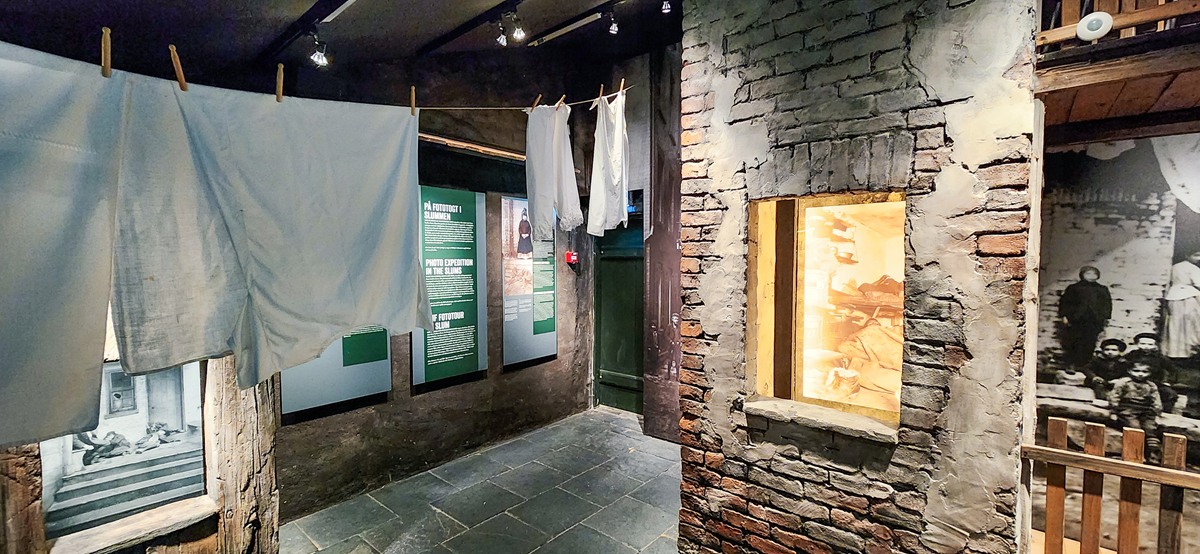
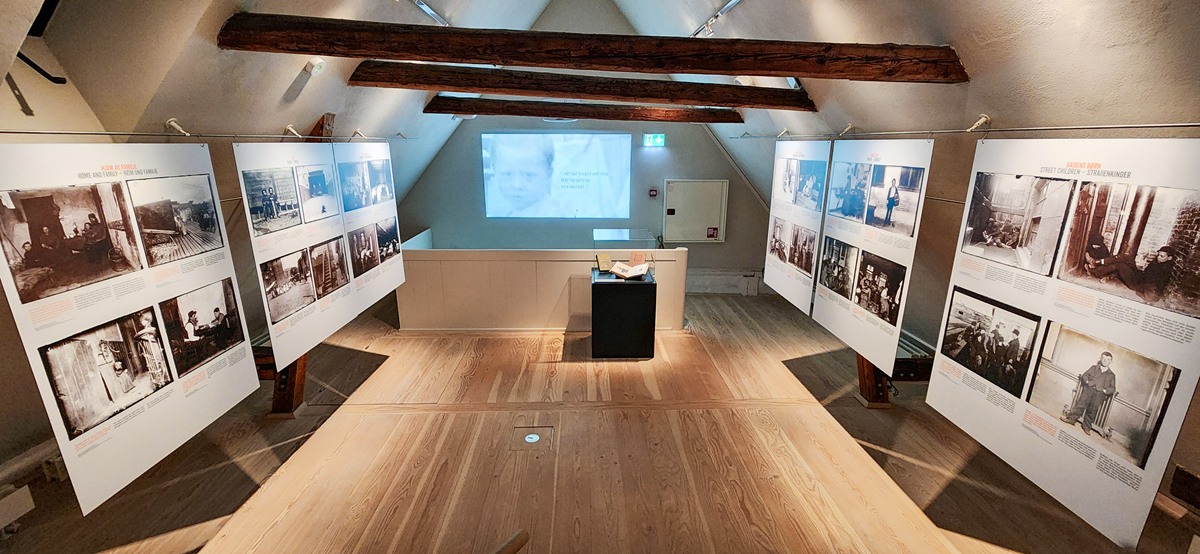
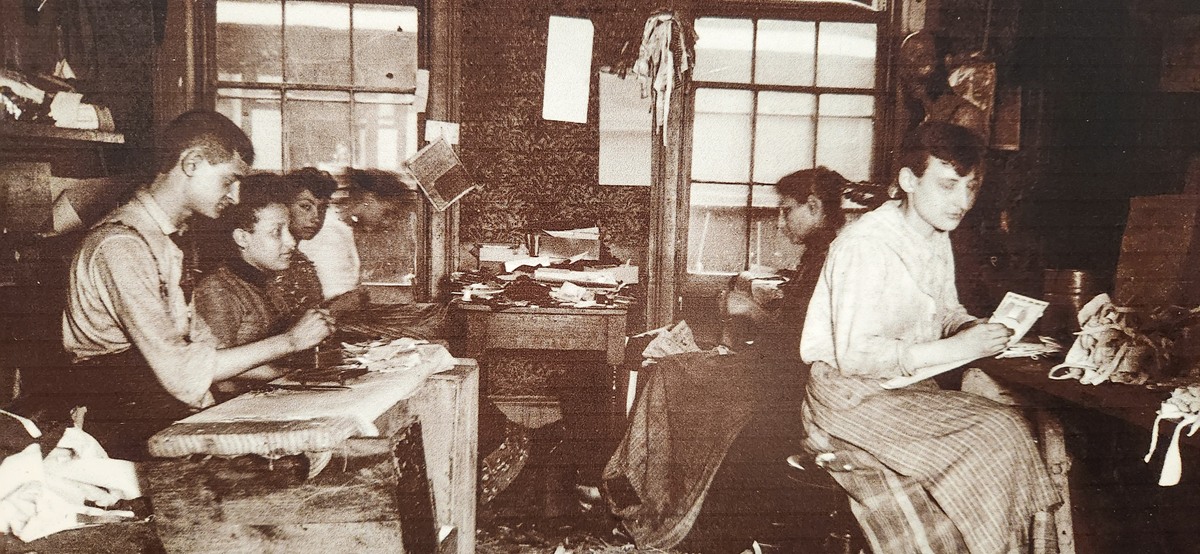
5. HEX! Museum of Witch Hunt
Ribe’s history also has a dark side: the witch trials. The HEX museum tells how fear of witches swept through Europe and Denmark in the 16th and 17th centuries, and the consequences thereof. Ribe played a major role in this.
Denmark’s most famous witch, Maren Spliids, lived near Quedens Gaard in Ribe. She was executed outside Ribe in 1641. But Maren Spliids was just one of nearly a dozen so-called witches executed in Ribe during the Renaissance.
The events surrounding the witch hunt, and the conviction of witches, actually took place on the site of this museum and in the surrounding streets.
You can perfectly combine this museum with the Jacob A. Riis Museum, which is also located here.
You can find the HEX museum in Ribe on the map here.
6. The Ribe Art Museum
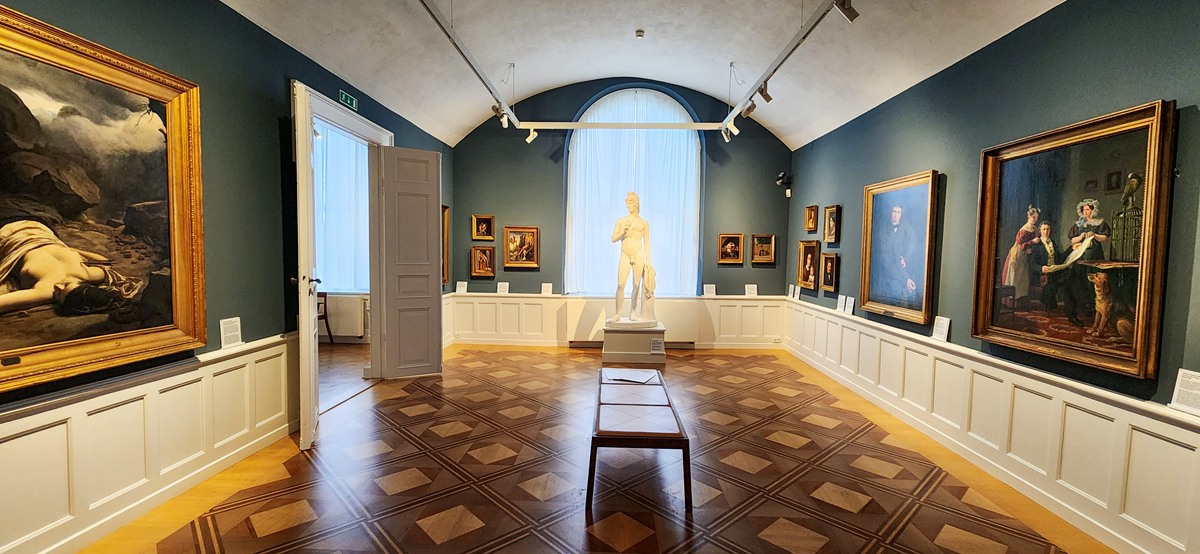
The Art Museum in Ribe is housed in a beautiful red building from 1864. It is one of Denmark’s oldest museums, which opened in 1891 and exhibits the work of Danish artists.
You’ll find a beautiful collection of Danish art from roughly 1750 to 1940, including the Golden Age, the Skagen painters, and modern art. I immediately recognized the work of painters Anna Ancher and Michael Ancher from Skagen, which I had also seen there. They’ve since become my favorites from Denmark.
The museum is located next to a lovely garden where you can also grab a drink (especially nice in the summer months), and you can walk there from Ribe’s town centre via the wooden bridges (no. 7).
You can find the Ribe Art Museum on the map here.
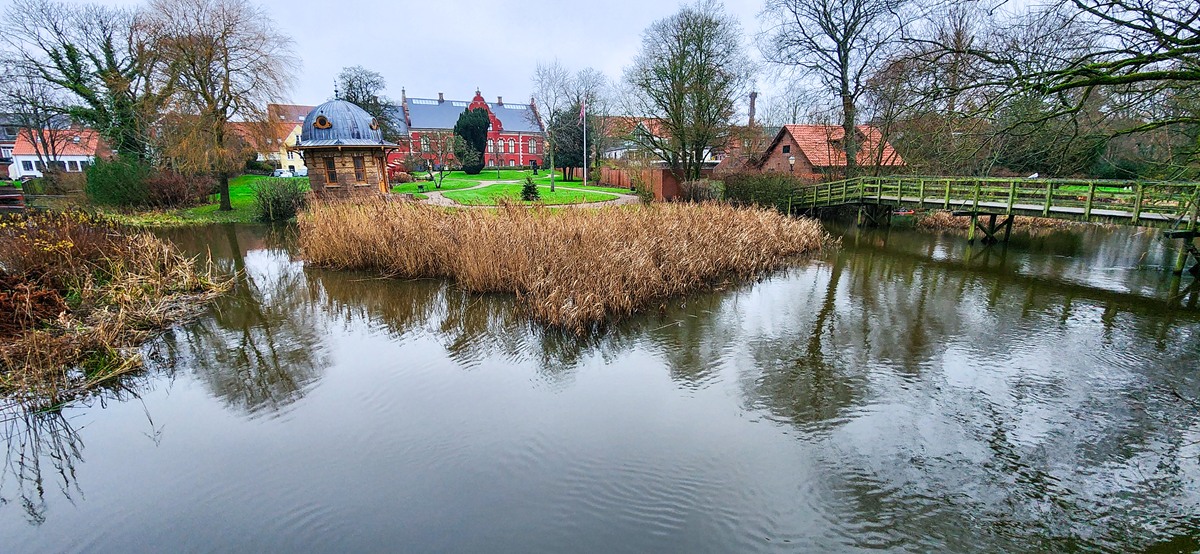

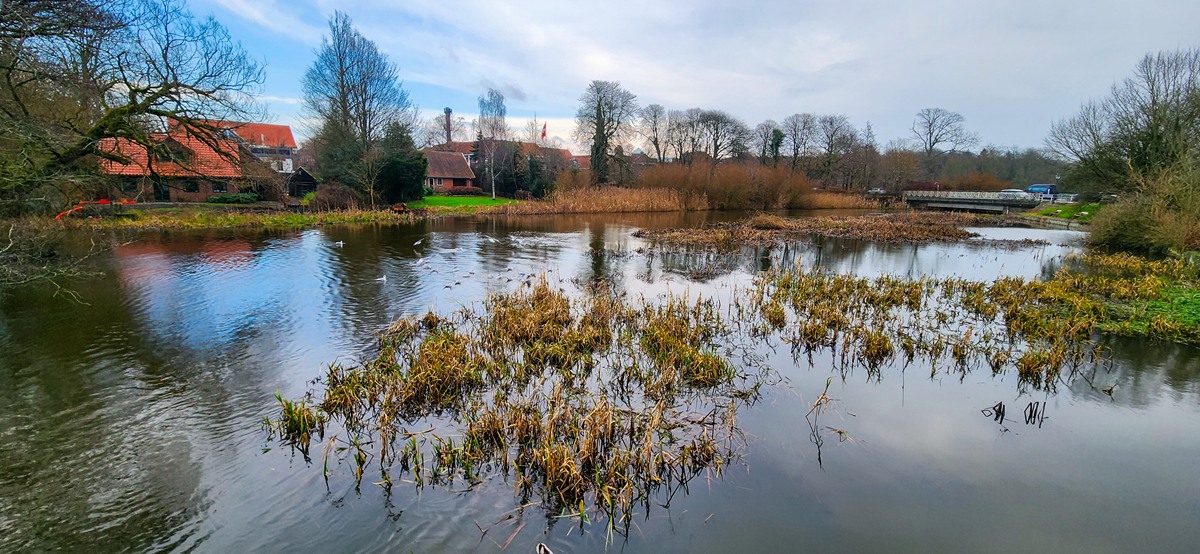
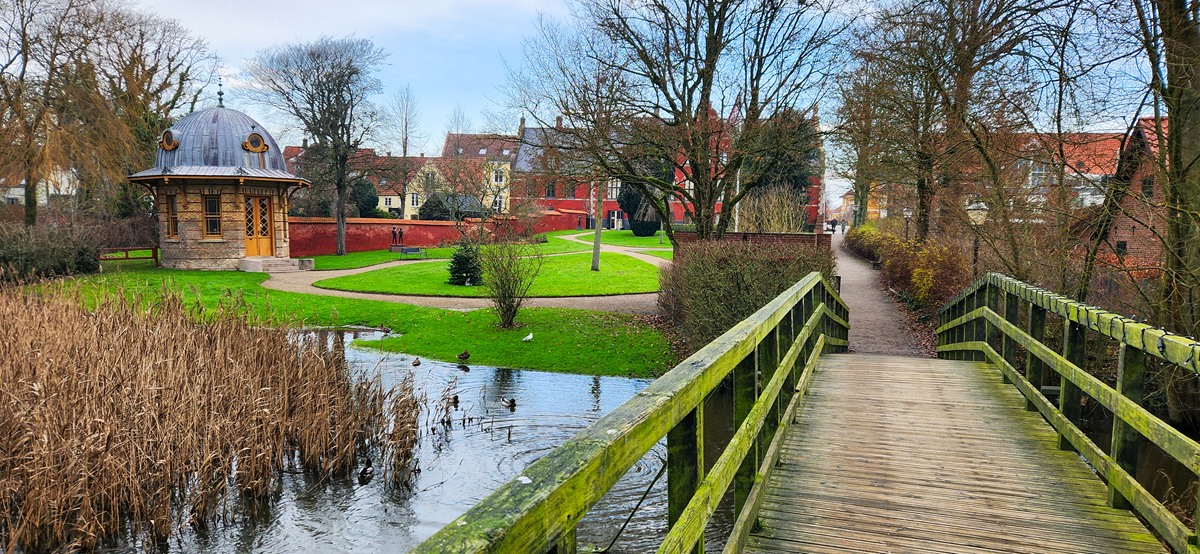
7. The wooden bridges
beautiful wooden footbridges over the Ribe Å, the river that runs through the town centre A bit of nature in the city. The wooden bridges are somewhat hidden in the city, and very fun to walk across.
You can find the wooden bridges in Ribe on the map here.

8. The Old Town Hall: Det Gamle Rådhus Ribe
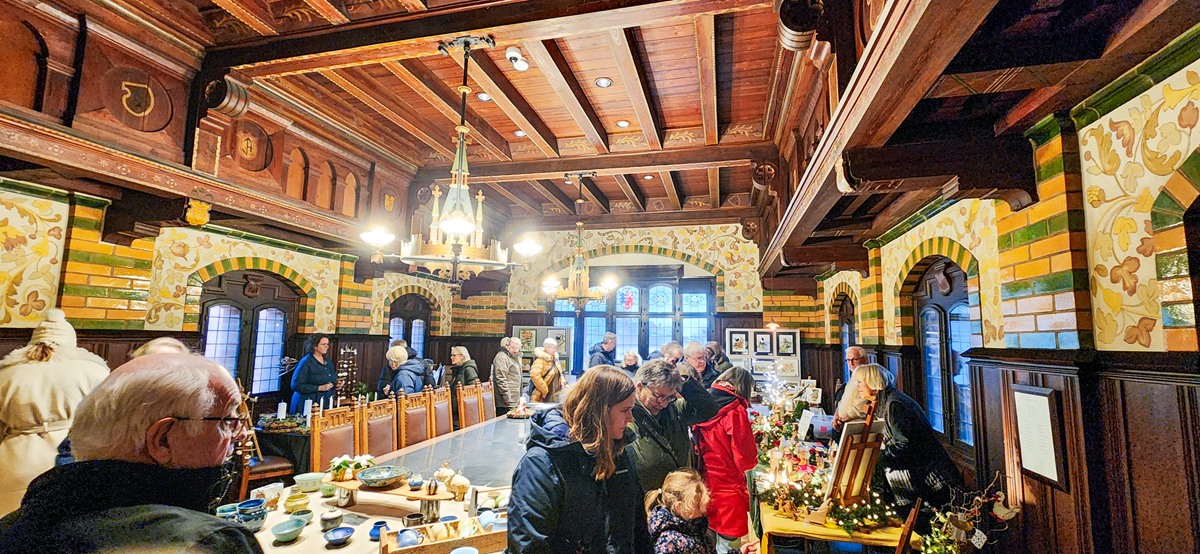
The Old Town Hall is a beautiful building both inside and out, right in the center. The town hall was built in the 1520s and for the next nearly 200 years, several wealthy citizens of the city lived in the house, but in 1709 it came into public ownership.
From 1709 until the major municipal reform in 2006, the house served as the town hall, but now it is only used for city council meetings and ceremonial purposes. And for the Christmas market in December (see below).
You can visit the Old Town Hall, but it’s not always open. If you see the flag hanging outside, in front of the entrance, it is open to the public. Unfortunately, it wasn’t open during my stay, but I went inside during the Christmas market anyway. The interior is truly beautiful and really worth a visit.
You can find Det Gamle Rådhus Ribe on the map here.
9. Kannikegaarden: historic museum opposite the cathedral
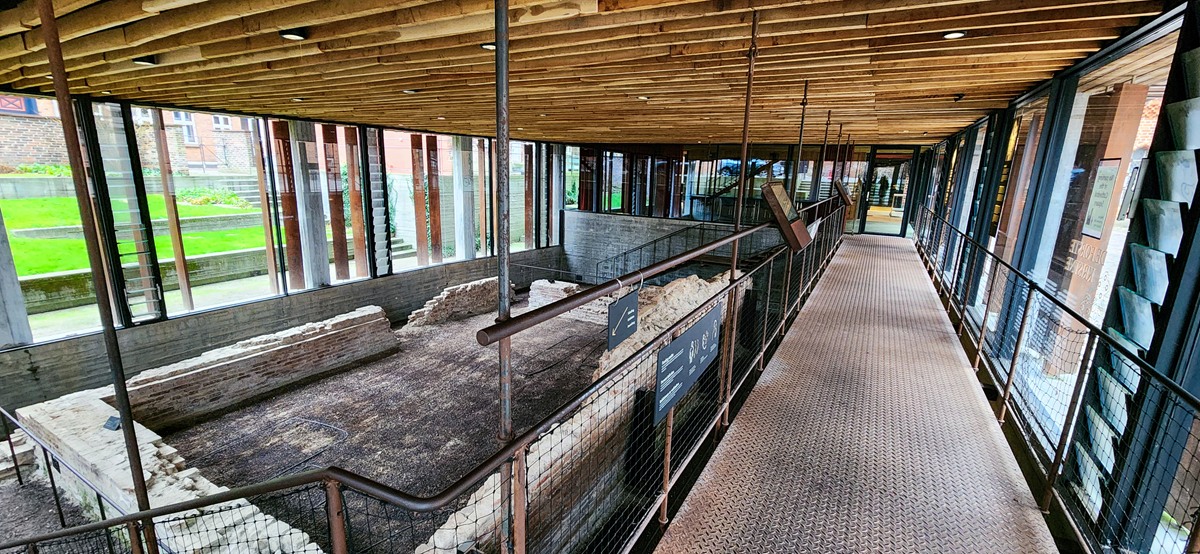
Kannikegaarden is a small and free museum on the Domkirkeplads by the cathedral. The building contains, among other things, the remains of what is likely Denmark’s oldest brick building, a former canon monastery that burned down in 1176. As well as an old cemetery.
The free section is a very small but interesting museum. Definitely take a look if you’re there anyway.
You can find Kannikegaarden on the map here.
10. Ribe Glas
Also on the Cathedral Square, you’ll find the shop and studio Ribe Glas, the personal studio of Erna Møller and an exhibition of glass art. Here you can look around and buy something beautiful made of glass. I bought a ring there myself with a glass ‘stone’ on it, which I’m still very happy with.
The house where Ribe Glas is located, Hans Tavsen Hus, is at least as interesting. The house is 500 years old and has an eventful history. In 1933, it was described as ugly, dirty, and creepy. The building stood in the way of increasing traffic on the square, but thanks to a national collection, the house was preserved.
The house is beautiful from the outside, and on the inside, it breathes art. From the cellar to the attic. You’ll find a gallery, a shop, and a studio.
Definitely take a look! You can find Ribe Glas on the map here.

11. Galleries in Ribe
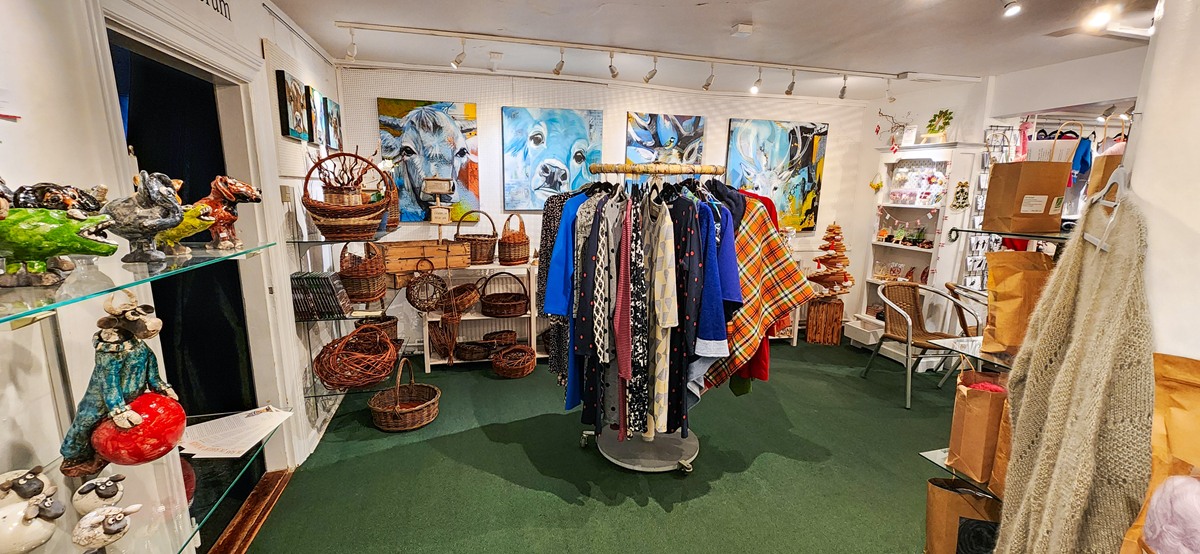
And there is more art in Ribe. You’ll find many beautiful galleries to stroll through. With glass art, ceramics, and paintings. For example, check out Foged Ceramics for beautiful ceramics, the Ribe Fotocenter for stunning photos, and Galleri Vadehavet.
And don’t forget the most famous one: Artizan. A gallery with a bit of everything, from textiles to ceramics to jewelry to figurines, wood, glass, and much more. Made by nearly twenty local artists. You could easily spend an hour here and a lot of money, so watch out 🙂
12. Riberhus Slotsbanke
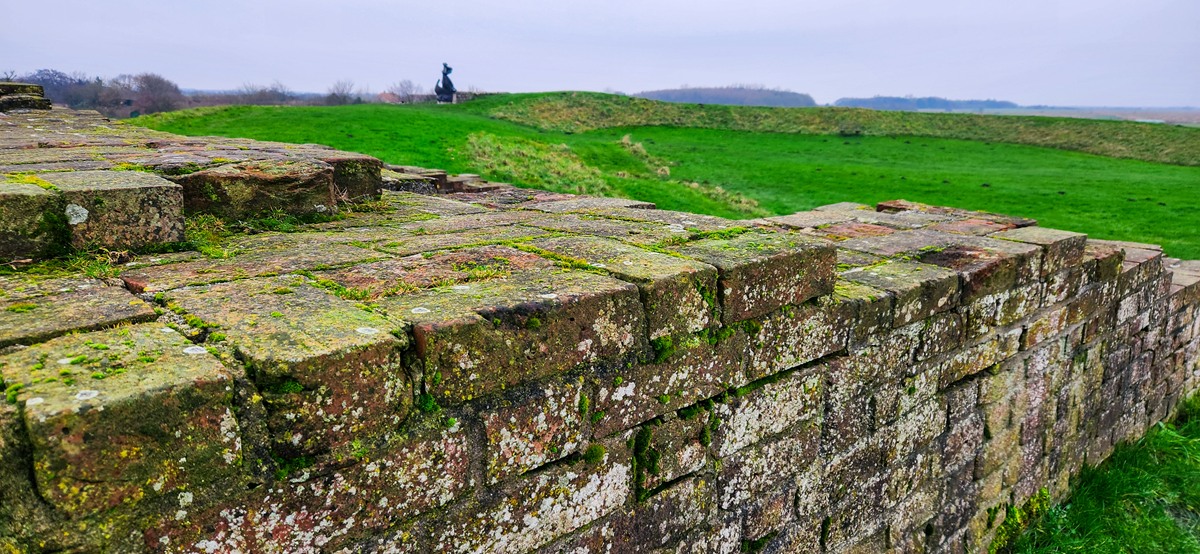
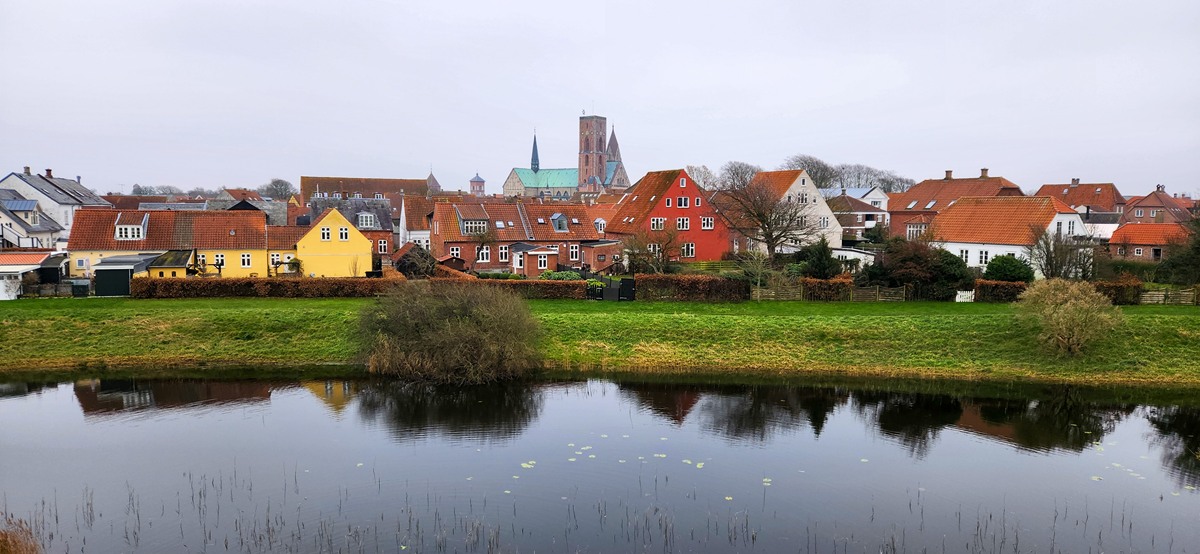
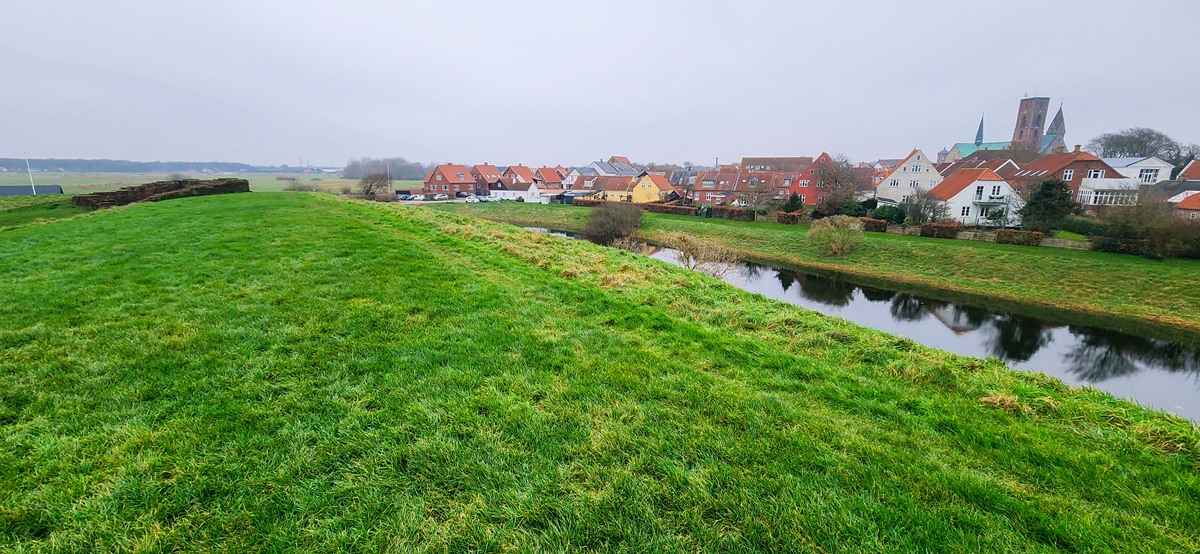
Riberhus Slotsbanke is the green castle hill just outside the old center of Ribe: the remnant of the former royal castle Riberhus, once one of Denmark’s most important royal fortresses in the Middle Ages.
Over the years, Riberhus was expanded and in the 1500s it received new forms of defense. But after the Swedish wars in the 1600s, the castle lost its military utility and fell into disrepair, after which it largely disappeared. Around 1940, the remains of the castle were excavated and the hill with the moats was refurbished.
You can easily walk there from the center, up the hill and across the castle moat. Besides ruins, you’ll see a beautiful view over Ribe. Riberhus is also part of a nice walk through Ribe and the surrounding nature (see below).
You can find Riberhus on the map here.
13. Walk through the streets of Ribe
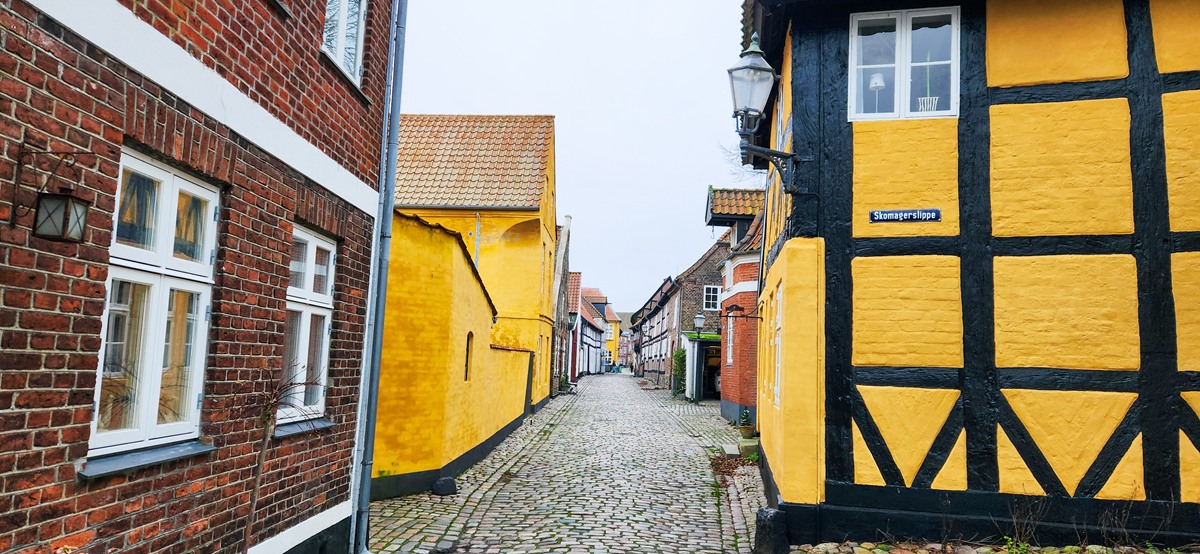
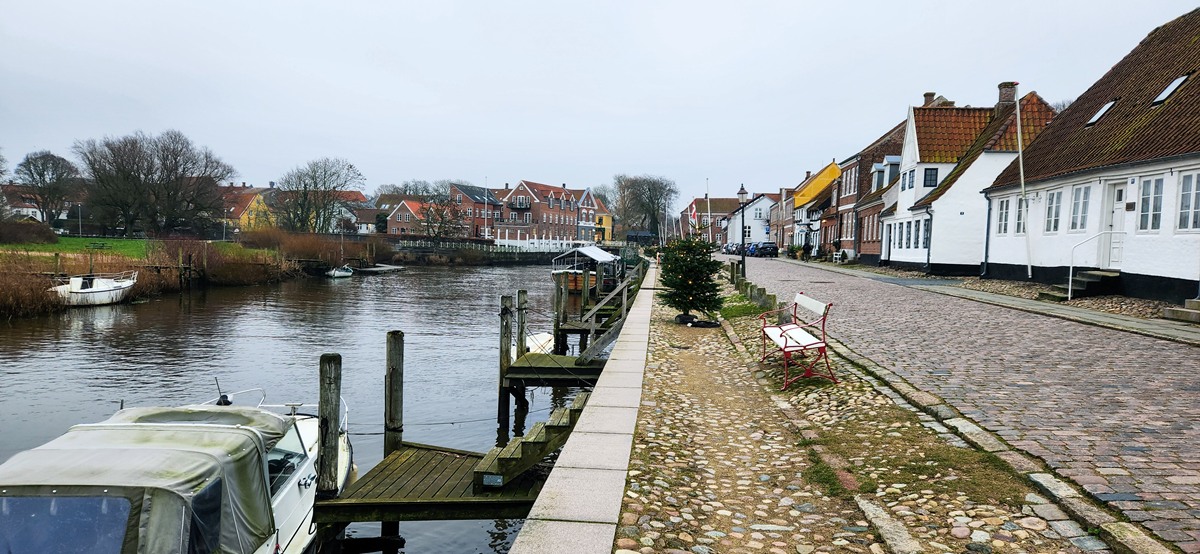
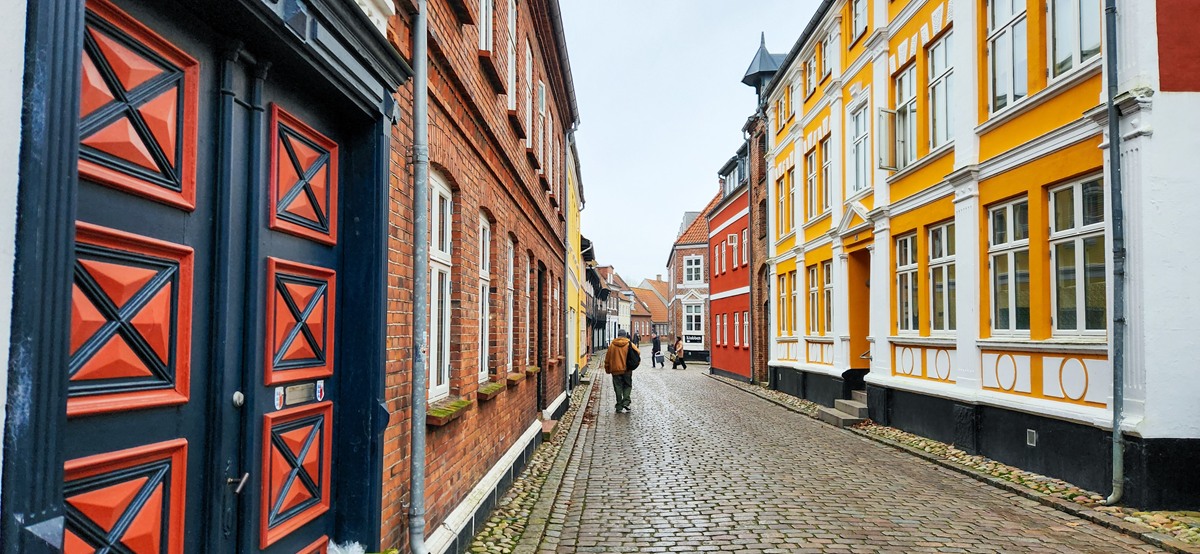
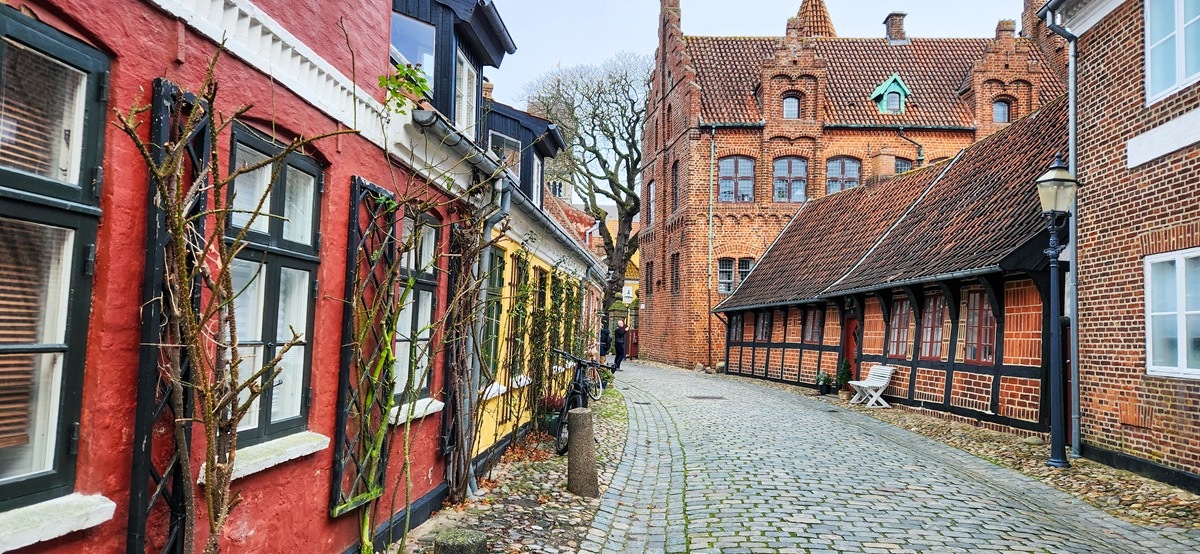
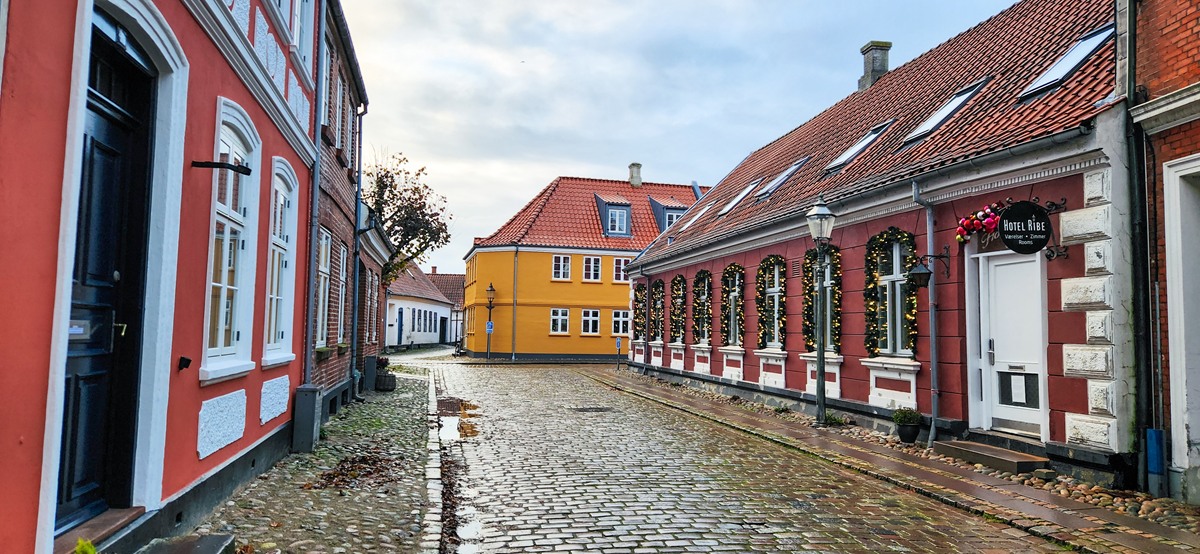
Besides the standard sights, it’s a joy just to walk through Ribe. You see so much beauty. Historic houses, cute courtyards, the Ribe Å, and of course many nice shops in the shopping street.
Here’s what else there is to see:
- The Ribe Kloster, a beautiful building surrounded by lovely historic streets.
- Stroll through the picturesque streets of Taarnborg.
- Visit the jeweler Den Lille Ravbutik; I bought another ring here…
- Walk through the cozy shopping street and visit The Old Pharmacy; you’ll just keep looking around in there.
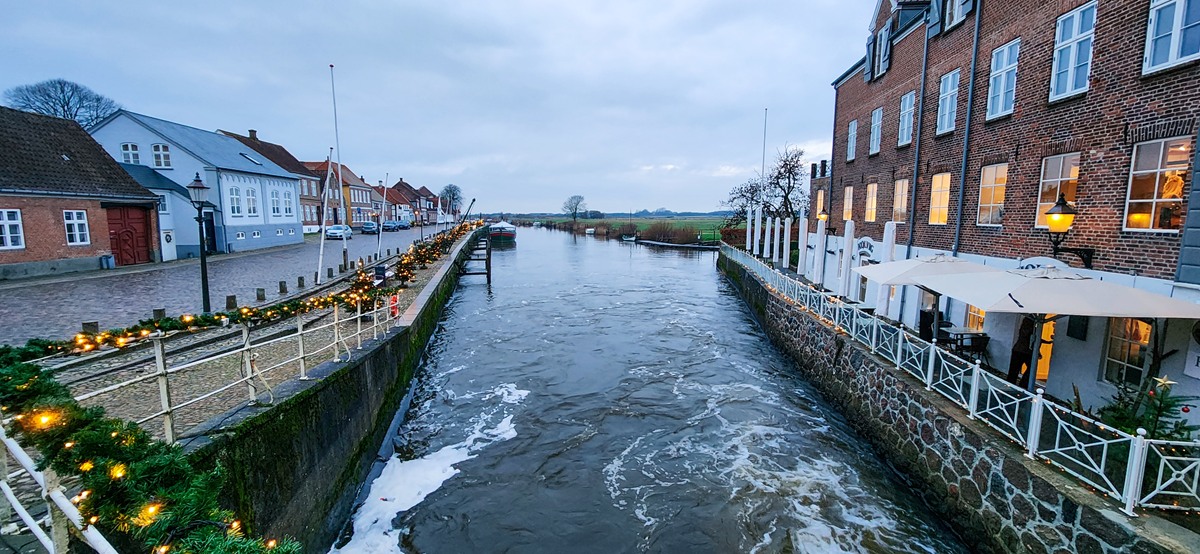
- Don’t forget to walk along the water, for example to the Storm Surge Column, a nice spot. Walk into the side streets there too, very beautiful.
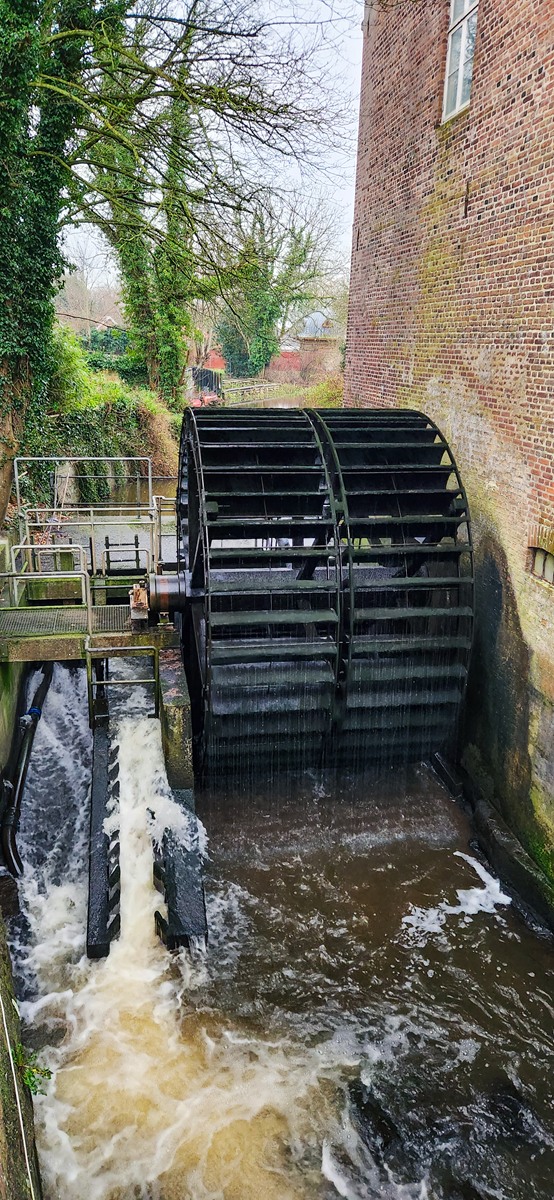
- The well-known shopping street Overdammen, Mellemdammen, and Nederdammen runs over an old dam in the Ribe Å. That dam was built as early as 1250 to hold back the water and provide water power for mills. That dam splits the river into three narrow, flowing channels, which historically provided space for three water wheels. You’ll come across these water wheels as you walk through the shopping street.
14. Discover Ribe with the Night Watchman
In the summer months, you can join the traditional round of the Night Watchman. It starts in the evening on the square (near Restaurant Weis Stue) and lasts about 45 minutes. It’s free and you don’t need to book. Read more information here.
I didn’t do this walk myself because I was there in the winter. But I’ve read many good reviews about it.
Hike through Ribe: discover the nature around the city
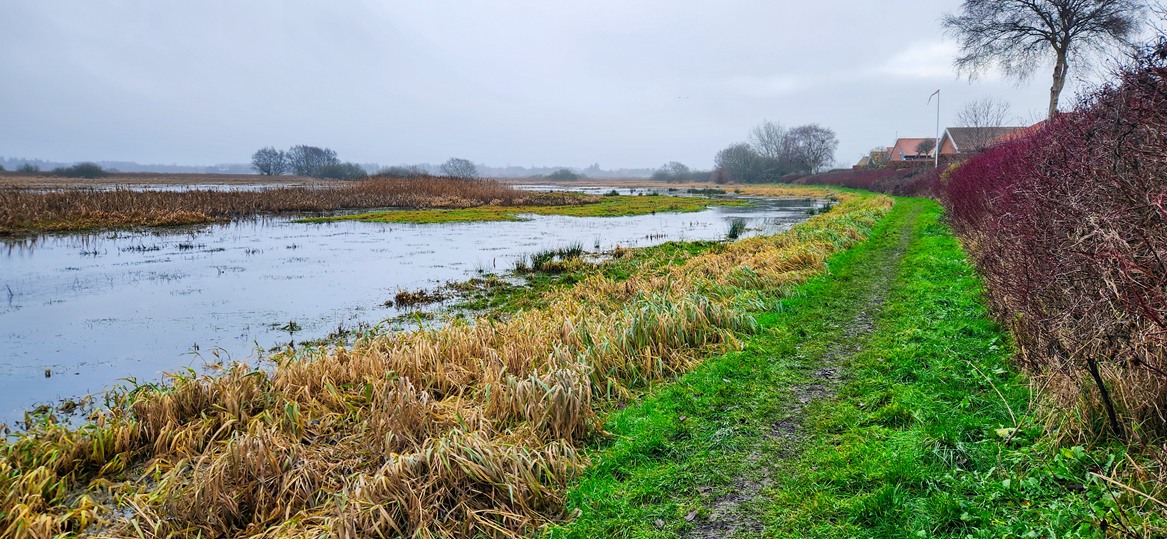
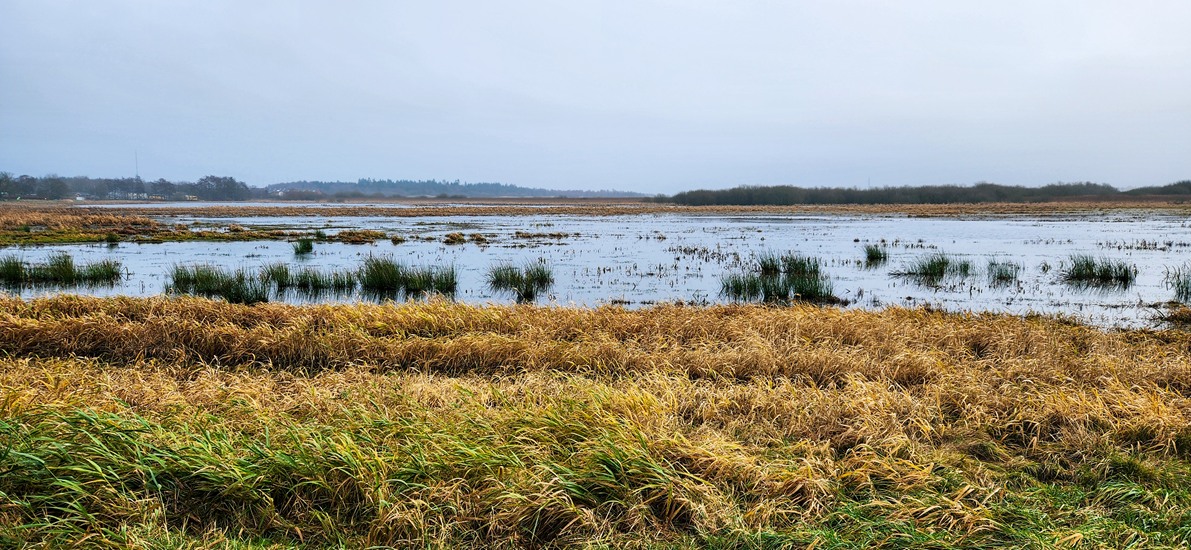
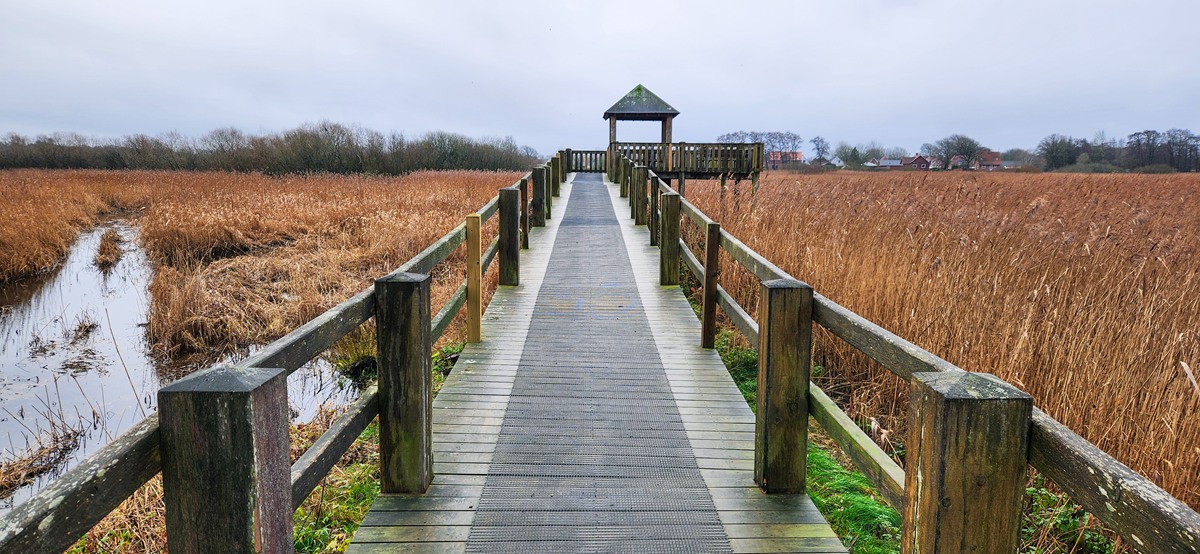
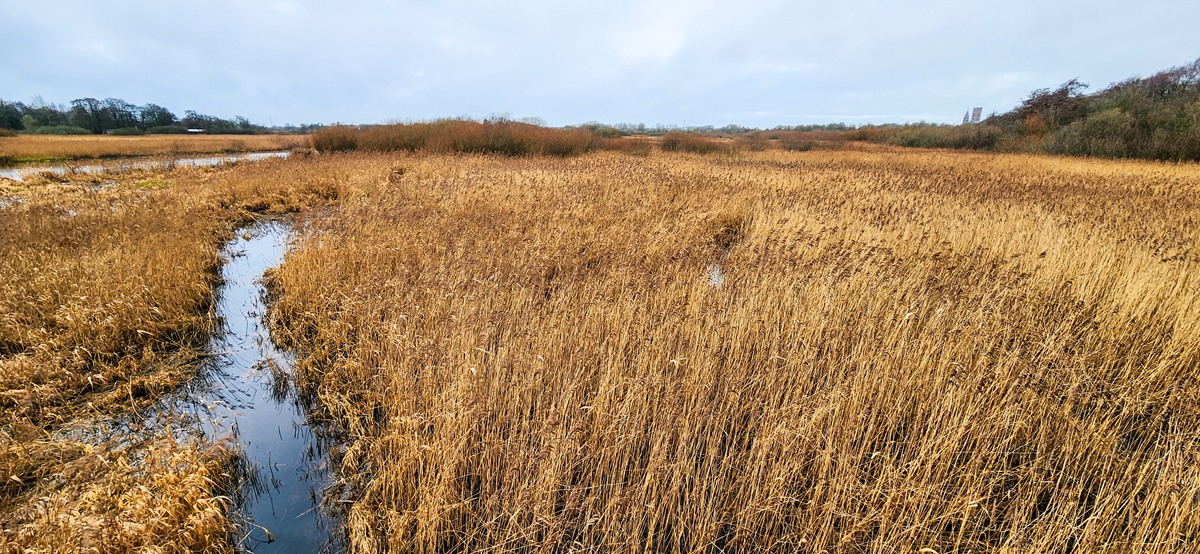
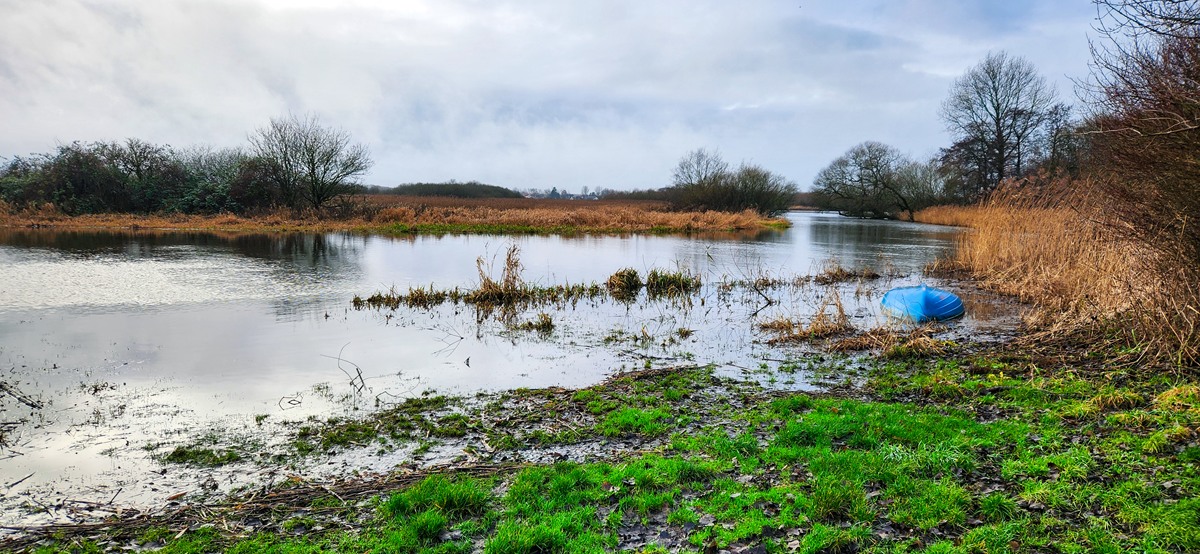
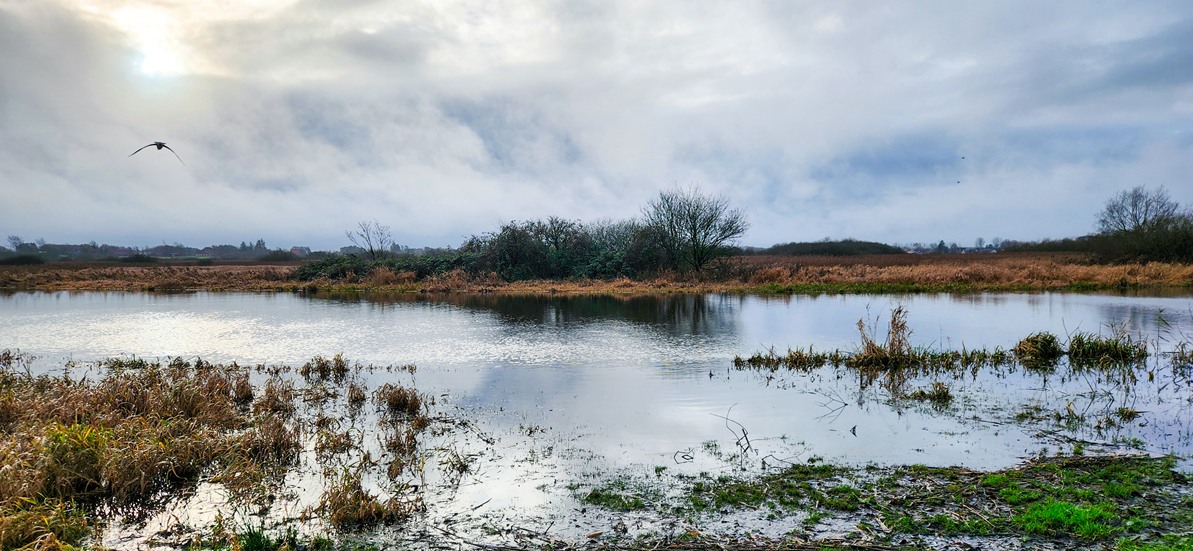
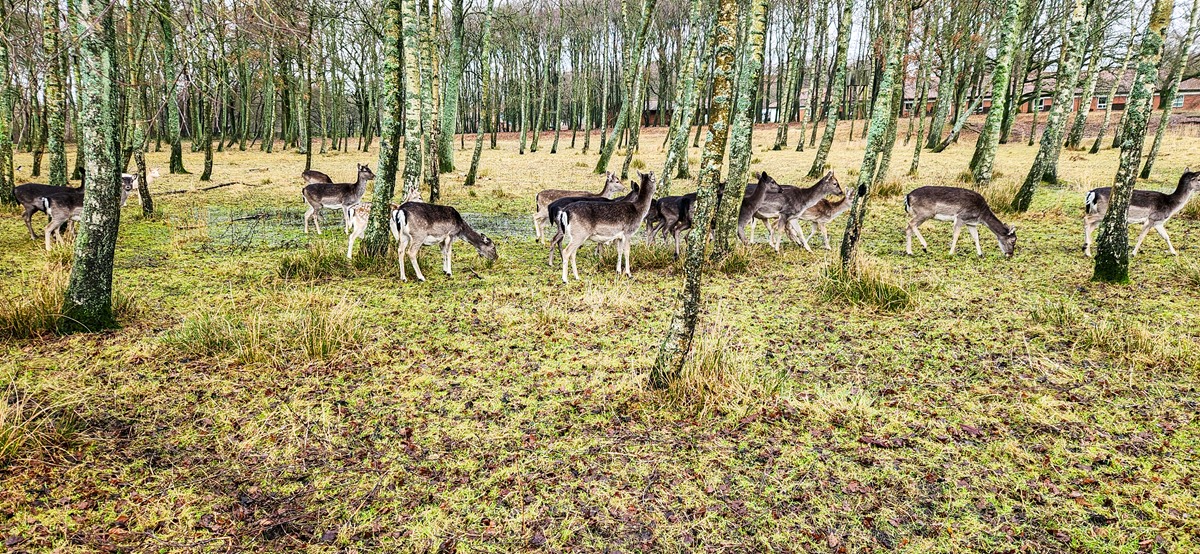
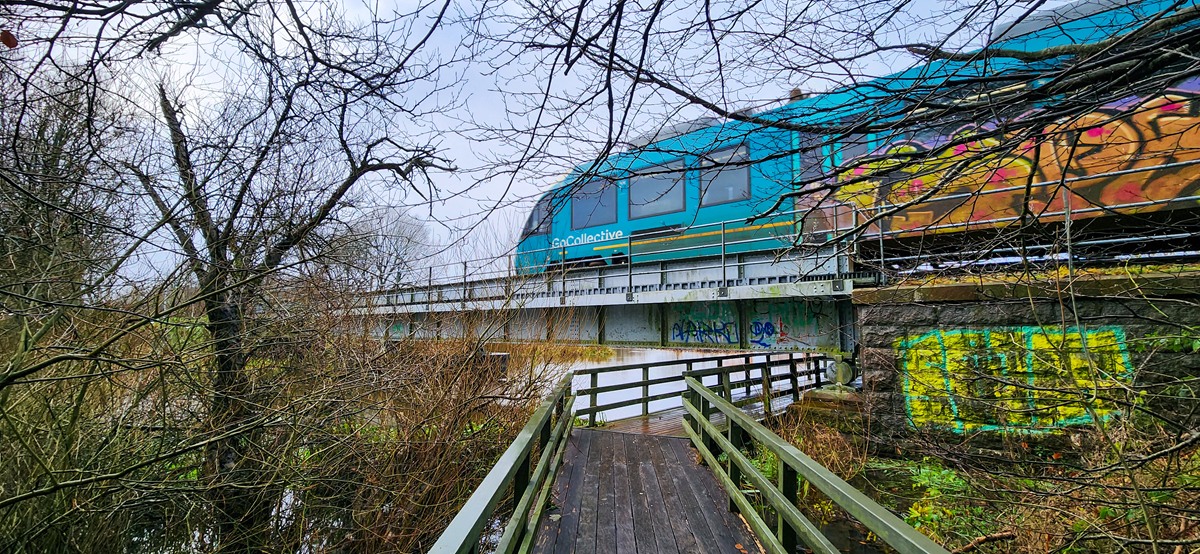
From Ribe, you’ll find many beautiful hiking routes. I did a 9-kilometer hike via Riberhus to the nature reserve. Incredibly beautiful. The hike first goes through the village, after which you walk past the train station to the residential neighborhoods in Ribe. At some point, you enter nature and walk along the water, past viewpoints for birdwatchers and a kind of marshland.
It was quite boggy when I was there due to the rain, so I couldn’t walk a small part through the nature reserve, but I did most of it. You also pass the Ribe Østerå Fugletårn, a spot for birdwatchers and for a nice view.
I thought it was a very beautiful hike, and good to see more of Ribe than just the city center. It took me about 2 hours.
Click here for the walking route.
Nice restaurants and cafes in Ribe
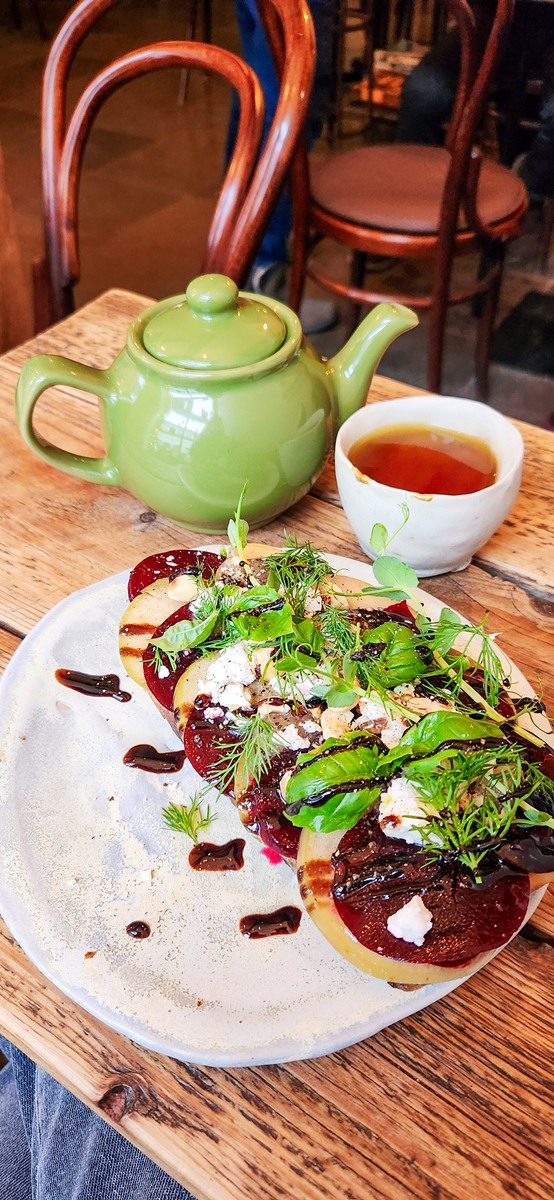
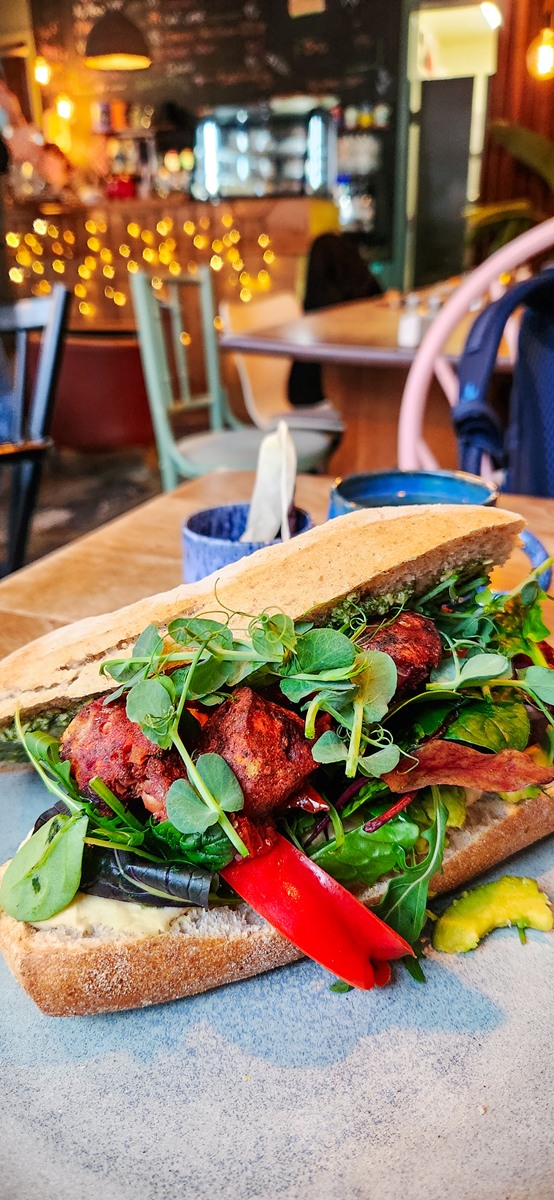
Ribe is bursting with cozy restaurants and eateries. I’m a vegetarian and in all the restaurants I visited, they had delicious vegetarian food. Here are my favorites.
Café Sallys
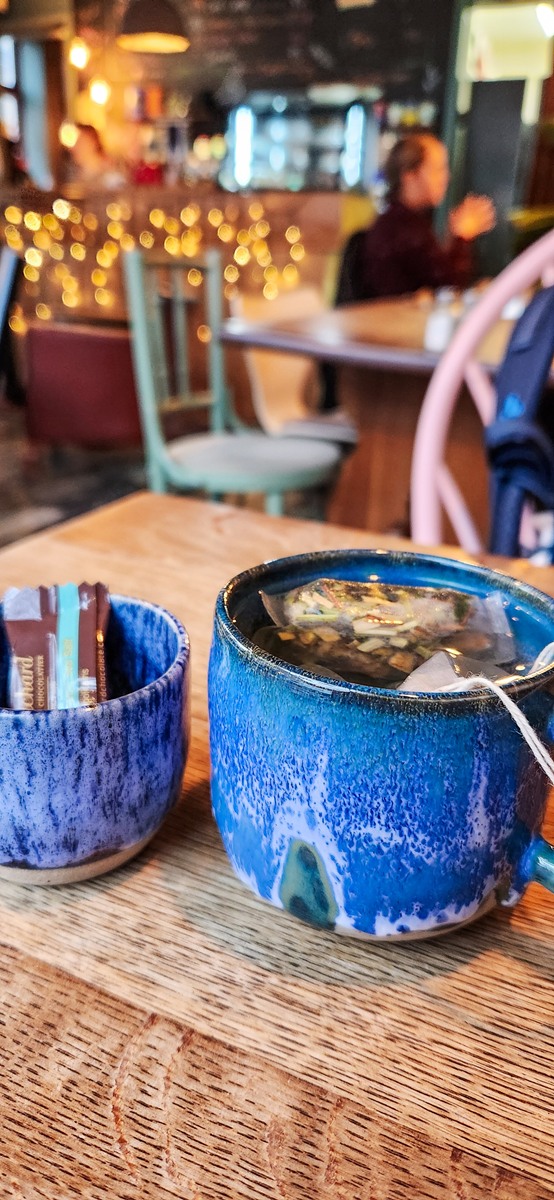
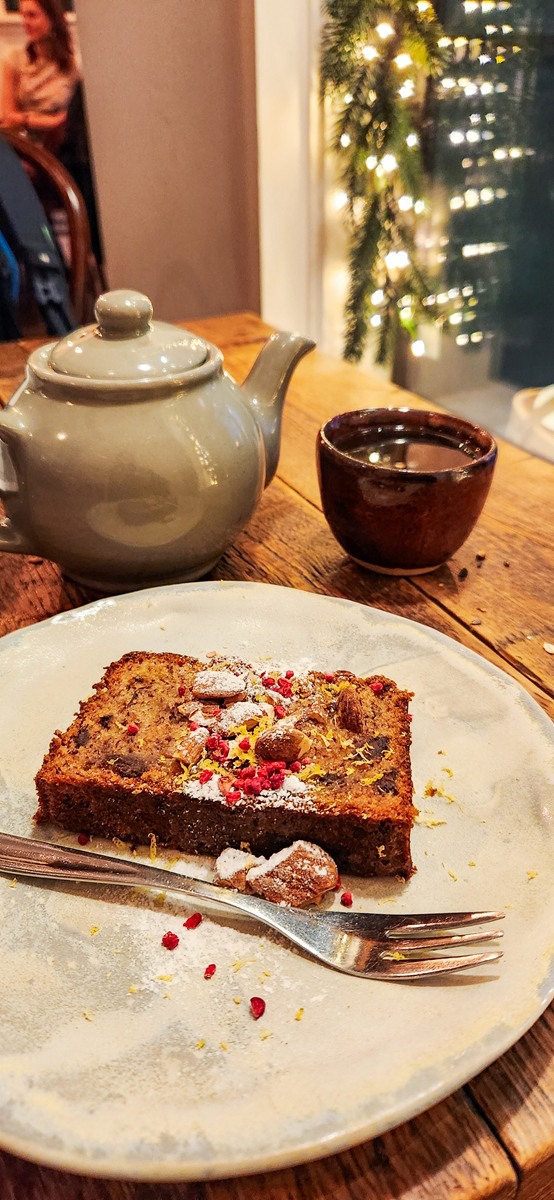
Right in the center and very cozy. I had a nice lunch there and sat for a while. They also have delicious teas. Café Sallys is also a hotel, so you can stay and have breakfast there too.
You can find Café Sallys on the map here.
Quedensgård Cafe Og Krambod
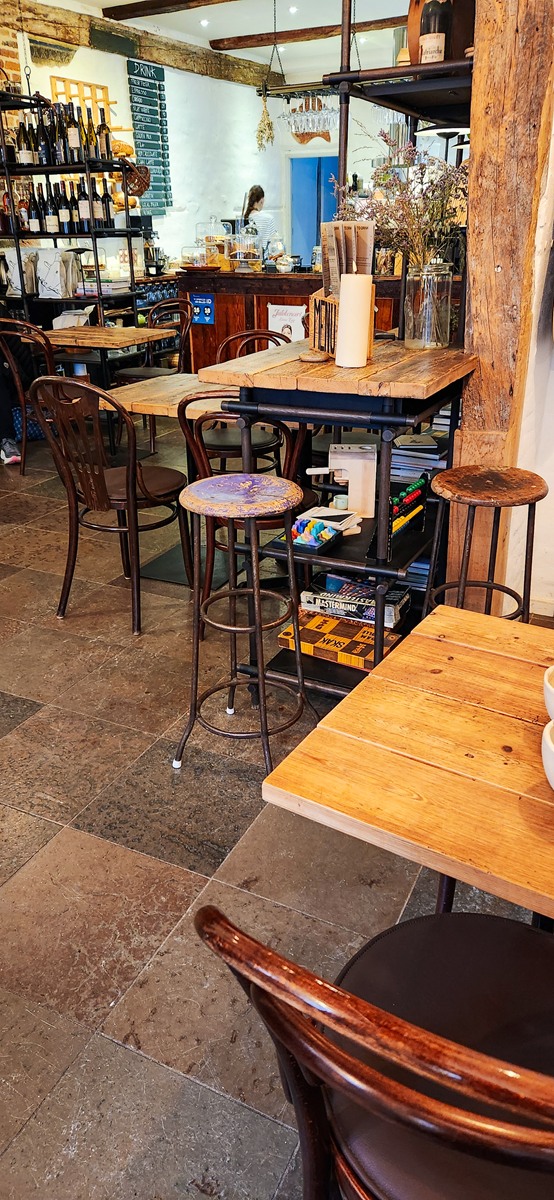
Café Quedens is housed in a building from 1582, which was bought in 1834 by merchant Johannes Harbo Quedens. He took over an existing grocery store there. Today it’s a cozy restaurant where, besides food, you’ll find all sorts of nice trinkets. The cafe also has a lovely back garden that borders the Jacob A. Riis Museum and the HEX! Museum.
I had a delicious lunch there and chatted with a Danish couple from Ribe.
You can find Café Quedens on the map here.
Terpager & Co
Another place you won’t want to leave. In a historic building from the year 1550, with a great atmosphere, good food, delicious pastries, and plenty of tea choices. Their food is mainly plant-based and is homemade with fresh, organic ingredients. In the summer months, they use fruit and vegetables from their own garden.
In the building next to the cafe is a historic grocery store, where you can buy wine and specialties like organic spices, groceries, and sweets, just like in the old days. Don’t forget to visit this too.
You can find Terpager & Co on the map here.
Temper Chokolade
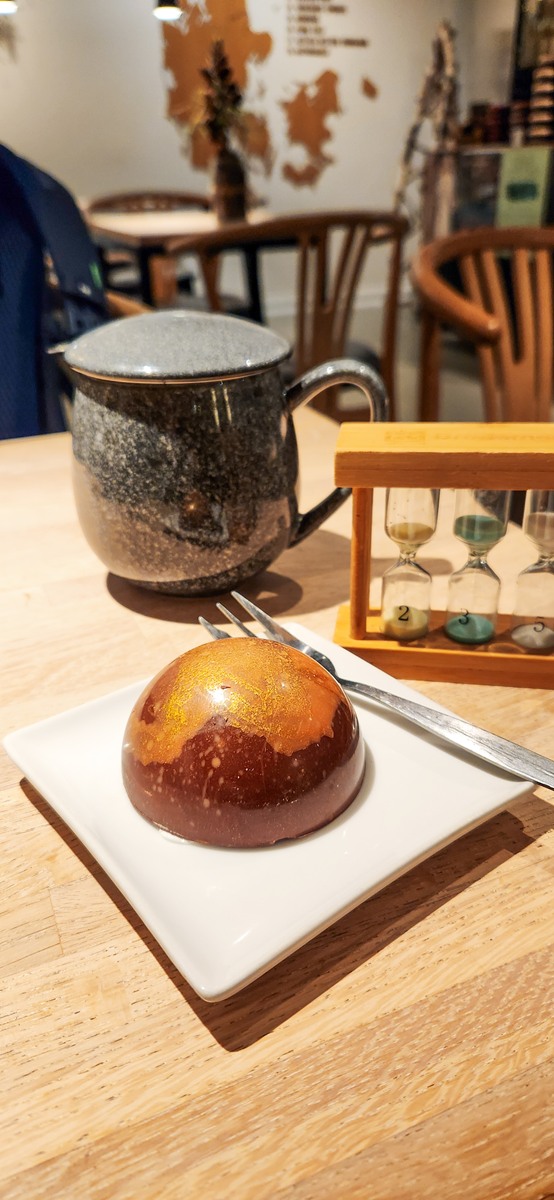
A chocolate shop where you can also have a drink, and of course eat their amazing chocolate. They make all the chocolate themselves, they roast their own coffee, and they make fresh Italian gelato. And really: the chocolate is delicious. And not only that, it also looks special. I naturally went here several times and each time I tasted different chocolates. I also took some chocolate home for the family. Absolutely a must when you’re in Ribe.
You can find Temper Chokolade on the map here.
Pompei Bakery
At Pompei Bakery, I bought fresh bread for my breakfast every day. It’s a small bakery that provides fresh bread throughout the day, made according to old baking traditions. Are you looking for good bread in Ribe? Then Pompei is the place.
You can find Pompei Bakery on the map here.
What to do in the Ribe area: 4 tips
Ribe is also the perfect base for discovering the surrounding area. Think of the Wadden Sea area, the city of Esbjerg, and the islands of Mandø, Fanø, and Rømø.
And also very charming: the town of Tønder, where I made a stopover on my way back to the Netherlands.
I would have loved to get to know the Wadden Sea area, but in winter this is a bit more difficult than in summer. Besides, I was traveling without a car and simply didn’t have any more time. Plenty of reasons to come back again!
In any case: if you do have the opportunity, there is plenty to do around Ribe.
1. Wadden Sea Centre (Vadehavscentret): the gateway to the Wadden Sea
Just outside Ribe lies the Wadden Sea Centre, right next to the Wadden Sea National Park. The area is on the UNESCO World Heritage List and is one of the most unique tidal landscapes in Northern Europe.
The center itself is a good starting point for discovering the Wadden Sea area. You learn about birds, tides, and why this landscape is so unique.
The Vadehavscentret also organizes nature tours with a guide, ideal if you want to spot birds, for example, or go out on the mudflats with someone who knows exactly where to look. There are seal safaris, birdwatching tours, walking tours, oyster tours, and much more. Click here for an overview of activities from the Wadden Sea Centre and the calendar.
2. Visit the islands of Mandø, Fanø, and Rømø
From Ribe, you can go to the three islands of Mandø, Fanø, and Rømø.
Mandø: only accessible at low tide
The island of Mandø is special simply because the road to it floods twice a day. So you can only go there depending on the tide. And the way you get there is also unique, namely with the Tractor Bus (Mandøbussen), which departs from the Wadden Sea Centre. Click here for the Tractor Bus times and to buy a ticket. In high season, it’s recommended to reserve your spot in advance.
Once you arrive on the island of Mandø, there’s plenty to see. The Mandø sluse, with a beautiful view. The Wadden Sea with an endless horizon, silence, birds, and wind. You can spot birds: the island is known for its breeding and migratory birds. There are also bird excursions. And you can enjoy walking and cycling.
Mandø is a small island and difficult to reach, so it’s much quieter than on the other islands. As a result, there’s also less to do and fewer dining options. But if you love walking, cycling, birdwatching, and peace, this island is fantastic.
Fanø: by ferry from Esbjerg
Fanø is a larger island, located on the Esbjerg side. You get there by ferry from Esbjerg, which takes you to Nordby. This trip takes about 12 minutes and can be done all year round. Check the current timetable here. You can go on the ferry by car, bike, or on foot. And if you don’t have a car, there’s a bus that runs on the island.
There’s a lot to do on the island of Fanø, from walking and cycling to staying overnight and good food. You’ll find sandy beaches, forests, dunes, a windmill, and you can visit the cozy harbor of Nordby and the village of Sønderho. Seal excursions are also popular to do on Fanø. Click here for more information on what to see and do on Fanø.
Rømø: an island full of nature
Rømø is the largest island in the Wadden Sea. You get there via the 9-kilometer-long Rømø dam. On the island, you’ll find a completely different nature than on the mainland. The biggest attraction is the 3-kilometer-wide sandy beach (Lakolk Strand), with a wide view over the surroundings. But besides kilometers of wide sandy beaches, you’ll also find green hills, many birds, bunkers, and beautiful dunes.
You get to Rømø by car or, if you don’t have a car, with bus 285 from the train station in Skærbæk. Check the timetable on Rejseplanen.dk.
More information about Rømø can be found here.
3. Take a day trip to cozy Tønder
I visited Tønder on my very last day in Denmark. From here, I took the train back to the Netherlands. It’s only a half-hour journey by train from Ribe, and perfect for a day trip.
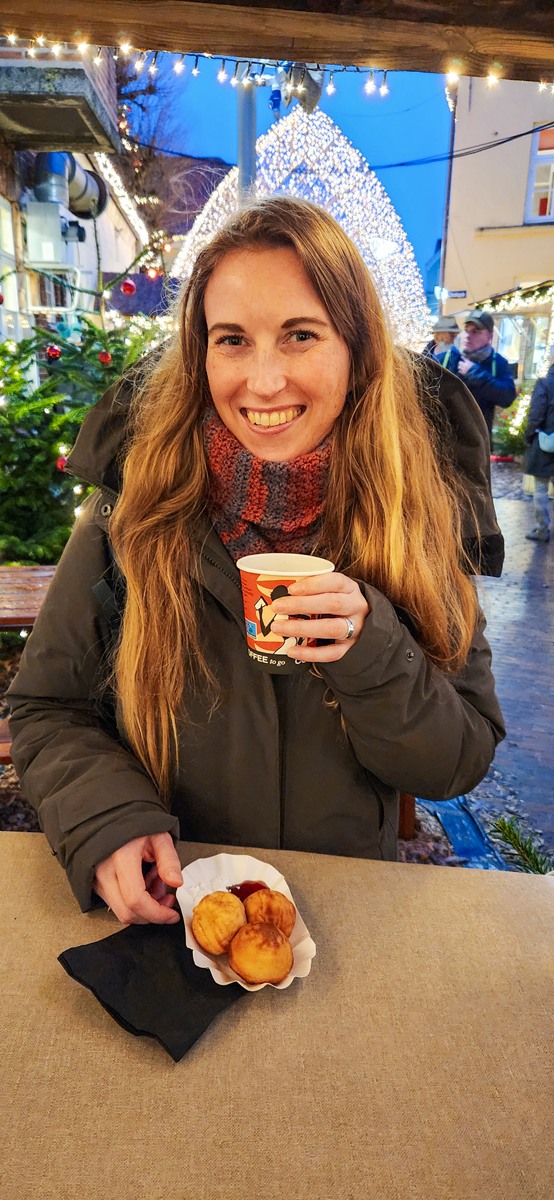
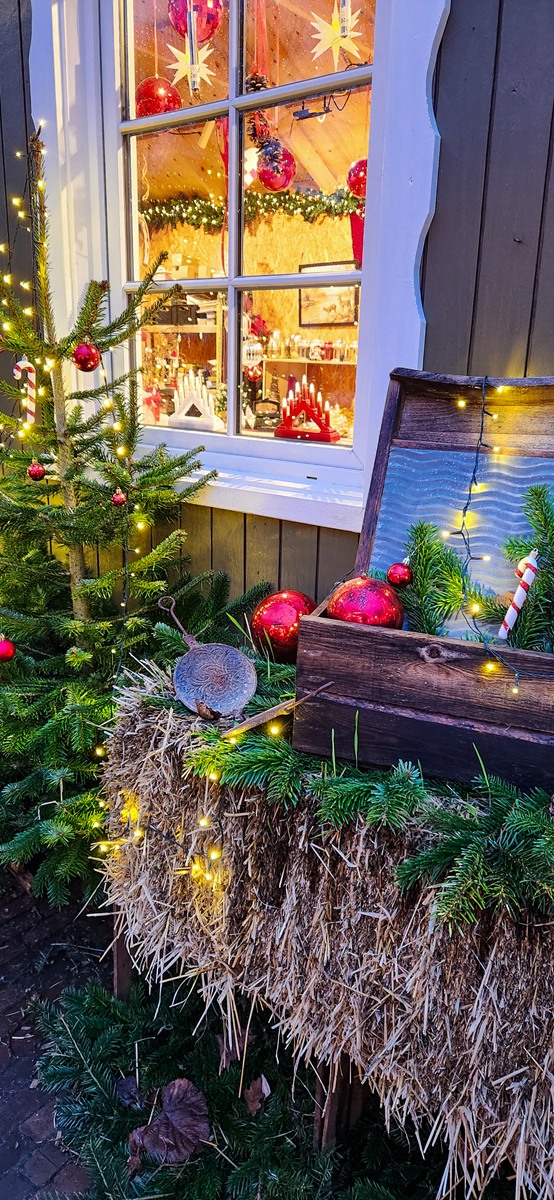
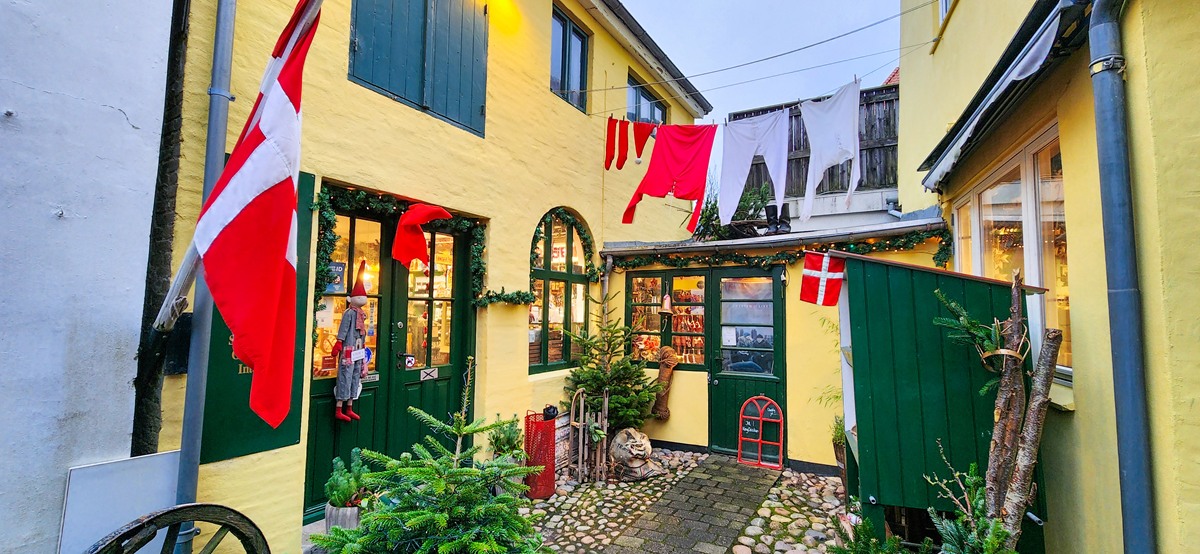
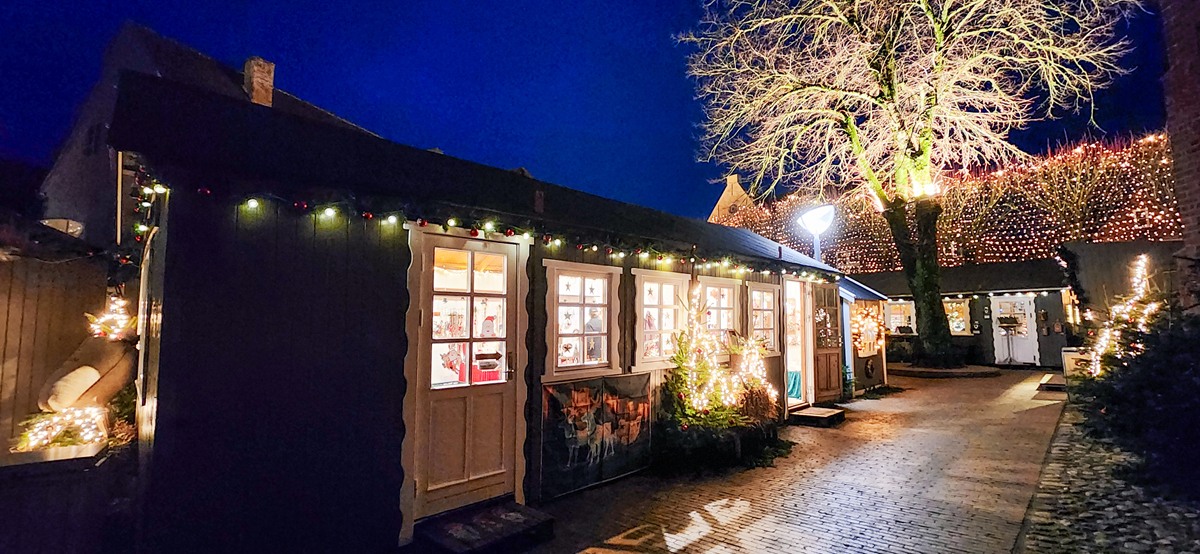
I found Tønder very cozy, especially in the Christmas spirit. There was a beautiful Christmas market, a nice shopping street, I had a good meal, and visited a museum. All in one day.
Tønder is located in Southwest Jutland, near Germany, and you can tell. A lot of German is spoken and there were also many German people at the Christmas market.
Tønder received city rights as a market town as early as 1243, making it one of the oldest market towns in Denmark. In the Middle Ages, it was a port and trading city, but due to silting and later dike construction, the area lost its direct access to the sea and the city’s role changed.
From the 17th to 19th century, Tønder became known as a center of the lace industry, and you can still see that in museums and crafts. For example, I visited the House of Drøhse (Drøhses Hus), where you learn all about the history of lace in Tønder. The museum is housed in one of Tønder’s best-preserved houses, from 1672.
What is there to see in Tønder?
Walk through the center and enjoy the old merchant houses and cozy shops. Think of Det Gamle Apotek (The Old Pharmacy), where you’ll just keep browsing. And in December, there’s a cozy Christmas market on the square by the old town hall.
Don’t forget to visit the cute little shop KongChristian X. It’s a bit hidden in an alley, and very fun to browse around.
I stayed at Motel Apartments, right at the beginning of the shopping street Vestergade. Cheap and perfect for a night. But as mentioned, you can also easily visit Tønder on a day trip from Ribe.


4. Day trip to Esbjerg
Esbjerg is a larger city north of Ribe. But as old as Ribe is, Esbjerg is just as young (by Danish standards). The city was ‘only’ founded in 1868 as a port city, after Denmark lost territory to Germany in 1864 and needed a new North Sea port. The harbor was officially opened in 1874 and after that, Esbjerg grew rapidly.
Popular sights in Esbjerg
- Mennesket ved Havet (Man Meets the Sea). Four enormous white figures looking out over the sea: the icon of Esbjerg. They are 9 meters high and stand at Sædding Strand.
- Fiskeri- & Søfartsmuseet (Fisheries and Maritime Museum). This museum is all about the sea, shipping, and life on the coast, including aquariums and seals.
- Esbjerg Museum. This regional history museum from 1941 offers exhibitions, activities for children, and a souvenir shop.
- Esbjerg Art Museum. Esbjerg Art Museum is a fine museum if you like modern and contemporary Danish art, focusing on how Danish art has developed from about the 1920s to the present. As an art lover, I would definitely visit this museum.
- The base for Fanø. If you want to go to the island of Fanø (see tip 2), you first have to go to Esbjerg. Great to combine with other sights.
Christmas in Ribe
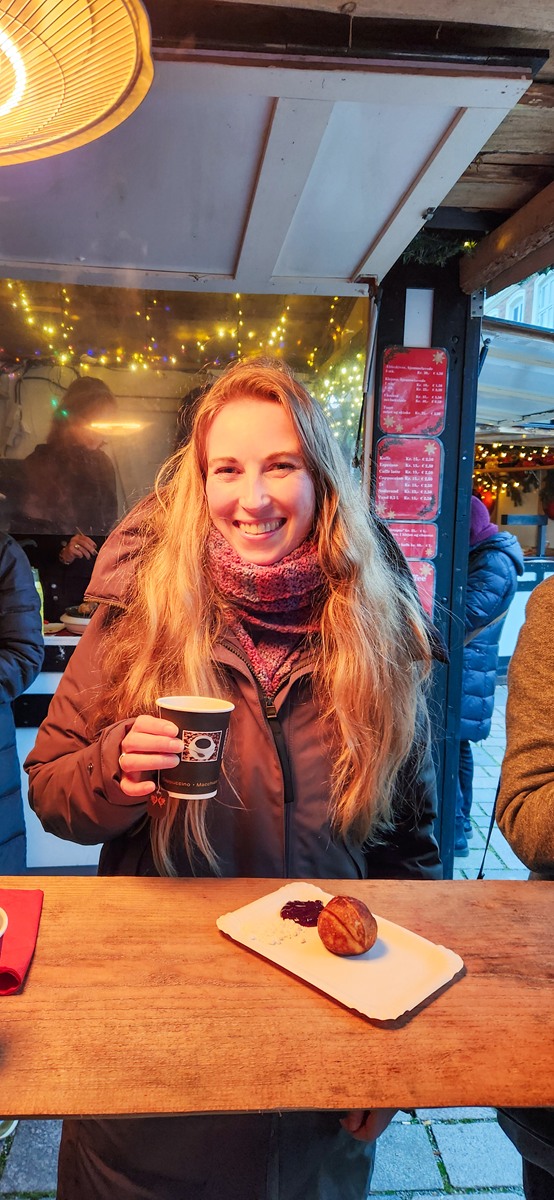
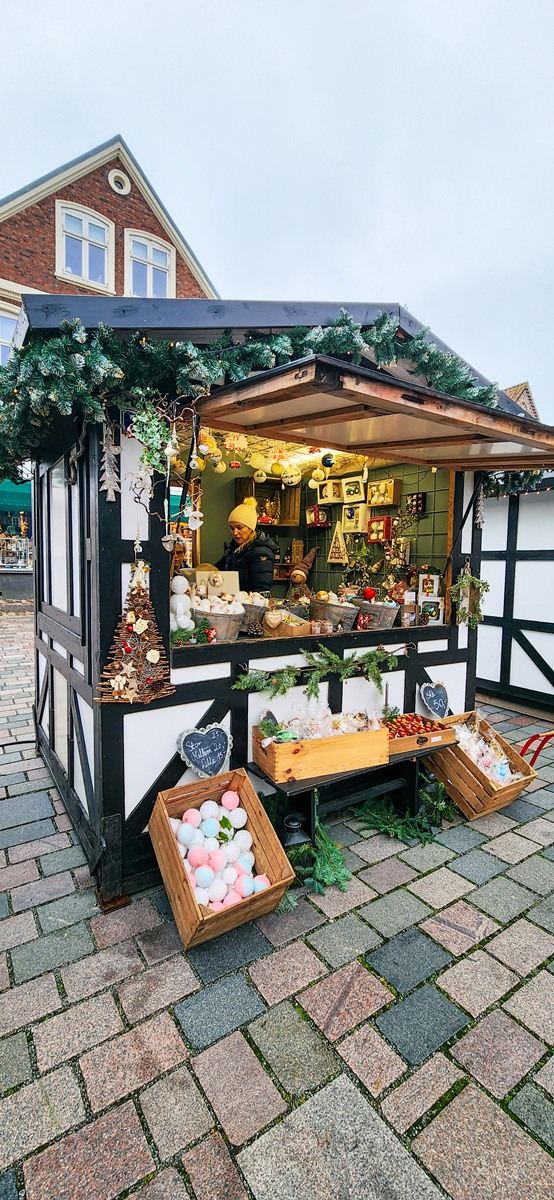
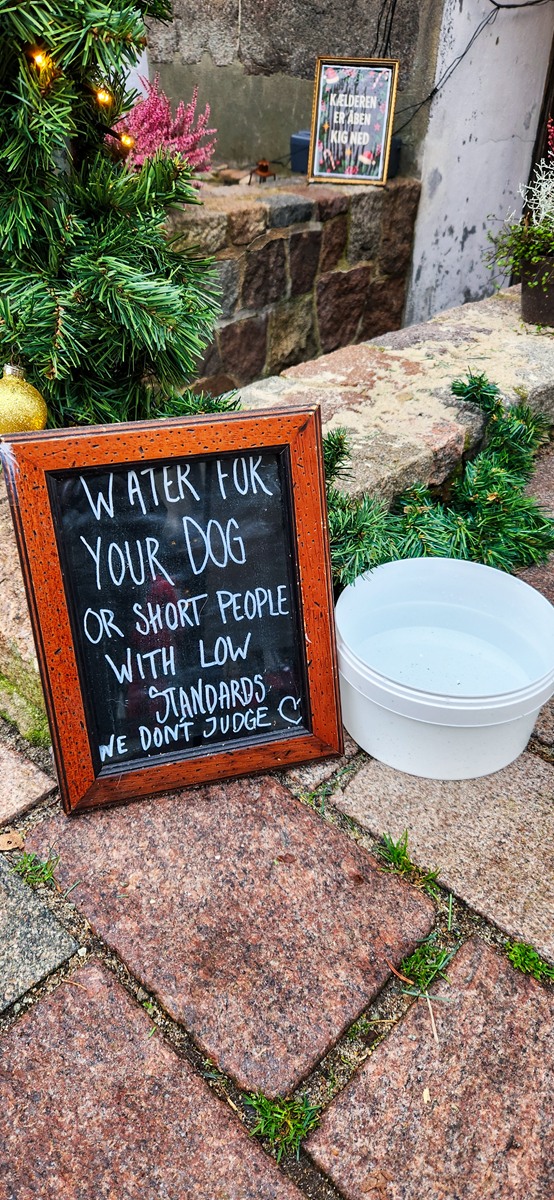
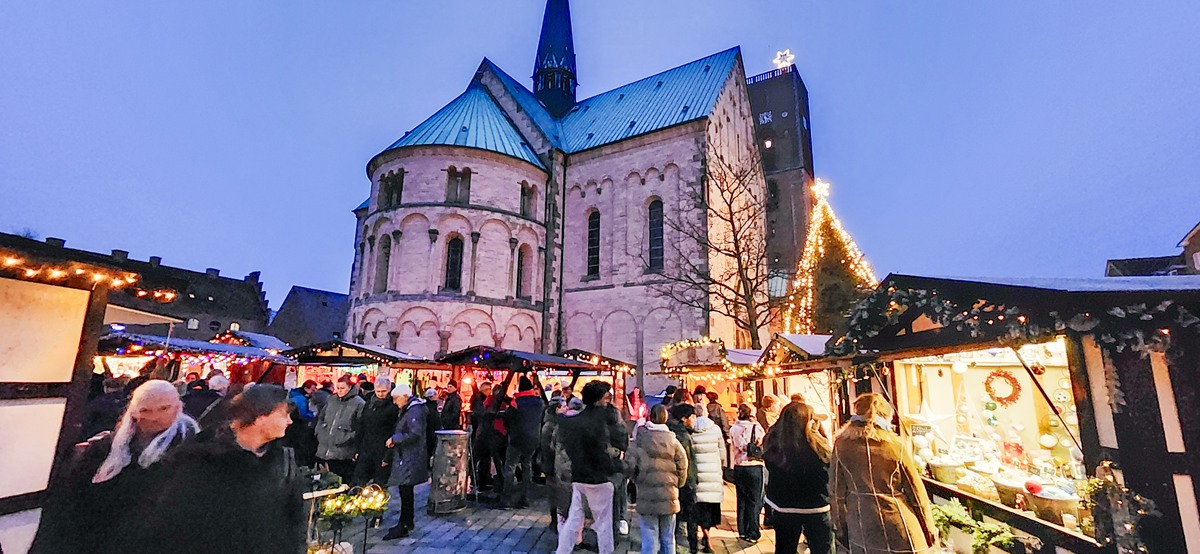
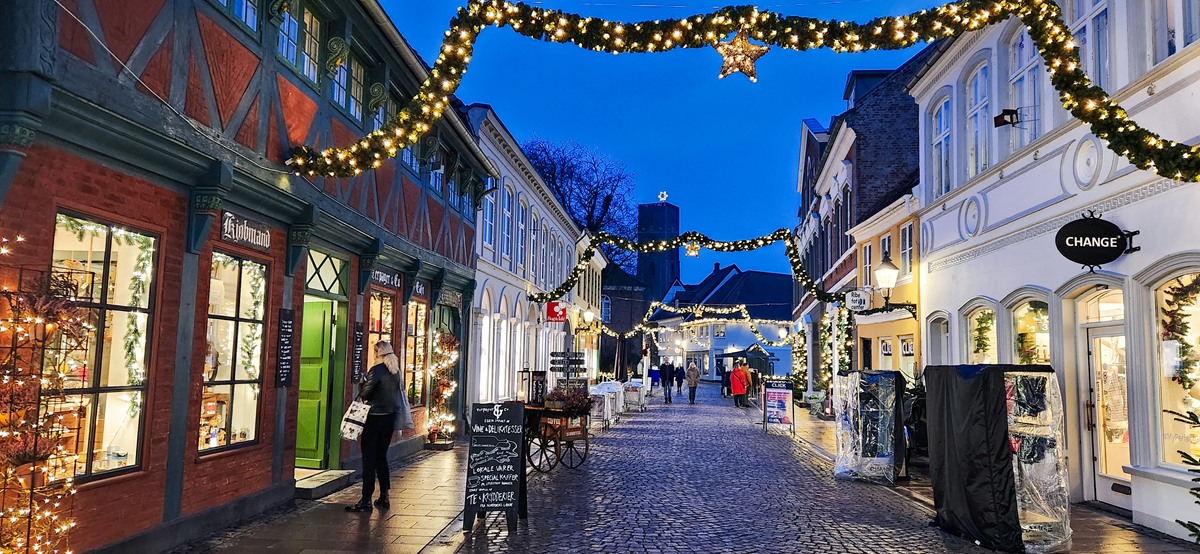
I visited Ribe in mid-December, during the cozy Christmas atmosphere. And I thought it was fantastic. Everything was snug and cozy: the restaurants, the streets, and the shops. There was also a small Christmas market on the square next to the Cathedral. This was open on the weekend. Lovely to stroll around and have a drink.
There was also a Christmas market in the Old Town Hall on the weekend. This way, I could see the inside of the Town Hall right away and buy the last Christmas souvenirs for home.
Nice to know: everything sold at these two Christmas markets was handmade by the sellers themselves. Denmark is bursting with creativity anyway, but I thought it was really nice that this was so explicitly reflected at the Christmas market.
I couldn’t pay by card at either Christmas market, but there is an ATM to withdraw cash.
The best time to visit Ribe
When it’s best to visit Ribe depends on your own preferences. In the summer, between June and September, it’s warmer but also busier due to tourism. In the winter, it’s colder but very cozy (especially in December) and other tourists are much scarcer during this period.
It can rain anytime in Ribe, whether in spring, summer, autumn, or winter. I personally always prefer traveling outside the high season when it’s quieter. I visited Ribe in the first half of December.
Note that certain museums are closed during the winter months, such as the famous Viking Center that many people come to Ribe for. So I didn’t visit it, but if you’re coming to Ribe specifically for that, check carefully when it’s open.
How many days do you need for Ribe?
Ribe is only a small town, but there’s a lot to see and do. Both in Ribe and in the surrounding area. Because I was there in the winter and traveling by train, so I didn’t have a car, I didn’t see anything of the surroundings myself. I stayed in Ribe for 4 nights and was very happy that I took so much time for it.
If you also want to see the surroundings, I would definitely set aside a week for Ribe. If you only want to visit the town and go through it quickly, you can do that in 2 days.
Where to stay in Ribe?
Ribe is a small town where you won’t find hundreds of hotels, but only about 30 within a 3-kilometer radius of the city center. You can find all hotels in Ribe here. There are, however, many accommodation options in the surrounding area. And especially if you’re traveling by car, that’s also very doable.
Would you like to stay more cheaply in a hostel? Then take a look at Danhostel Ribe.
In addition, there are a lot of Airbnbs, also in beautiful historic houses. I stayed in this Airbnb myself.
There are also campsites in the Ribe area. Even in the city itself: Ribe Camping. From here, you can walk to the city center. This is convenient for avoiding parking hassles and high parking fees.
How to get to Ribe?
Ribe is easy to reach from Germany; it’s located close to the border. From Amsterdam, you can drive to Ribe in 700 kilometers, taking about 8 to 9 hours depending on traffic.
I traveled to Ribe by train from Aarhus. And from Ribe, I traveled back to the Netherlands with a stopover in charming Tønder. Ribe was my last major stop during my 3-week solo train journey through Jutland. Click here for my itinerary and more information about travelling by train in Denmark.
Finally: Ribe is a must-see in South Jutland
I found Ribe magical. It’s like walking through an open-air museum. The atmosphere was so lovely, the streets so beautiful, the people so kind, and the food so delicious. There is so much to do in that small town; I’m glad I took the time for it. Heading to South Jutland? Be sure to visit beautiful Ribe.


This article contains affiliate links. If you click on one of these links and purchase something, I will receive a small commission for it. The price remains the same for you. This helps me to create new content and maintain my website.
