


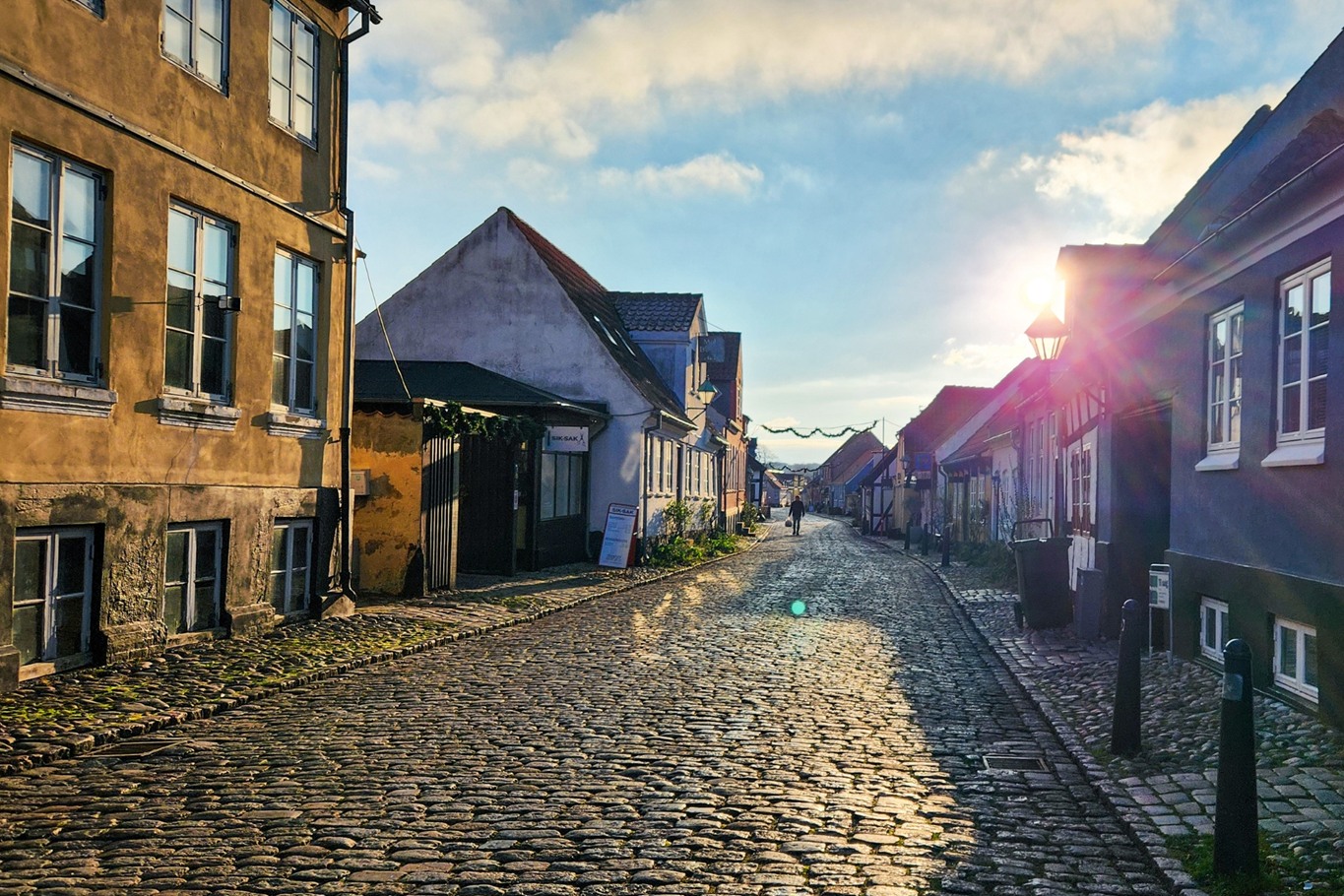
Denmark is fantastic. A beautiful country with lovely hilly landscapes, brightly colored villages, and cozy cities. Perfect for a train trip. Between mid-November and December 10, I traveled to Denmark on my own for 3 weeks. Since there’s quite a lot to see and to do, I decided to stick to Jutland. In this article, you’ll find my Denmark itinerary, sights to see, all the tips for traveling by Danish train and bus, how to enjoy a cozy Christmas atmosphere, and much more. Join me!
Table of contents
Why travel solo to Denmark?
For some reason, I’d wanted to get to know Denmark better for a while. I’d been to Copenhagen before, but now I wanted to head inland. I travel solo regularly, and I just love traveling alone.
Since I don’t get that cozy, chilly Christmas vibe in Colombia, Denmark seemed like the perfect place to experience it. Besides, I was looking for peace, coziness, a Christmas atmosphere, solitude, and safety. And Denmark is the perfect place for that.
If there’s one place that’s quiet, it’s Denmark. The perfect country for hiking alone in nature, discovering cities and villages, and experiencing peace.
At least, those were my expectations. But I can now say they were more than met. I haven’t been this relaxed in ages as I was in Denmark. I loved it—the peace, the safety, being alone, and that cozy Christmas atmosphere. The charming cafes, the interesting museums, the beautiful nature, the many hiking trails… I couldn’t get enough of it.
Yes, I’ve fallen a little bit in love with Denmark. I’ll definitely be back!

Denmark in a nutshell
Denmark is located in Northern Europe and is the southernmost country in Scandinavia. The country consists of the Jutland peninsula and hundreds of islands, of which Zealand, Funen, and Bornholm are the most famous.
Capital: Copenhagen.
Second city: Aarhus.
Population: over 6 million (2026), and much more sparsely populated than the Netherlands.
Currency: Danish Krone, abbreviated as DKK. 1 euro is roughly equal to 7.50 Danish Krone and 1 dollar is about 6.46 Danish Krone. Check the current exchange rate here.
Even though Denmark is a small country, it’s very diverse. You have vibrant major cities like Copenhagen and Aarhus, but also old towns, dune landscapes, cliffs, forests, heathlands, and endless coastline. In Central Jutland, you’ll also find beautiful hilly areas.
Denmark is known for design, cycling, coastal life, and of course hygge: the typical Danish feeling of coziness, peace, and togetherness.
Danish Jutland (Jylland)
I only visited Jutland during this trip. The large peninsula attached to Germany that forms the western part of Denmark.
North Jutland is vast; there are fewer people, more coastline, and dunes. Sometimes I felt like the only person in the world there. South Jutland has a bit more life; there are more people. When you travel through Jutland, you really notice the difference between north and south. It’s definitely recommended to visit both parts when you’re in Denmark.


Traveling by train and bus through Denmark | Mini-guide
Traveling by train through Denmark is incredibly comfortable and easy. As soon as you cross the border from Germany, the delays and canceled public transport are over. In Denmark, trains run right on time and those seats… they’re so comfortable.
How do you buy train tickets in Denmark?
The easiest way to buy train tickets is via an app. You can use the DSB app or Rejsebillet. I’d recommend buying train tickets directly via the DSB app because you can choose from several fare options there. And use the Rejsebillet app for bus tickets. That way, you’ll save money.
- Download the DSB app here in the Apple Store or on Google Play.
- Download the Rejsebillet app here in the Apple Store or on Google Play.
It works very simply: you buy a train or bus ticket via the app, and then all you have to do is get to the station on time and hop on. You don’t need to check in or out anywhere. You’ll then be checked on the train and will need to show your ticket.
How much does the train cost in Denmark?
Via the DSB app, you can choose from 4 price options on most routes (not always, but you’ll see for yourself):
- Orange: the cheapest ticket. This is non-refundable and non-flexible. But it’s a lot cheaper. I always chose this option.
- Orange Fri: non-flexible, but refundable up to 30 minutes before departure.
- Standard ticket: this gives you flexibility on your departure time and is refundable up to a day before departure.
- DSB ‘1 ticket: flexible departure times, refundable up to a day before departure, includes a drink and breakfast.
Note: you can also buy your train ticket with the Rejsebillet app, but you can only buy a standard ticket there. This is almost always more expensive than via the DSB app, where you can also opt for an Orange ticket.
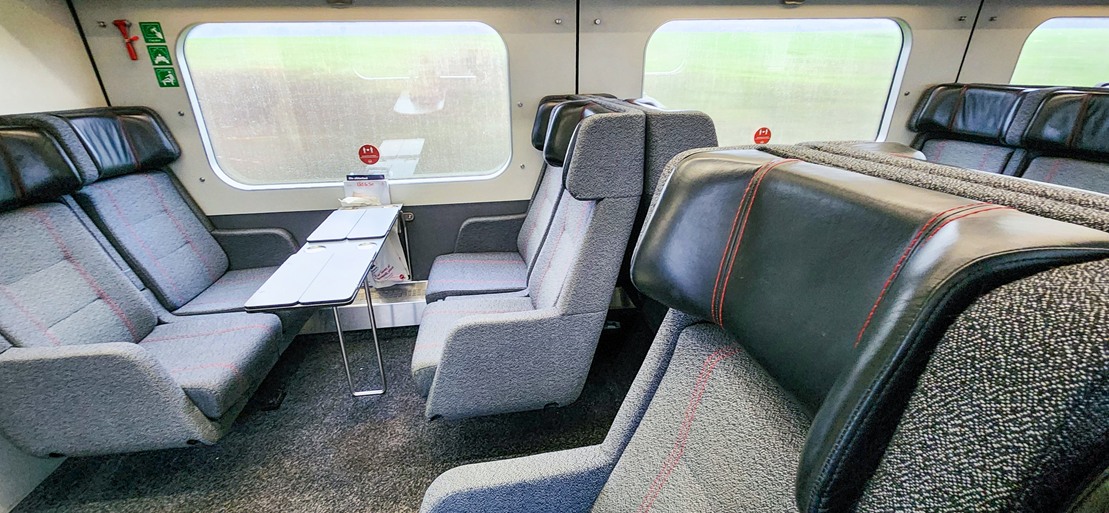
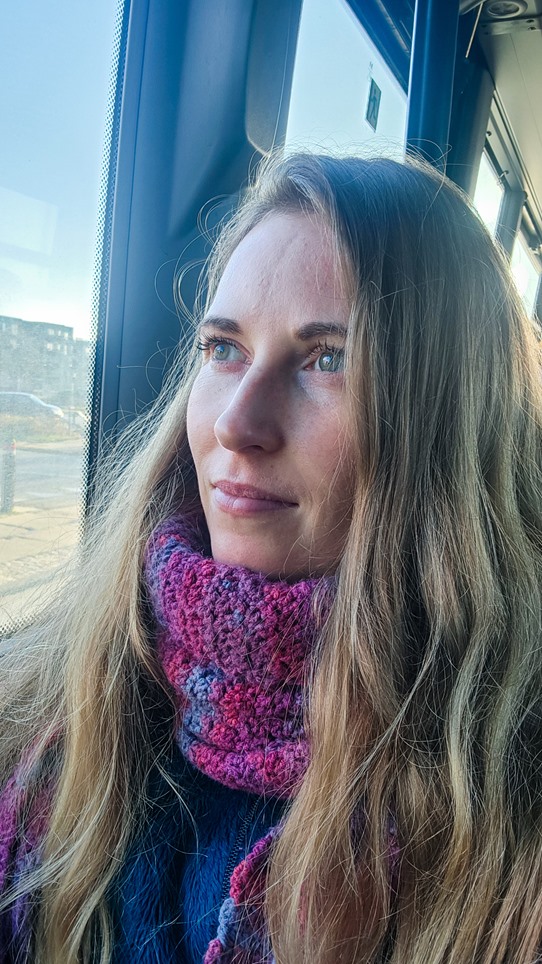
With all tickets, you can reserve a seat for an extra 30 kroner. This isn’t possible on all routes, but you’ll see which ones allow it. I always reserved a seat whenever possible. The photo below shows second-class seats in an Intercity train in Denmark.
Tips to save costs when traveling by Danish train
- If you book your ticket too late, there’s a chance the Orange tickets will be gone, and you’ll end up paying more. This happened to me once. Try to book a day in advance, and for very popular routes like Aalborg – Aarhus, Aarhus – Copenhagen, and Germany – Denmark, book your ticket a few days ahead.
- Traveling off-peak is cheaper. I always left between 10:00 and 11:30 AM, which can save a lot of money.
- Don’t reserve a seat. That saves 30 kroner. Though, I personally always reserved a seat.
- Find a hotel, hostel, or Airbnb within walking distance of the train station; this avoids extra costs to get to your accommodation.
How do you buy a bus ticket in Denmark?
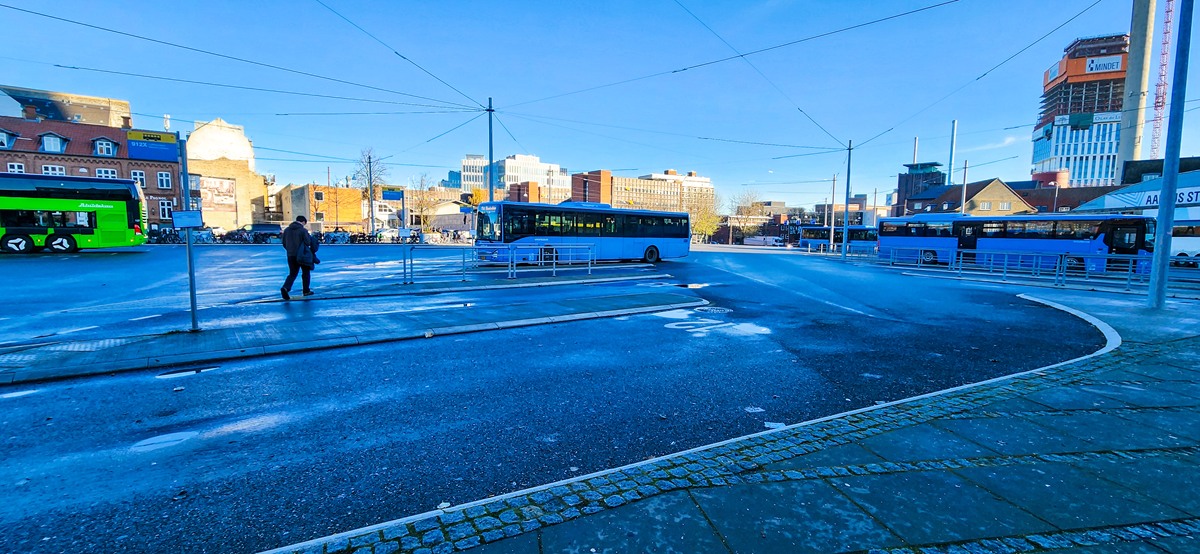
You buy a bus ticket via the Rejsebillet app. It’s very easy and works basically the same as the train, just through a different app. You enter the route and see which buses go there. Check Google Maps for the nearest bus stop and enter it in the app.
After purchasing, show the ticket on the bus; you don’t need to check in or out anywhere.
How far in advance should you buy your train or bus ticket?
I usually bought train tickets a day in advance, but for some short routes, I bought them on the day itself. I had one instance where there were no Orange tickets left, so I paid more. To avoid that, it’s best to book a bit earlier. I sometimes bought bus tickets just 15 minutes before.
Tips for traveling by train through Denmark
- Buy your ticket at least a day in advance; the Orange ticket is usually still available then.
- Travel outside peak hours to save money.
- Find your hotel or Airbnb within walking distance of the train station; it’s fast, cheaper, and easy.

Useful websites and apps for your train trip through Denmark
Omio: for international train tickets
With Omio, you can easily plan and book your train journey in Europe. Within Denmark, it only works well for standard routes, such as Aalborg to Aarhus, but not for more complicated itineraries. You also cannot choose between different fare types. However, Omio is ideal if you want to buy tickets to Denmark, travel between major cities, or take a FlixBus.
Rejsebillet: for bus tickets in Denmark
An essential app if you’re traveling by public transport through Denmark. I used it to plan my routes, and the app is ideal for buying bus tickets. For train tickets, it’s better to use the DSB app. Download the Rejsebillet app here in the Apple Store or on Google Play.
DSB: for train tickets in Denmark
To buy train tickets within Denmark, I recommend the DSB app. You can easily plan your route and buy a ticket here. You have a choice of several fares (see the description above), which you don’t get with other ticket apps. Using the DSB app can therefore be cheaper. Download the DSB app here in the Apple Store or on Google Play.
AllTrails: for hiking routes
AllTrails was an absolute must-have app during my trip. Not only does it help you find the best hiking trails, but it also shows you exactly where they go. It’s much more detailed than Google Maps. With AllTrails, it’s a lot harder to get lost. I used the app for all the hikes I did, like the one in Mols Bjerge National Park and the one in Skagen and Grenen.
DMI Vejr: for weather forecasts
The climate in Denmark is quite changeable, but fairly predictable. I used the DMI Vejr app (download here on Google Play or Apple Store) so I could adjust my plans to the weather. A must when traveling through Denmark.
Exchange rates: XE app
In Denmark, they use the Danish Krone, and it’s quite handy to know what you’re actually paying in your own currency. Download the XE Currency app here on Google Play or in the Apple Store.
Google Maps (offline map)
You probably already have Google Maps on your phone, but if not: definitely download this app before your trip. Don’t forget to download the offline map so you can use it without internet access. You can also find great restaurants, museums, and other sights via Google Maps, including reviews.

Denmark itinerary: my 3-week journey through Jutland
I consciously chose to only visit Jutland and to get to know the places I visited well instead of rushing through. More slow travel, basically. Here you’ll find all the information about my Denmark itinerary.
1. By train from Utrecht to Hamburg (1 night, stopover)
I came from The Netherlands and I chose to do a one-night stopover in Hamburg. I was very happy with that, as the train in Germany had considerable delays (about 2 hours), so I definitely would have missed any connection. And I didn’t want to start my holiday with stress and missed hotels.
I stayed at the very basic ALPHA Hotel Garni, a 5-minute walk from the station in Hamburg. I wouldn’t want to stay there for a week, but for 1 night, it’s a good budget option.
- Hotel: ALPHA Hotel Garni
- Travel time: officially 5 hours, but with delays about 7 to 8 hours.
- Booking train tickets: Omio
2. From Hamburg to Vejle (1 night, stopover)
I started my trip through Denmark in the charming town of Vejle. Again as a stopover on the way to the real first destination of my trip. I stayed in one of the most unique hotels in Denmark: The Note. A green hotel, and I mean really green.
It’s full of plants (even in the room), the walls are green, and on the top floor, there’s a green room with relaxing music and a beautiful view. You’d almost go to Vejle just for this hotel…
I only had an afternoon and evening in Vejle, but I managed to do a surprising amount in that time. Read here what to do in Vejle.

3. Skagen & Grenen (3 nights)
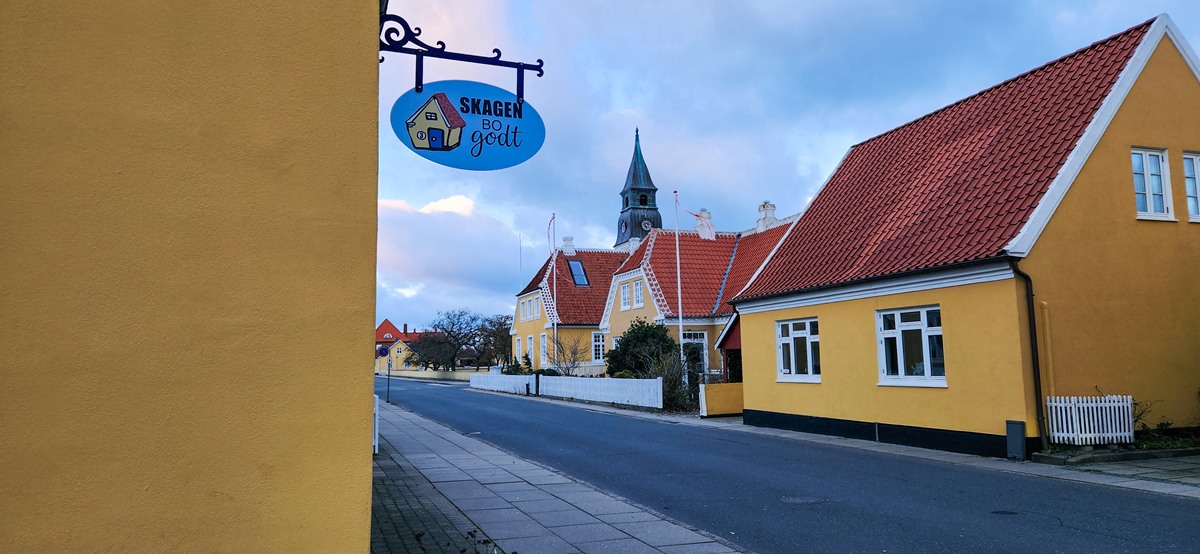
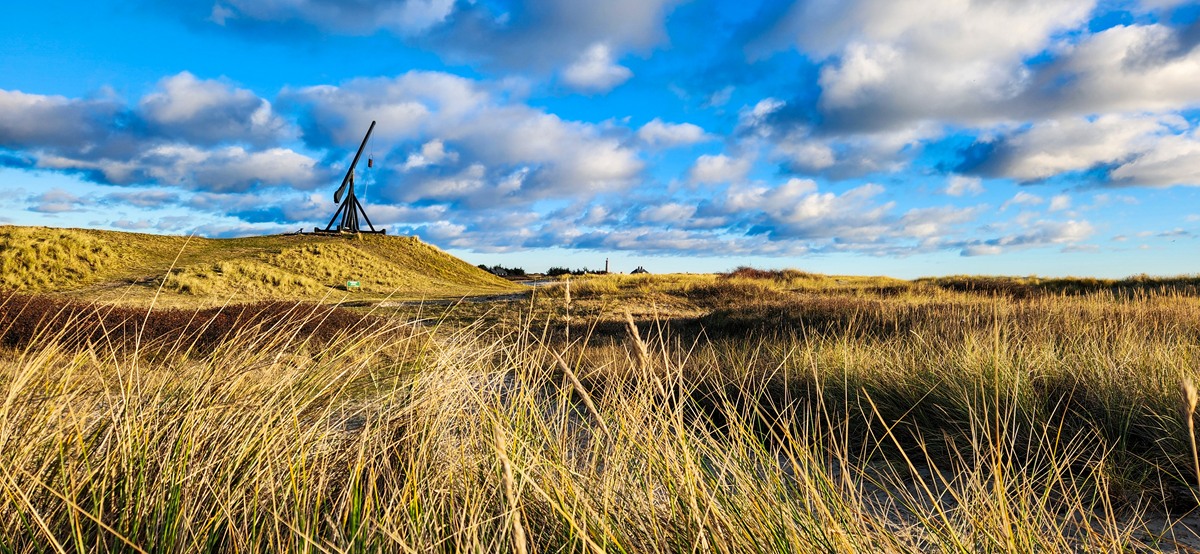
Skagen is the northernmost tip of Denmark, in North Jutland. It’s a bright orange village where you’ll also find Grenen, the place where two seas meet. But there’s much more than that. I found Skagen magical; it was so beautiful. I really enjoyed my time here.
In the summer months, Skagen is a lively village full of activity and tourism, but when I was there, I felt almost alone in the world. The streets were deserted, I was alone during the hikes I did, and several museums were closed.
And yes, I loved it. Such peace, beautiful nature, and truly a lovely place to start my train journey through Denmark.
Click here for all 16 sights and hikes in Skagen and Grenen. And for more information for your visit.
- Hotel: Skagen Bo Godt Kirkevej
- Travel time Vejle – Skagen: 4 hours, with a transfer in Aalborg
- Buy your train ticket: DSB app (download in the Apple Store or on Google Play)

4. Aalborg (3 nights)
Aalborg is the largest city in North Jutland and great for a cozy city trip. Although the city is a lot smaller than Aarhus (no. 6), there’s a surprising amount to do.
Think interesting museums, charming shopping streets, beautiful street art, cozy Christmas markets (from late November), and streets full of colored houses. For me, this was also the perfect stopover between Skagen and Ebeltoft.
You actually need more than 3 nights to see everything. A reason for me to go back again.
Click here for all the sights in Aalborg. And for more information about a city trip.
- Airbnb
- Travel time Skagen – Aalborg: 2 hours, with a direct train
- Buy your train ticket: DSB app (download in the Apple Store or on Google Play)

5. Ebeltoft (4 nights)
I loved Ebeltoft. What a cozy, cute village. It was very quiet, almost deserted, due to the low season, but apparently this is different in the summer months. I really enjoyed it here. The atmosphere, the cute colored houses, and the beautiful nature.
I visited many museums and hiked more than 30 kilometers in the Mols Bjerge National Park (click the link for 3 hiking routes). Ebeltoft is the perfect base for Mols Bjerge, and it’s also easy to do if you’re traveling by public transport.
No trains run to Ebeltoft, but there’s a direct bus from Aarhus.
Take your time for Ebeltoft: this is a village you’ll want to savor.
Click here for all the sights in Ebeltoft and more information.
- Airbnb
- Travel time Aalborg – Ebeltoft: 1 hour and 45 minutes by train and then 1.5 hours by bus, almost 4 hours in total
- Buy your train ticket Aalborg – Aarhus: DSB app (download in the Apple Store or on Google Play)
- Buy your bus ticket Aarhus – Ebeltoft: Rejsebillet App (download in the Apple Store or on Google Play)
- Bus line: 123, departure from the Aarhus Rutebilstation


6. Aarhus (4 nights)
Aarhus is such a great city! To be honest, I liked Aarhus more than Copenhagen. It’s lively, there are many cozy eateries and cafes, and lots of great museums to visit. But it’s more easygoing than Copenhagen. Cozier. But with a city feel. Plus, Aarhus is a lot less touristy, which I personally find very nice.
And going to Aarhus for Christmas is a great idea. So cozy. Nice Christmas markets, beautiful decorations, and a lovely atmosphere in the cold. Highly recommended!
So I certainly wasn’t bored during my 4 days in Aarhus. And I really enjoyed what the city has to offer.
Click here for all tips and things to do in Aarhus.
- Airbnb room
- Travel time Ebeltoft – Aarhus: 1.5 hours by direct bus
- Buy your bus ticket Ebeltoft – Aarhus: Rejsebillet App (download in the Apple Store or on Google Play)
- Bus line: 123



7. Ribe (4 nights)
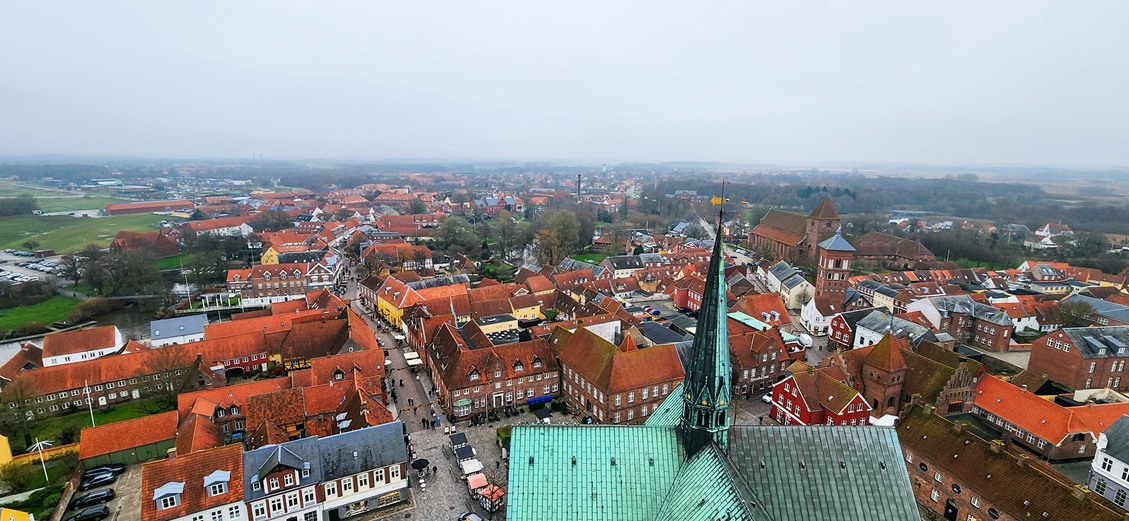
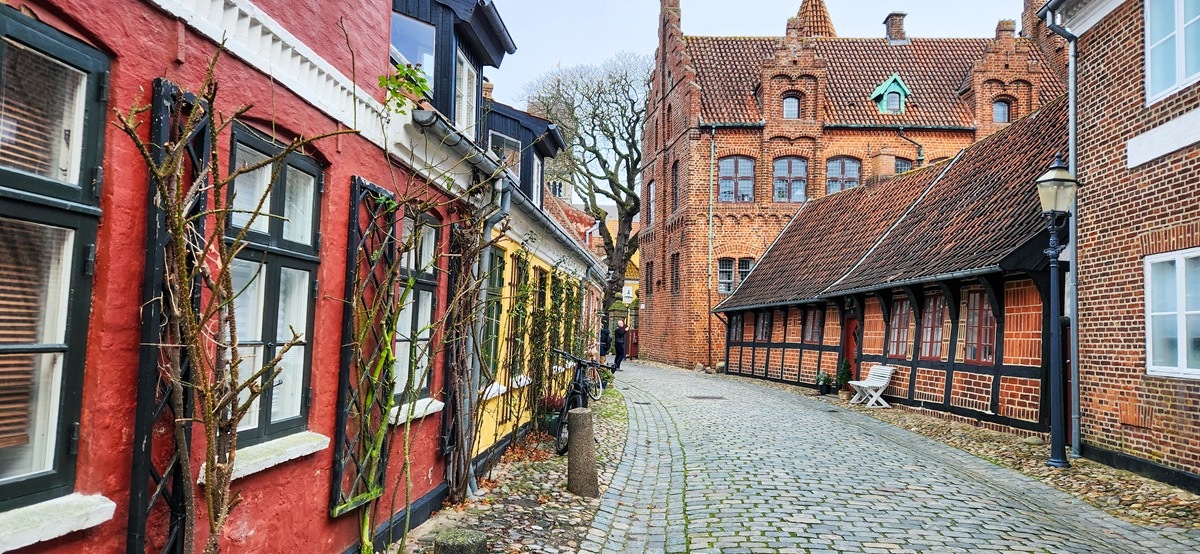
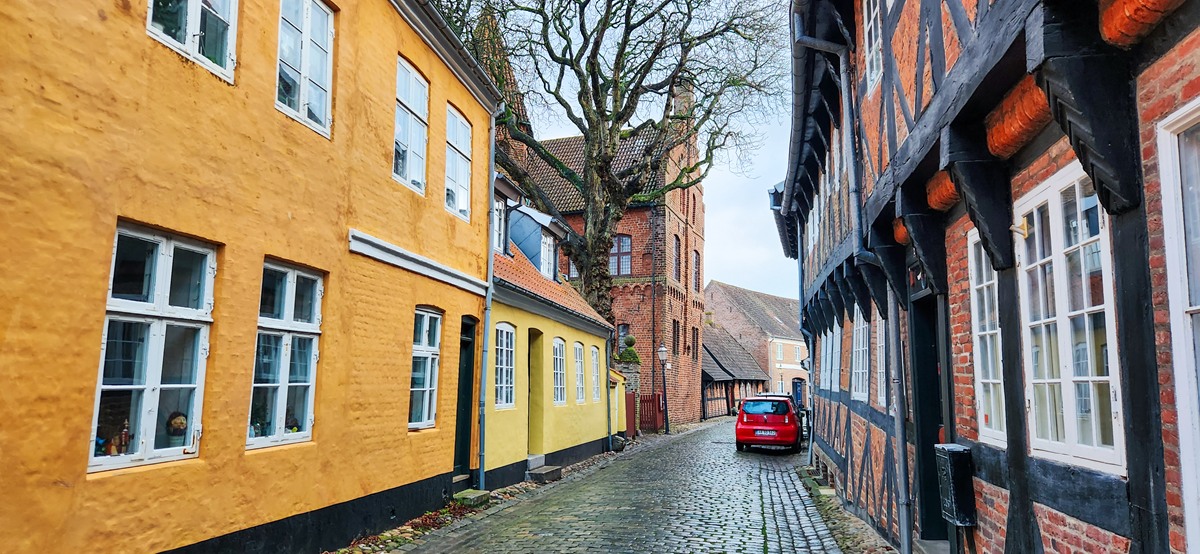
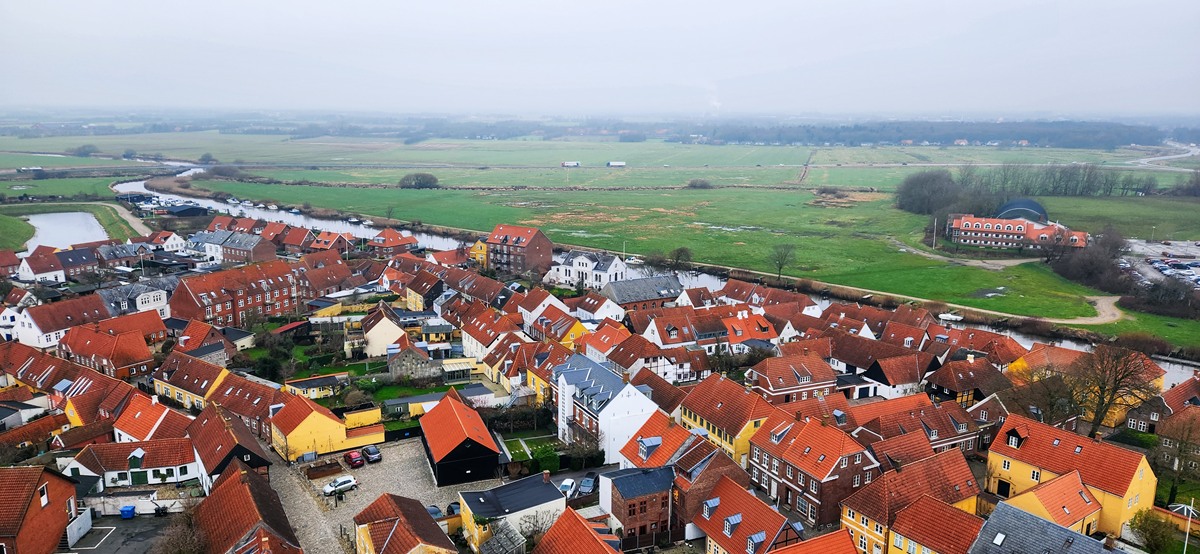
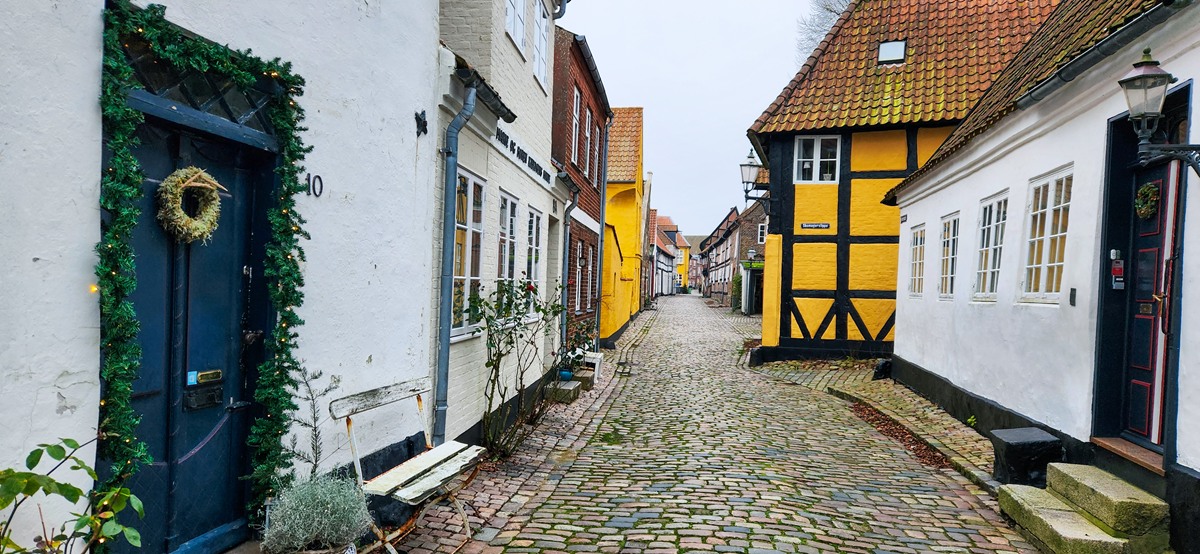
Ribe is a real gem, what a beautiful town. It’s like walking through an open-air museum, it’s that pretty. Ribe is the oldest city in Denmark, or actually in all of Scandinavia. A real must-see during your trip through Denmark.
Ribe is bursting with beautiful streets, colored houses, interesting museums, stunning views from Ribe Cathedral, charming shopping streets, a nice Christmas market (from late November), many art shops and studios, and cozy restaurants and cafes.
And as if that weren’t enough, Ribe is also the perfect base for exploring the surrounding area. For example, you can head to the Wadden Sea area from here. But you’ll also find beautiful nature and walks in Ribe itself.
Click here for 18 tips on things to do and see in Ribe and the surrounding area. And for more information.
- Airbnb
- Travel time Aarhus – Ribe: Depending on which route you choose. I traveled from Aarhus to Bramming and from Bramming to Ribe, about 3 hours in total. But there are more ways with other transfer locations. There is no direct train from Aarhus to Ribe
- Buy your train ticket Aalborg – Aarhus: DSB app (download in the Apple Store or on Google Play)
8. Tønder (1 night, stopover)
I decided to stay one night in Tønder and travel back to the Netherlands from there. That saves an hour compared to going directly from Ribe. Plus, Tønder turned out to be a very cozy town with a lively Christmas market, charming restaurants, and nice shops.
I was only in Tønder for an afternoon, and that was enough to get a good first impression.
From Tønder, I left early in the morning for the Netherlands, a long journey of over 11 hours, with transfers in Duisburg and Utrecht. I booked first-class tickets for this trip, which was only 20 euros more expensive and very nice on such a long journey.
- Hotel: Motel Apartments
- Travel time Ribe – Tønder: 50 minutes
- Travel time Tønder – Alphen aan den Rijn: over 11 hours, with a half-hour delay in Germany
- Book train tickets: Omio

The best time to visit Denmark
I always say: there’s almost never a single best time to travel. It depends on what you want. If you prefer warmth, it’s best to go to Denmark between June and September. If you want to experience the Danish Christmas atmosphere and don’t mind the weather, you should be in the country between mid-November and late December. If you want to experience a real winter, go between January and March. If you want guaranteed heat and sun, don’t go to Denmark.
In Denmark, it can rain anytime, no matter which month you go. So for the rain, it doesn’t matter much.
Personally, I find it more important that a place isn’t overrun by tourism, so I like to travel outside the high season. If that’s important to you too, it’s better to avoid the months of July and August.
Things to keep in mind if you go to Denmark in winter
It’s good to know that not everything is open if you go to Denmark on holiday outside the high season. Think museums, some hotels, and certain restaurants. As a result, I missed a few museums in Skagen and couldn’t go to the famous VikingeCenter in Ribe. Did I mind? Not at all; plenty of museums, restaurants, and hotels are open. So no problem for me. And a good reason to come back again.
But it’s wise to check in advance if the museums or other places you definitely want to visit are open in the month you plan to go.
It also often happens that museums are only open on weekends during the winter months; you can adjust your planning accordingly.
Is it safe to travel solo as a woman in Denmark?
Yes, it is absolutely safe as a solo female traveler in Denmark. Now, safety always feels a bit different to me because I’ve lived in a less safe environment for years where I always have to be alert. So even in Denmark, I had to get used to being alone on a long hike. But I soon noticed that safety in Denmark, at least in Jutland, is very much taken for granted.
Of course, as a woman alone, it’s always good to keep in mind that you are alone and therefore (unfortunately) more vulnerable. Although Denmark is very safe, something can always happen, including things that have nothing to do with crime. Falling off a rock, for example, or spraining something so you can’t go any further. It’s always good to go on a trip prepared.
This is how I prepared:
- I gave my entire itinerary to family members, including train departures and arrivals and links to my accommodations. For longer hikes, I sent the route in advance and let them know when I was back in the village.
- I consciously didn’t book Airbnbs where only a man was in the house. It might be fine, but it felt more comfortable for me.
- I also didn’t walk alone on the streets in the middle of the night, but I don’t usually do that anyway.
- Always have internet access. I used a Dutch SIM card, but you can also install an e-sim so you can always reach someone.
- Downloaded offline map on Google Maps. That way you always know where you are and where you need to go.
- I had this power bank with me so I could always charge my phone.


Is Denmark really that expensive for a holiday? | My expenses
Yes, Denmark is expensive, but you can make it as expensive as you want. If you travel alone, overnight stays are especially pricey because you can’t share the costs. But I have to say I didn’t actually find the costs for hotels and Airbnbs in Denmark that high. And the quality was super good . Perhaps also because I traveled in the low season.
Here’s an overview of my travel costs in Jutland (these are low-season prices from late 2025).
How much does traveling by train in and to Denmark cost?
Traveling to and through Denmark by train was very cheap. From Alphen aan den Rijn to Hamburg cost €43.49, from Hamburg to Vejle €30.49, and from Tønder back to Alphen aan den Rijn €100.89 (a journey of over 11 hours and first class). In total, I traveled to Denmark for €175 (203 USD), round trip.
All train journeys as described in the 3-week itinerary together cost exactly €142 (165 USD).
For all transport to, from, and in Denmark combined, I therefore spent a total of €317 (368 USD).
How much does accommodation cost in Denmark?
I picked out some really lovely hotels and Airbnbs, every single one of them. Except for those in Hamburg and Tønder, which were very basic. In all my accommodations, I had a private bathroom, and except for Hamburg, Vejle, and Tønder, also a kitchen to be able to cook for myself. It was absolutely worth the money.
- 1 night Hamburg: €97.75
- 1 night Vejle: €97 (including breakfast)
- 3 nights Skagen: €211
- 3 nights Aalborg: €295.99
- 4 nights Ebeltoft: €297.61
- 4 nights Aarhus: €296.82
- 4 nights Ribe: €375.19
- 1 night Tønder: €84.60
Total spent on accommodation: €1,755.96 (2040 USD).
How much do museums cost in Denmark?
Museums in Denmark are expensive, but I just love going to a museum. So I didn’t skimp on that. In total, I spent €227 (264 USD) on museum entrance tickets during my 3-week tour.
How much does food cost in Denmark?
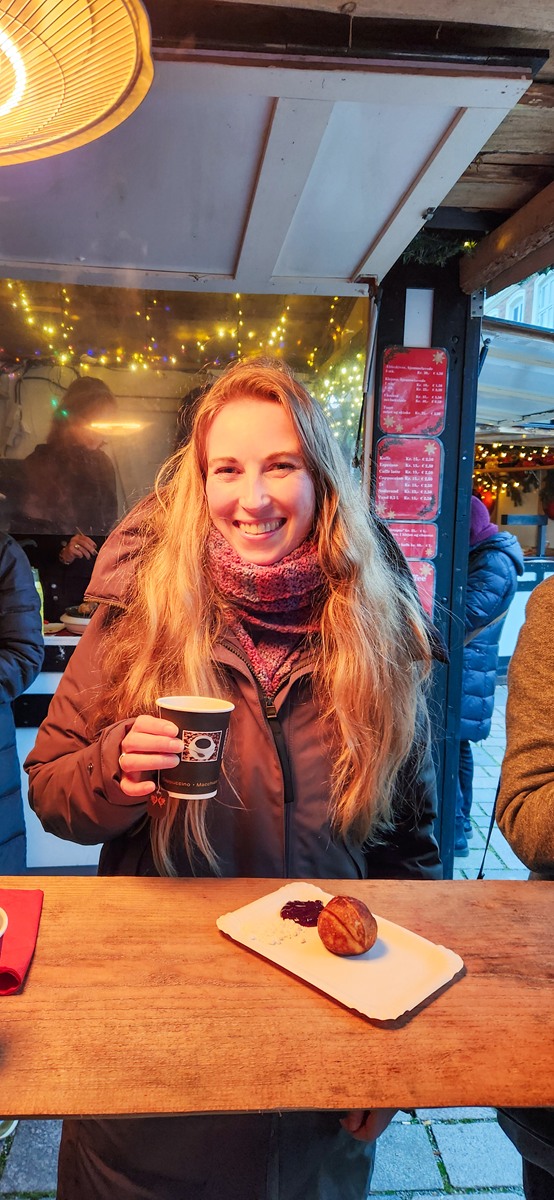
Eating out in Denmark is expensive, which is why I prepared as much as possible myself. There are supermarkets everywhere where you can get everything. In total, I spent €525 (610 USD) on food. And by that, I mean everything: breakfast, lunch, teas, chocolates, glögg at the Christmas market, sandwiches for on the go, food from the supermarket, dinner, eating out in a restaurant. Everything. That comes down to an average of €23.8 (27 USD) per day over 22 days.
I should add that I had two expensive days in Aarhus. For example, at the Moesgaard Museum, I spent almost €50 on lunch and dinner, and in Den Gamle By, all the food cost almost €35. So if you don’t count those, you end up with even less than €23 per day. Making my own food and getting sandwiches from the bakery saved me a lot of money.
Total: how much did my 3-week train trip through Denmark (Jutland) cost?
- Public transport to, from, and in Denmark: €317 (368 USD)
- All accommodation: €1,755.96 (2040 USD)
- Museums in Jutland: €227 (264 USD)
- All food: €525 (610 USD)
The total cost of my 3-week trip through Denmark: €2,825 (3282 USD; low season late 2025).

How to save money on your trip through Denmark
- Make your own food. In 3 weeks, I only bought my dinner in a restaurant once. For the rest, I mostly cooked for myself and picked up a meal salad a few times. I did eat lunch in a restaurant more often, but certainly not everywhere. For breakfast, I always got rolls from the bakery; it saves a lot of money and is very tasty.
- Travel by public transport. That saves on petrol and parking costs, which in Denmark are definitely higher than traveling by train and bus.
- Do good research on where you stay. It can be a lot more expensive, and also cheaper. I could have stayed in hostels, but I didn’t want to. I think my hotels and Airbnbs were a very good price for the location; it can definitely be more expensive.
- Travel in the low season.
- Going in the high season? Then book far in advance. The more tourists, the faster the best and cheapest hotels, hostels, Airbnbs, and campsites are gone. If you book later, you’ll pay more.
- Choose consciously which museums you want to visit. Museums in Denmark are quite expensive. Usually between 15 and 25 euros. I went to many museums, but if that’s not your thing, you can save on that. Only go to museums you really want to see.
- Choose your destination consciously. The absolute most expensive destination of my trip was Aarhus. Everything seemed more expensive here: the food and the museums. Funnily enough, I did find the cheapest Airbnb of my whole trip here (which was also very good), but otherwise, everything was expensive. You’re cheaper off in villages and cheapest in less touristy destinations.
My packing list for Denmark: handy things to put in your suitcase
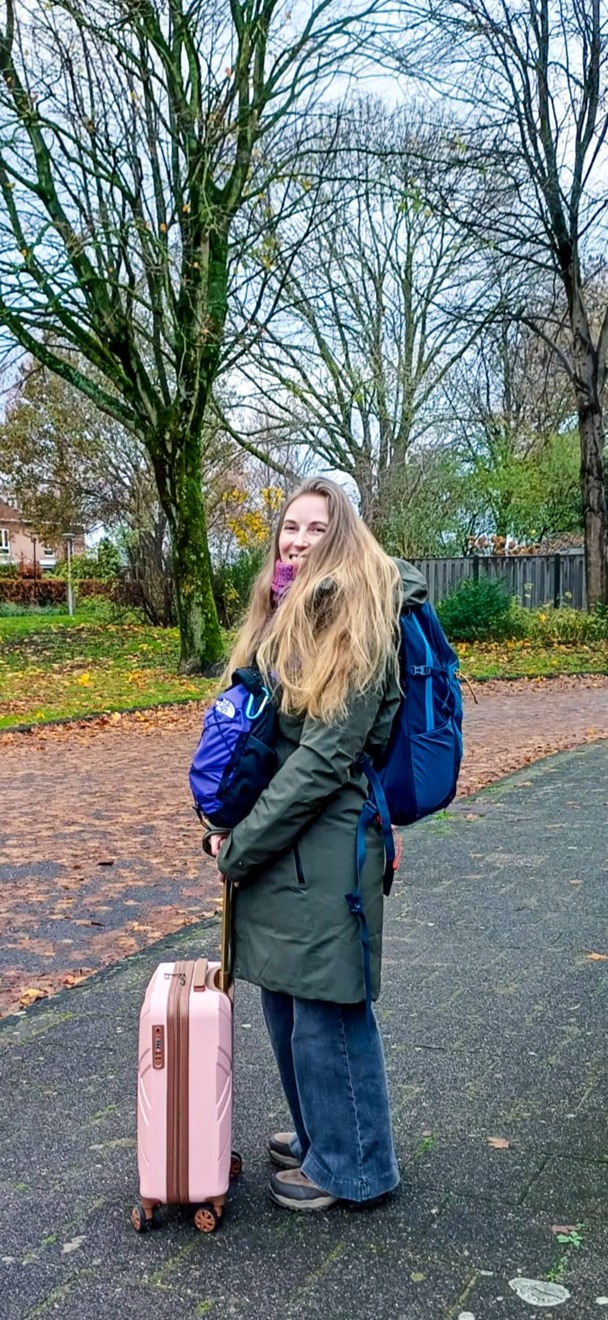
I traveled for 3 weeks with only hand luggage: a small suitcase and my backpack. That’s very little, but perfectly doable. This is what I took with me:
- 1 pair of shoes: the shoes I was wearing. I thought: if they break, I can always buy new ones in Denmark.
- Few clothes: 1 warm sweater, 3 t-shirts for underneath, 2 sets of thermal clothing, 1 blouse, 5 pairs of hiking socks, 2 pairs of trousers (one of which I was wearing).
- Laundry strips. Truly a must for every trip. I washed the few clothes I brought with me several times, and laundry strips are ideal for that. They are not only eco-friendly (because there is no plastic, including no plastic packaging), but also very lightweight. They are basically just slips of paper with detergent on them. Easy to take with you and suitable for both hand washing and the washing machine. You can buy laundry strips at bol.com (I have these from Cosmeau) or Puur Mieke.
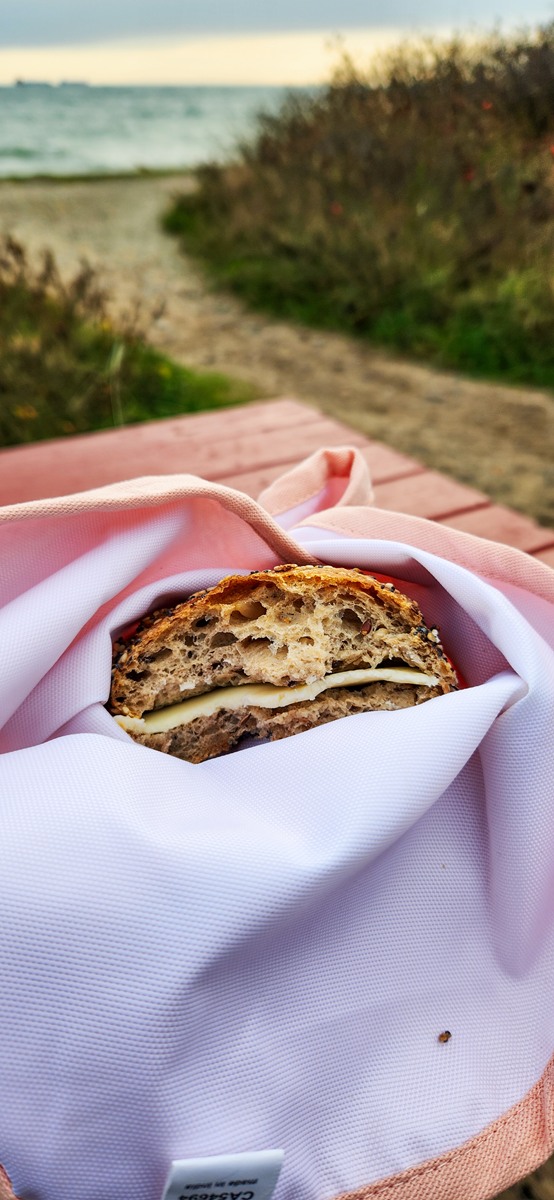
- Lunch wraps. A handy and eco-friendly way to carry your lunch. A kind of cloth or fabric pouch that you can reuse over and over. Fantastic for taking your lunch and snacks along on hikes. I used this lunch wrap from Waar.
- Shampoo bar and conditioner bar. Also sustainable and easy to take with you. No hassle with plastic shampoo bottles that leak and take up more space. You can buy soap bars at Happy Soaps or Wondr.
- Small bamboo hairbrush. I use a large brush at home, but for traveling, a mini hairbrush is much nicer. I use this small hairbrush from Bamboozy.
- Water bottle. You can drink the tap water in Denmark and refill your bottle every day. It saves money and is eco-friendly. These from Say What Bottles, for example.
- Power bank. Essential for every trip. I use the ANKER PowerCore Essential 20K.

Through Denmark by train? Yes!
I had an amazing trip through Danish Jutland. Wonderfully solo, enjoying getting to know the friendly Danes, discovering beautiful cities, taking stunning walks in nature, and enjoying the Danish hygge. I definitely want to go back to see more.

This article contains affiliate links. If you click on one of these links and purchase something, I will receive a small commission for it. The price remains the same for you. This helps me to create new content and maintain my website.
