


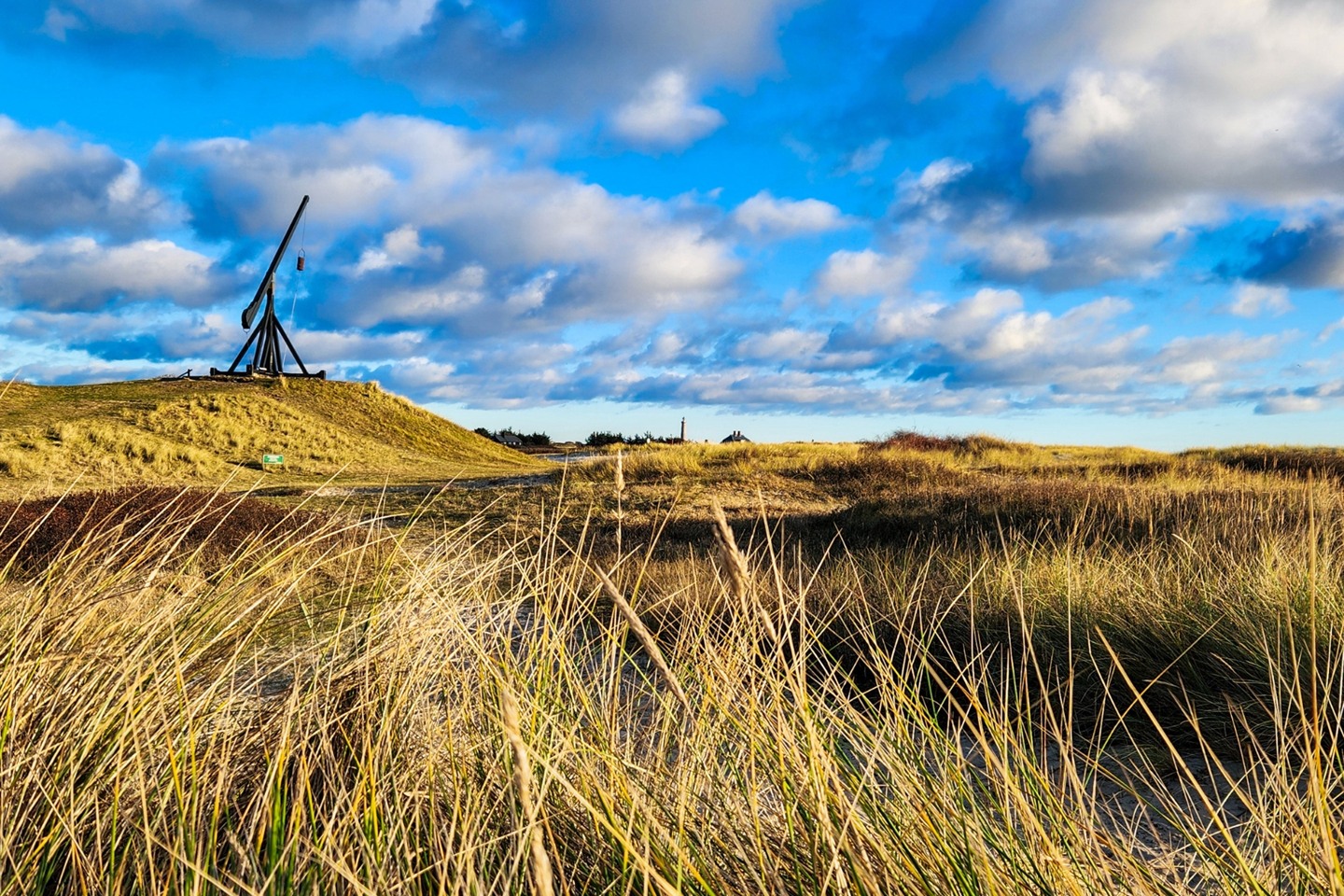
Way up in the north of Denmark, in North Jutland, lies Skagen. A beautiful yellow-orange village with many museums, galleries, endless beaches, and impressive nature. Including, of course, the famous Grenen, where you can see two seas meet. Skagen was a highlight of my solo train journey through Jutland. A place I definitely want to return to so I can see more. Because getting bored is very difficult here. In this article, you’ll find all my best tips for a fantastic holiday in Skagen.
Table of contents
A bit of history: why Skagen is so special
For centuries, Skagen was primarily a fishing village. Life revolved around the sea: fishing, storms, and shipping. But Skagen had something else: extraordinary light. That’s why a group of artists moved there in the late 19th century. They are also known as the Skagen Painters. You can learn all about them in the museums in Skagen. This gave Skagen an artistic status that you can still feel today. The small village is bursting with interesting museums, studios, and galleries. It really is an art town by the sea.
Additionally, Skagen is famous for its location. Being at the northernmost tip of Denmark, in Jutland, it feels different here than in the rest of the country. Because of its location, you’ll find several attractions that draw many tourists, including the beautiful dunes, the famous buried church, and of course, Grenen.
In Skagen, everything comes together: nature, culture, architecture, art, and great food.

What is Grenen?
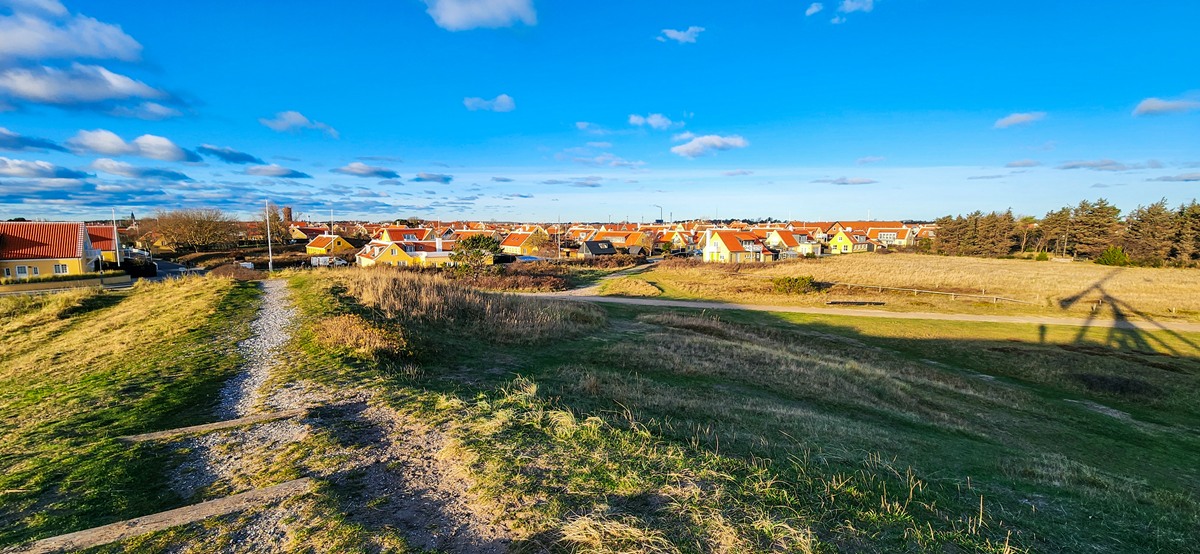
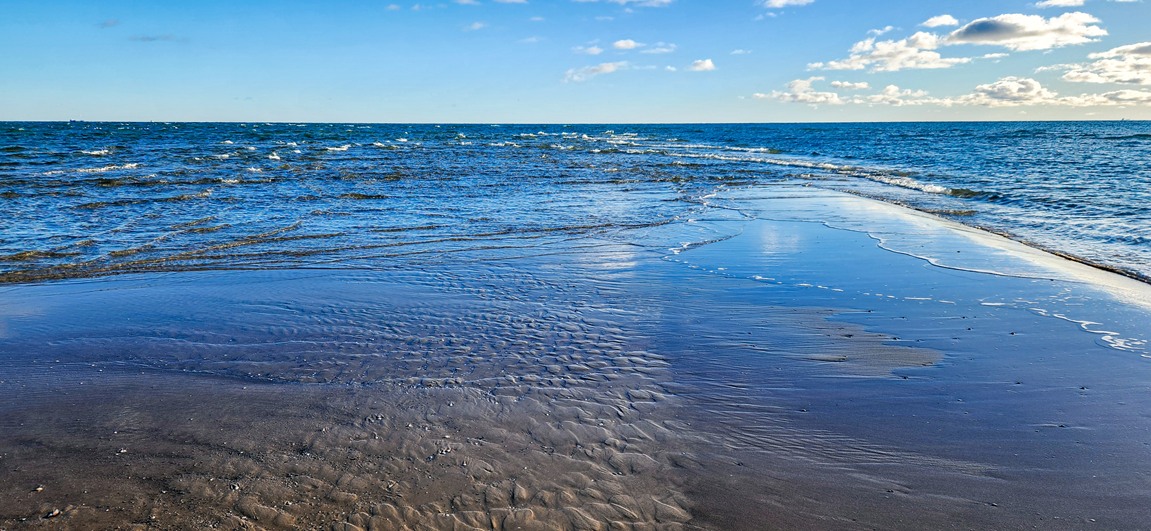
At the northernmost tip of Denmark, you’ll find Grenen. Grenen is a sandbar where two seas meet: the Skagerrak (North Sea area) and the Kattegat (Baltic Sea). I didn’t expect much beforehand, but standing there, I found it quite special to see those waves from different directions crashing into each other.
Besides that, Grenen is much more. You’ll find old bunkers, beautiful sandy beaches, and miles of hiking trails. I also went on a wonderful walk in Grenen, but more on that later (no. 14).
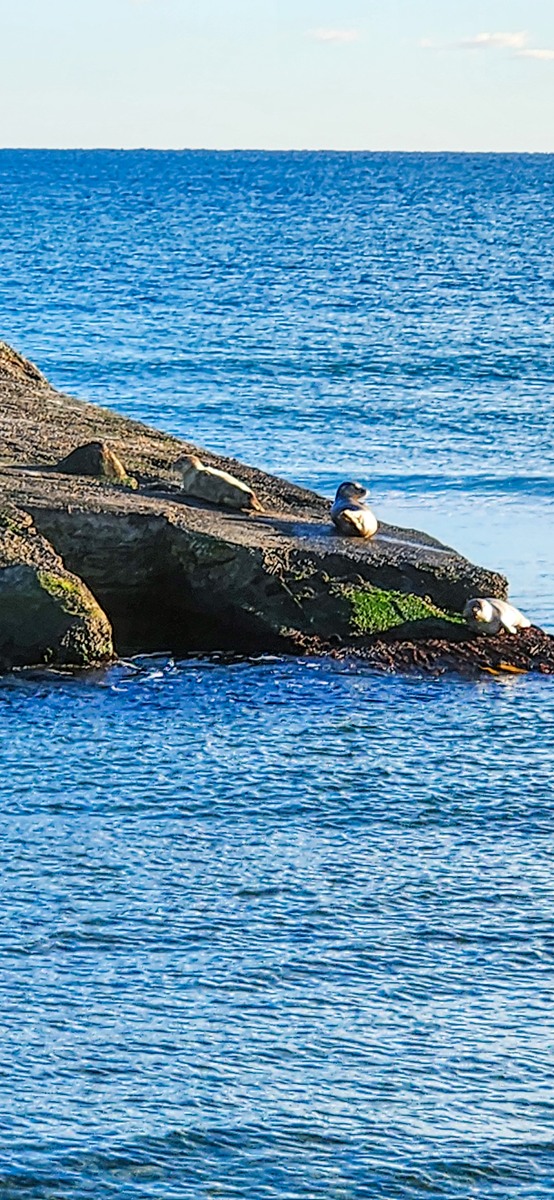
And as if that weren’t enough, you can also spot seals there. I was lucky enough to see some, even in winter. Very nice.
16 Sights in Skagen and Grenen
Although Skagen is small, there is an incredible amount to do and see. Below are 16 sights in Skagen, including location and information on entrance fees and opening hours. Please note: several museums are closed during the winter months. I’ve noted which ones those are. This list includes everything, including beautiful hiking trails and nature reserves. I found Skagen truly impressive; take the time to enjoy it!
I’ll let you in on my favorites in Skagen: they are numbers 1, 2, 5, 12, 13, and all the hikes. These are my absolute must-sees in Skagen.
The sights are listed by location: starting north of Skagen at Grenen, then the center of Skagen, then south of Skagen, and finally hikes around Skagen.

1. Grenen: a must-see where two seas meet
Grenen is the northernmost tip of Denmark and the ultimate must-see in northern North Jutland. Here, two seas meet: the Skagerrak and the Kattegat. You can see this by the waves crashing against each other. Pretty amazing.
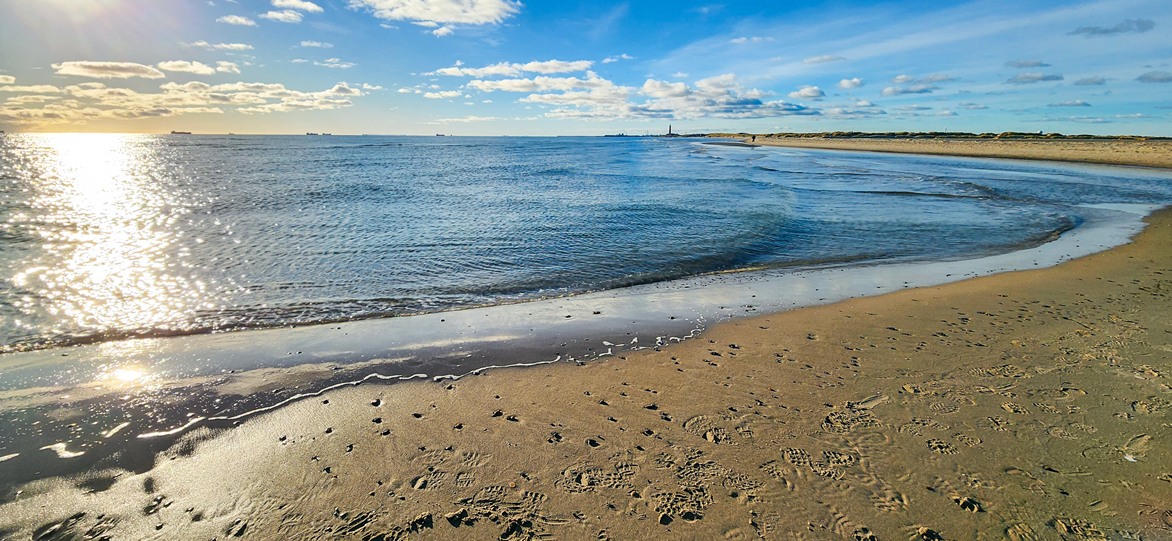
If you come by car, the walk to Grenen starts at this parking lot. From there, you take a beautiful walk across the beach to the northernmost tip of Denmark. Keep a close eye on your surroundings, because if you’re lucky, you’ll encounter seals.
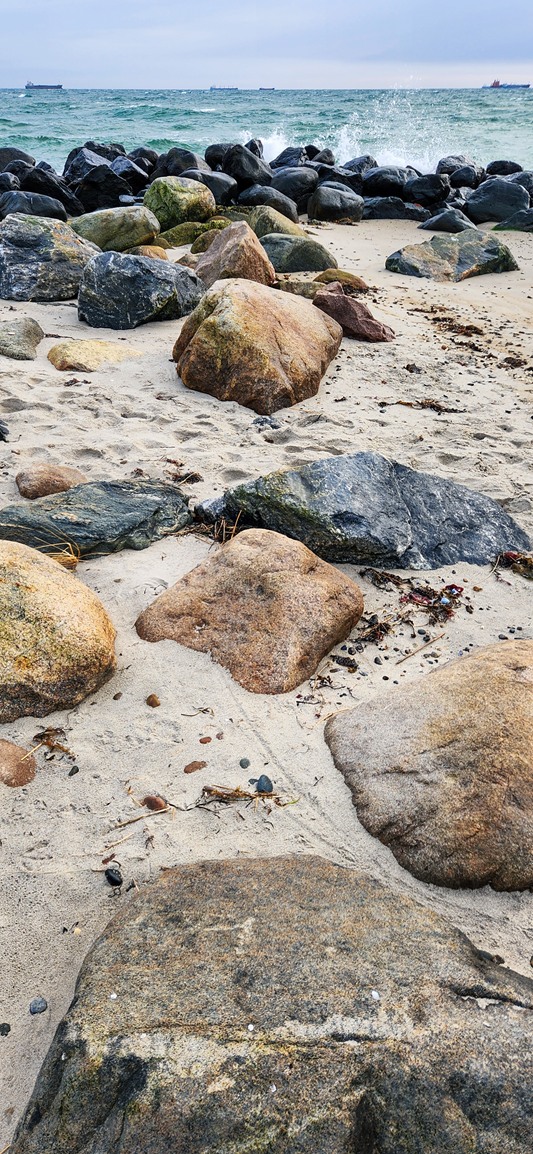
I didn’t have a car, so I walked the route from Skagen. A beautiful route that I can definitely recommend. You first pass Skagen’s Vippefyr (no. 2), a lovely spot with a great view over Skagen on one side and Grenen on the other. After that, you walk across the beach and through the dunes, passing bunkers from World War II. I found it a unique experience. If you want to know more, you can also visit the Bunker Museum (no. 3).
Next, you’ll pass the lighthouse (no. 4), which you can climb for a stunning view.
After the lighthouse, you reach the parking lot, and it’s just a short walk from there. From that point, you’ll notice it’s a major tourist attraction. I hardly saw any tourists, or people at all, in Skagen (I was there in late November), but exactly at this point, there were quite a few visitors. In the summer months, it’s likely very crowded here. If you want to avoid the crowds, come outside the peak season, early in the morning, or later in the day.
After visiting Grenen, I didn’t walk back the same way but added a beautiful hike to it right away. Highly recommended if you want to get into nature and see more than just Grenen. You can find the hike under number 14.
You can find Grenen here on the map.
2. Skagen’s Vippefyr: a beautiful view
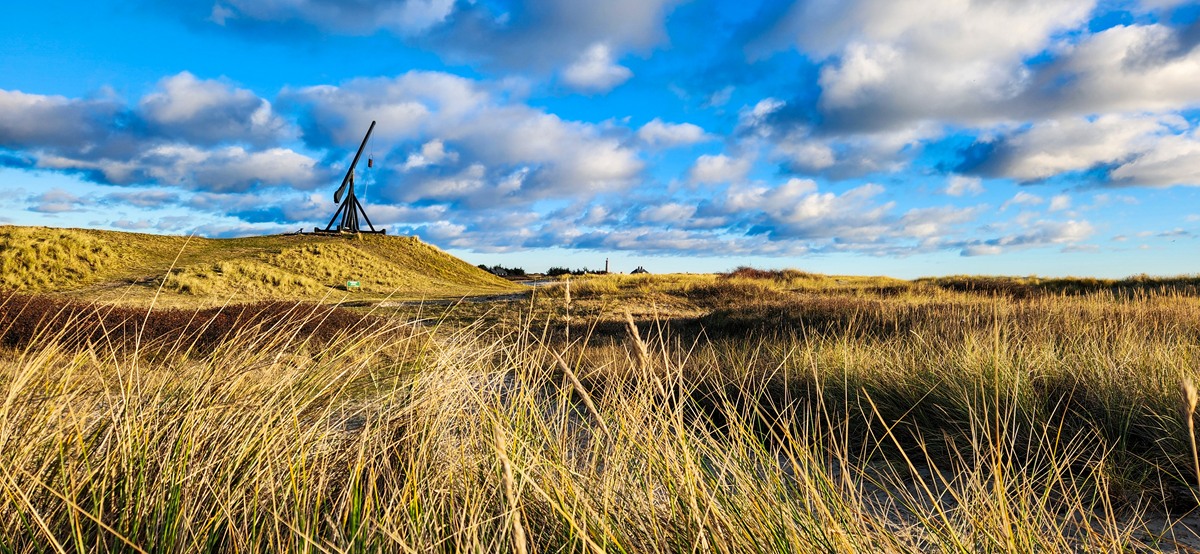
I thought Skagen’s Vippefyr was a beautiful spot; I sat there for quite a while and came back again later. The weather was beautiful when I was there—cold but sunny—and the view was impressive.
The Vippefyr in Skagen is a historic bascule light, built in 1747, which guided ships safely through the Skagerrak. The Vippefyr stands on a high dune, from which you have a fantastic view of the picturesque surroundings and the sea.
Find the Vippefyr here on the map.
3. The bunkers of Skagen and the Bunker Museum
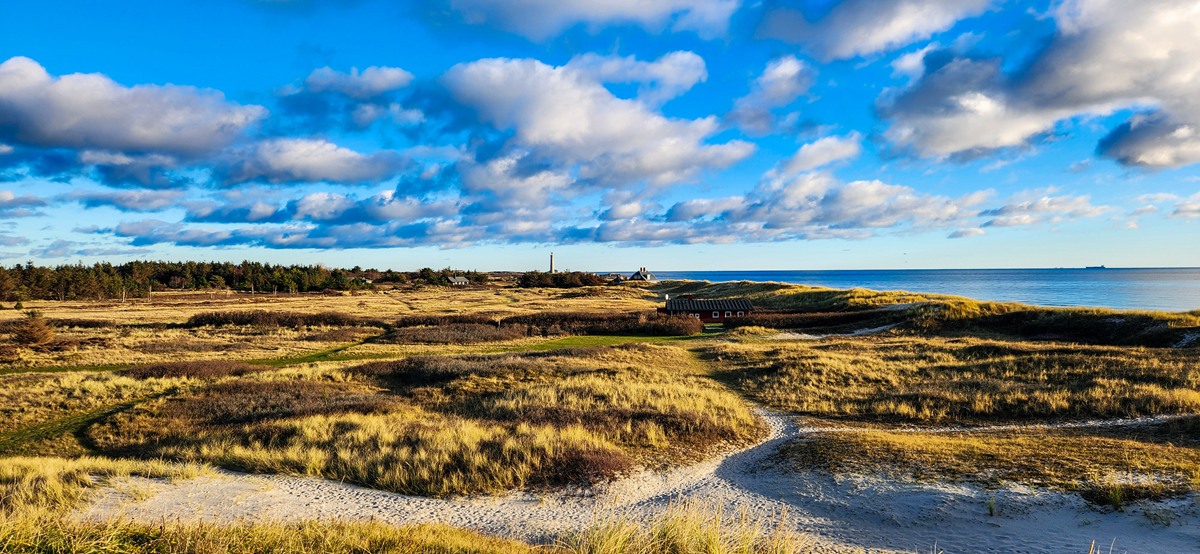
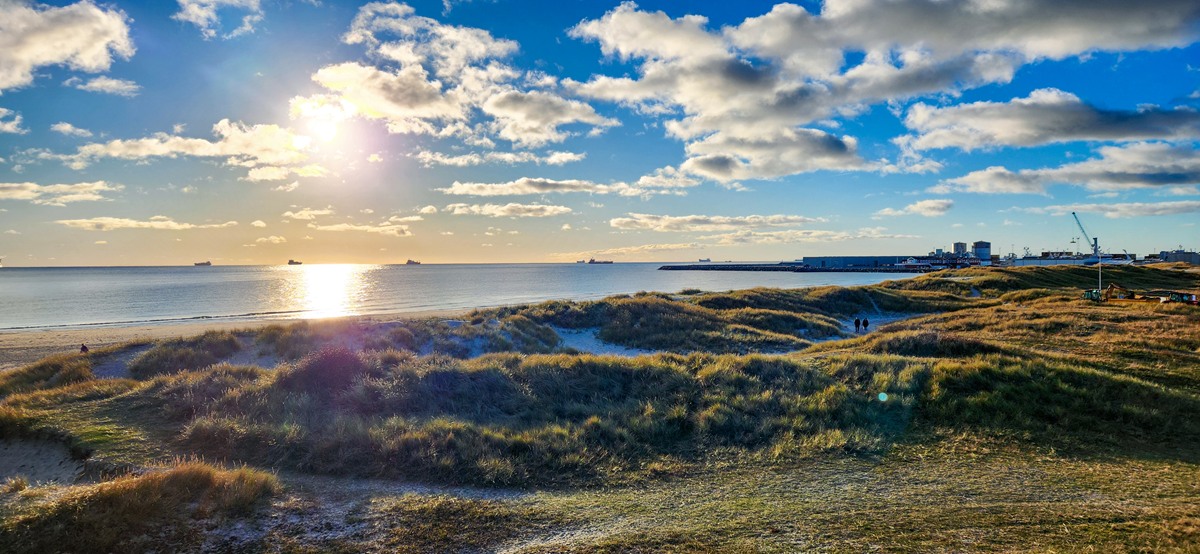
If you walk from Skagen to Grenen along the beach, you’ll pass bunkers from World War II. These are impressive traces of the so-called Atlantic Wall, a defensive line over 5,000 kilometers long built by Nazi Germany during WWII along the west coast of occupied territories in Western Europe.
The Atlantic Wall ran from Norway, through Denmark, Germany, the Netherlands, and Belgium to France, all the way to the Spanish border. In Denmark, about 7,000 bunkers were built, 1,800 of which were large, heavy bunkers. At this point near Skagen and Grenen, there were once 61 large bunkers; only a few remain today. It’s definitely worth walking past them. It’s quite impressive.
Find these bunkers here on the map.
Further along, near the parking lot to Grenen, is the Skagen Bunker Museum. I didn’t visit because it’s closed in winter, but it’s said to be an interesting museum. It’s located in an old German bunker of the Regelbau 638 type, which served as an infirmary for wounded soldiers during WWII. It’s a small war museum with uniforms, weapons, and other artifacts. Great to visit if you want to learn more about the German bunkers along the west coast of North Jutland.
Find the Skagen Bunker Museum here on the map.
You can find the opening hours here. Note: it is closed during the winter months.

4. The lighthouse in Skagen: Det Grå Fyr
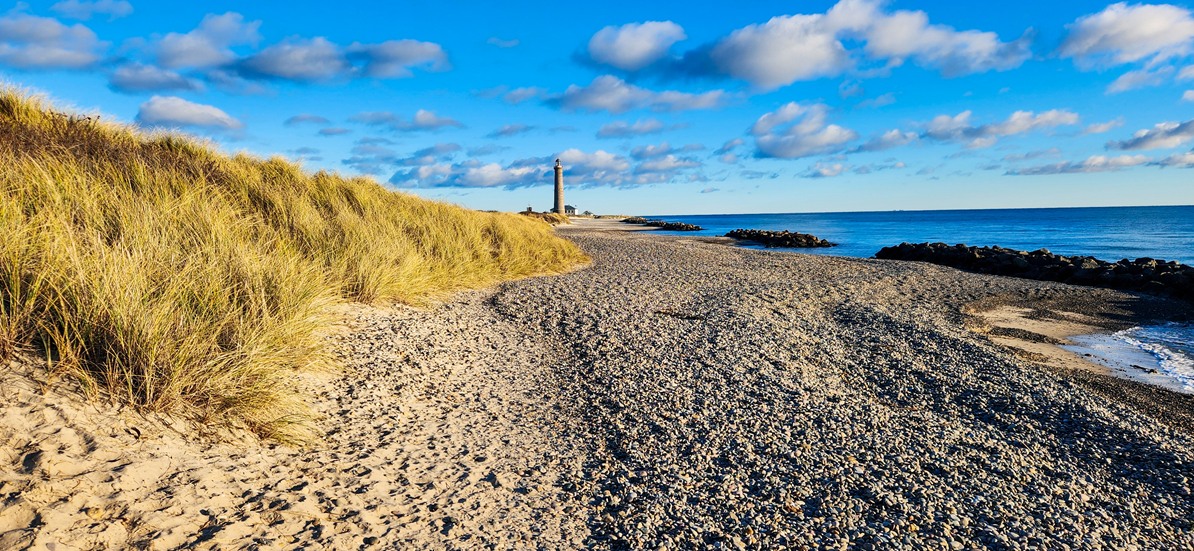
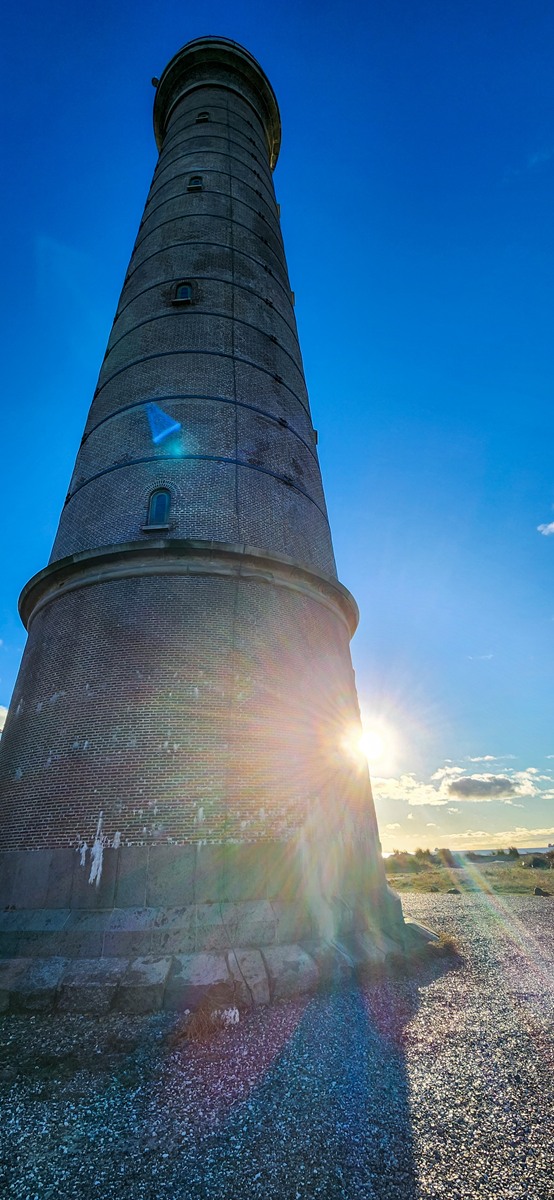
Det Grå Fyr is the tallest lighthouse in Denmark and is great if you love beautiful views. The Grey Lighthouse is an active lighthouse 4 kilometers northeast of Skagen, near Grenen. The lighthouse dates back to 1858 and replaced the White Lighthouse that stood there previously. The Skagen Lighthouse is 46 meters high and is open to the public year-round.
In 2017, the international bird center Skagen Grey Lighthouse, Center for Migratory Birds, was added next to the lighthouse. Skagen and the area around Grenen are known for their great diversity of migratory birds, making the lighthouse a perfect spot for birdwatching.
Find the lighthouse here on the map.
Click here for more information and opening hours.


5. Skagens Museum: a must-see
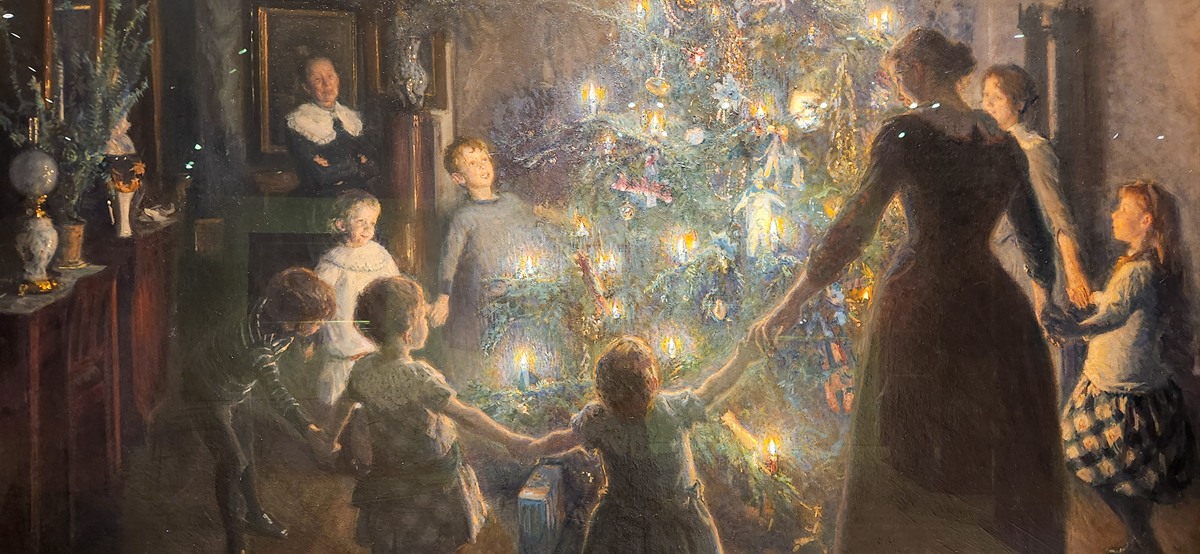
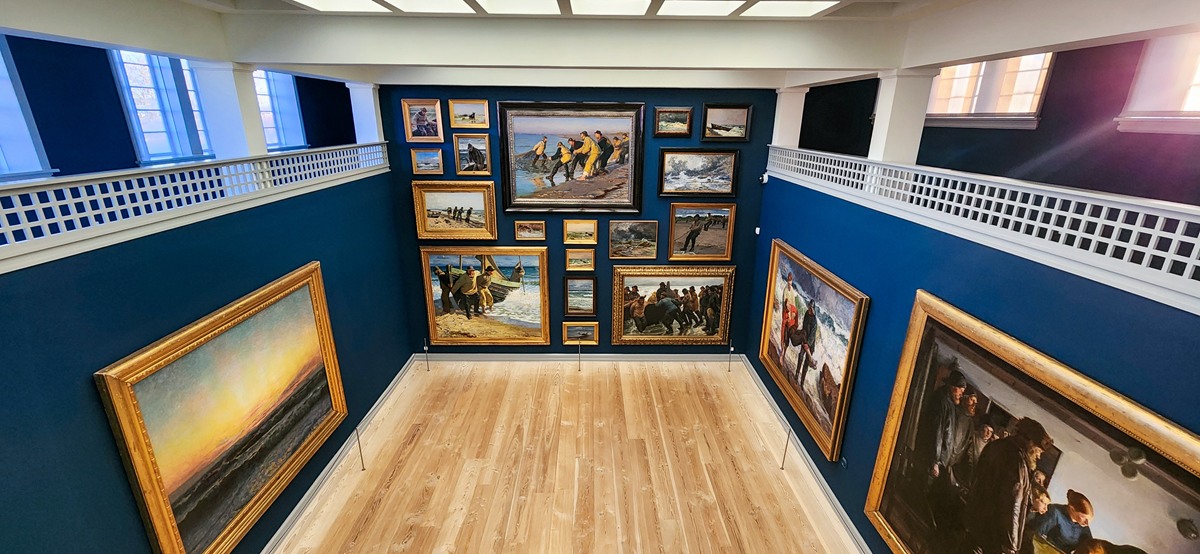
I honestly think the Skagens Museum is one of the most beautiful museums I’ve visited in Denmark. I spent a long time there enjoying the beautiful Danish paintings. In this museum, you can see the works of the Skagen Painters and learn why the light and life here attracted artists so much. I immediately learned all about Danish painters, whom I could later recognize in other museums in different parts of Jutland.
If you have to choose just one art museum while in Skagen, go to this one. And if you have time for two, combine it with the interesting Coastal Museum (no. 6).
Take your time for the museum, especially if you love art. Two hours will fly by…
- Find the Skagens Museum here on the map.
- Click here for opening hours. Note: the museum is closed for part of January and February.




6. The Kystmuseet Skagen (Coastal Museum)
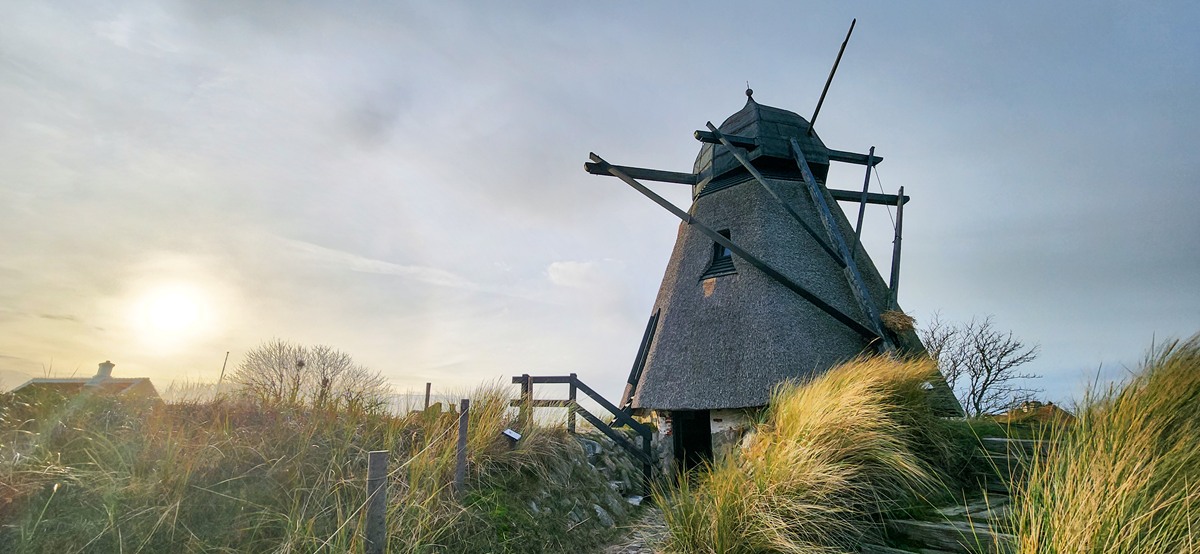
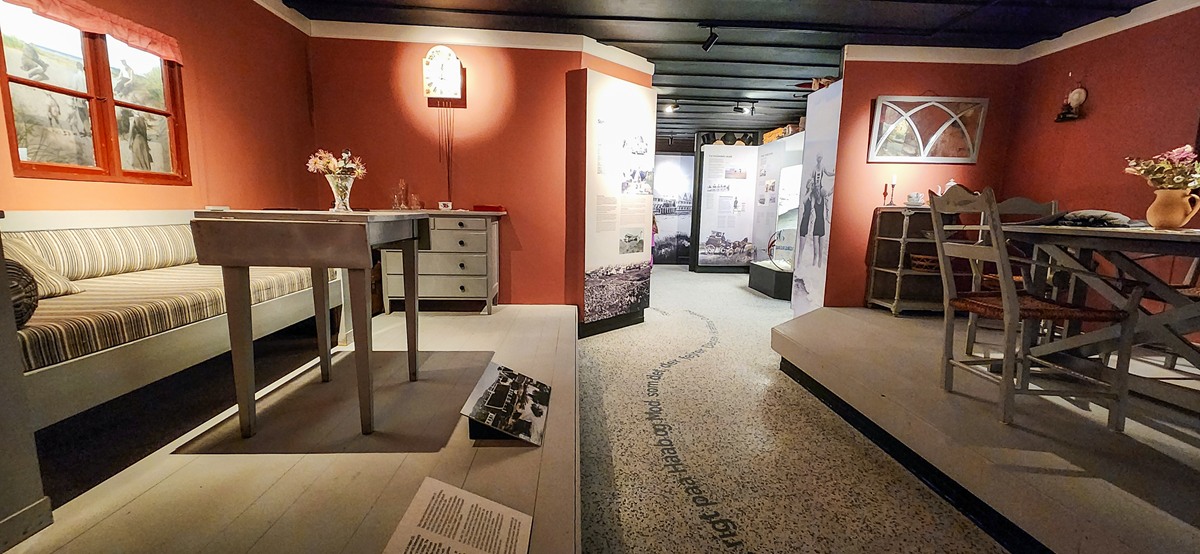
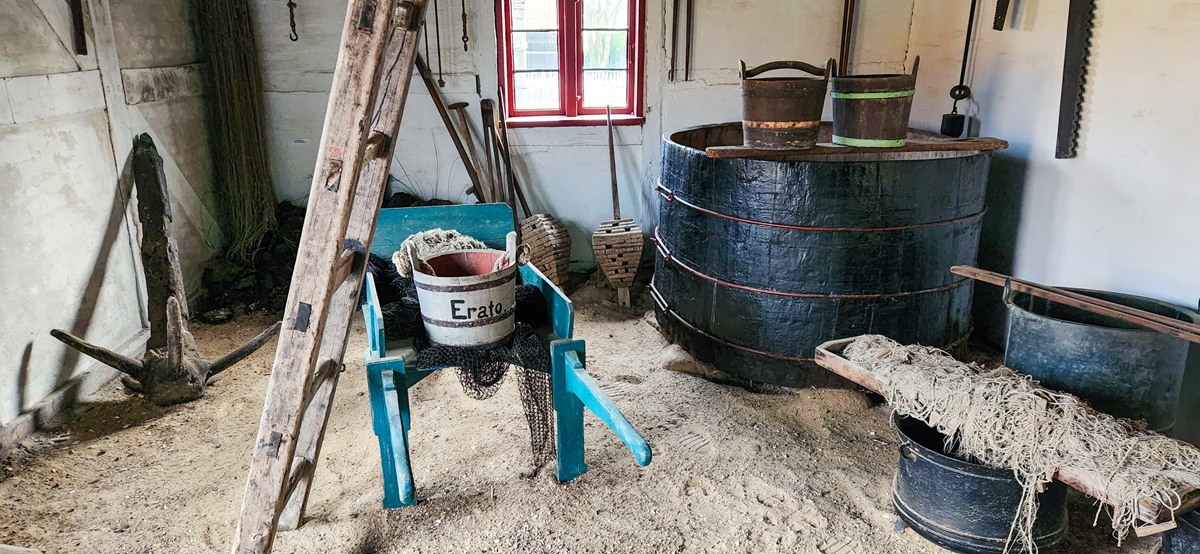
In the south of Skagen, you’ll find the Coastal Museum (Kystmuseet), my second favorite museum in Skagen. It’s a local history museum from 1927 (though it had a different name and location back then) and includes the former rescue station of Kandestederne and a thatched windmill. You’ll see and learn all about the history of Skagen, fishing, how people lived, and art. Definitely recommended.
Find the Skagen Coastal Museum here on the map.
Click here for more information and opening hours.
7. Anchers Hus
Anchers Hus is the former home of Danish painters Anna Ancher (1859–1935) and Michael Ancher (1849–1927), two of the most famous artists of the Skagen Painters. They lived in this house from 1884, and it became a sort of meeting place for the artists’ colony in Skagen.
In the museum, you can see how they lived back then, giving you a feel for daily life. You’ll also see original works and personal belongings. Unfortunately, I didn’t visit this museum because it’s closed in the winter months. But if you get the chance, it would be a great addition to the Skagens Museum, where you already get to know the artists Anna and Michael Ancher.
Find Anchers Hus here on the map. You can also see the current opening hours here.
8. Drachmanns Hus
Drachmanns Hus is a small, atmospheric house museum in Skagen centered entirely around Holger Drachmann (1846-1908): poet, writer, and marine painter, and a well-known name in Skagen.
Drachmann lived and worked in this house on the edge of Skagen from 1902. However, the house itself dates back to around 1828 and was renovated in 1903.
Inside, you’ll see work by both Drachmann and other artists from that period. There are also personal items, including around 150 paintings and drawings. Additionally, you can admire the house as he left it, giving you a glimpse into how he lived.
After Drachmann’s death in 1908, the house opened as a museum in 1911. It later became part of Skagens Kunstmuseer, along with Anchers Hus and others.
Unfortunately, I didn’t visit this one either, as this museum is also closed in winter.
Find Drachmanns Hus here on the map. You can also see the current opening hours here.
9. Skagen Bamsemuseum (Teddy Bear Museum)
In the teddy bear museum in Skagen (officially Skagen Bamsemuseum), you’ll feel like a kid again. It’s a small museum, founded in 1998, full of teddy bears, nostalgia, and humor.
You’ll find old and unique teddy bears arranged in all sorts of different settings. Think of bears traveling, in historical settings, shops, beach-like scenes, and more.
Find the Teddy Bear Museum here on the map.
You can visit the museum by appointment or by going to the Iscafeen. Click here for more information, contact, and opening hours.
10. Galleries in Skagen
Skagen has a striking number of galleries with beautiful paintings, handmade ceramics, and more. I visited Galleri Bo, a very lovely gallery with beautiful art and ceramics. And there are many, many more galleries in Skagen. It’s fun to stroll through, look around, and buy beautiful souvenirs for home. Here are a few galleries listed:



11. Strolling through the streets
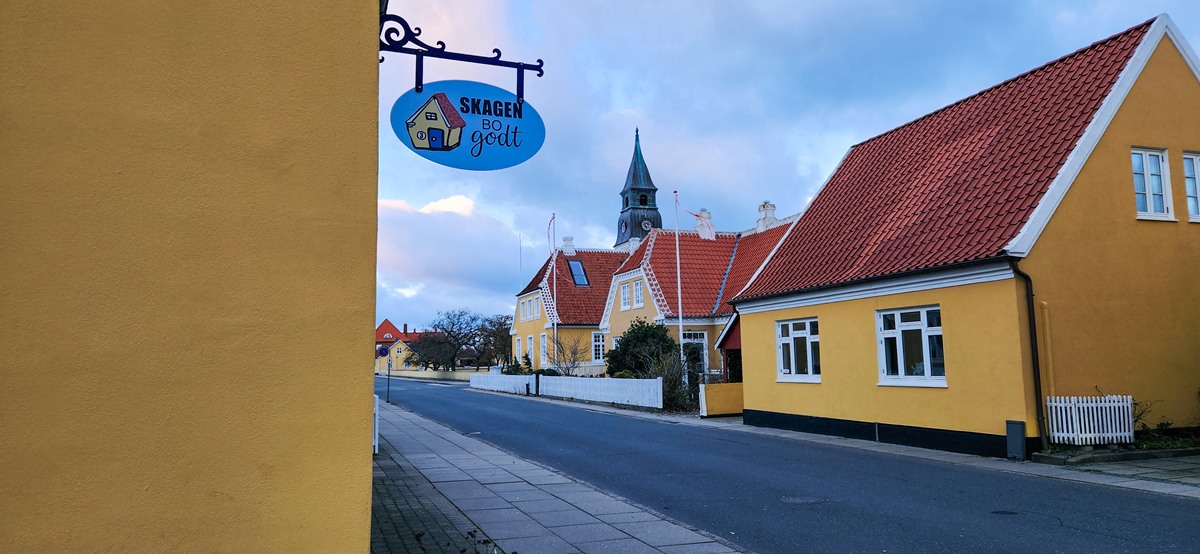
Skagen is a picturesque village full of orange-yellow houses. Just walking through Skagen is a delight. Visit the large church, stroll past the many shops on the main street, and duck into a side street here and there for more photogenic houses. There are also many restaurants and cafes to enjoy something delicious to eat and drink.

12. Den Tilsandede Kirke (The Buried Church)
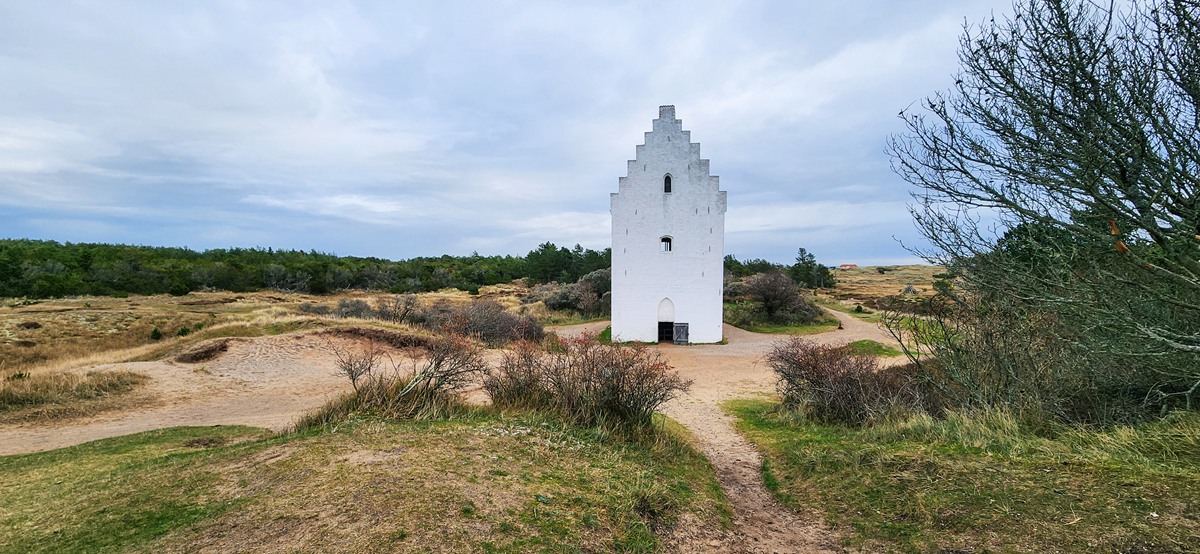
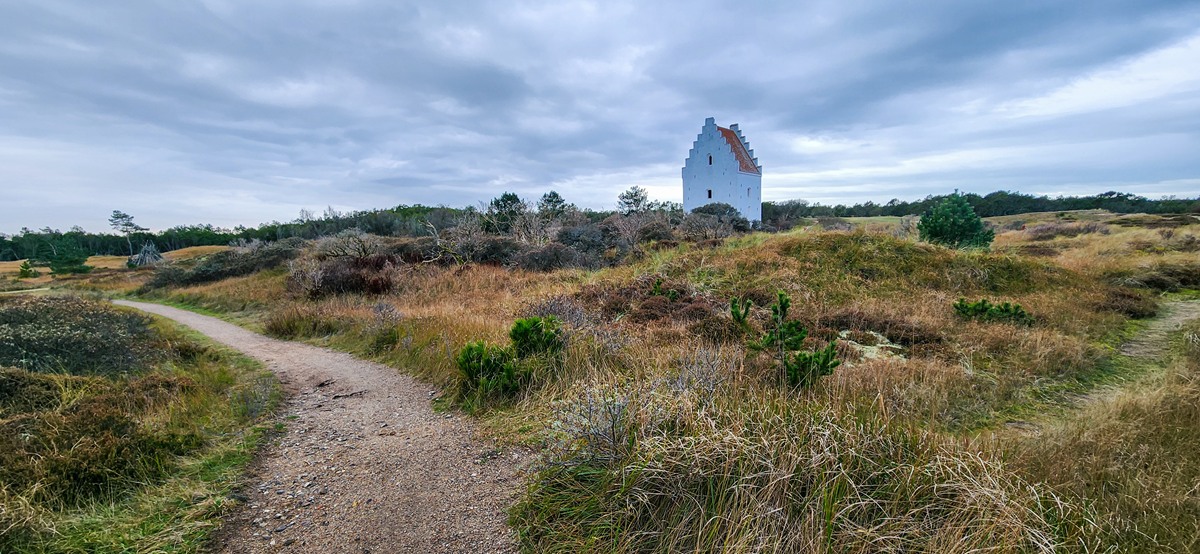
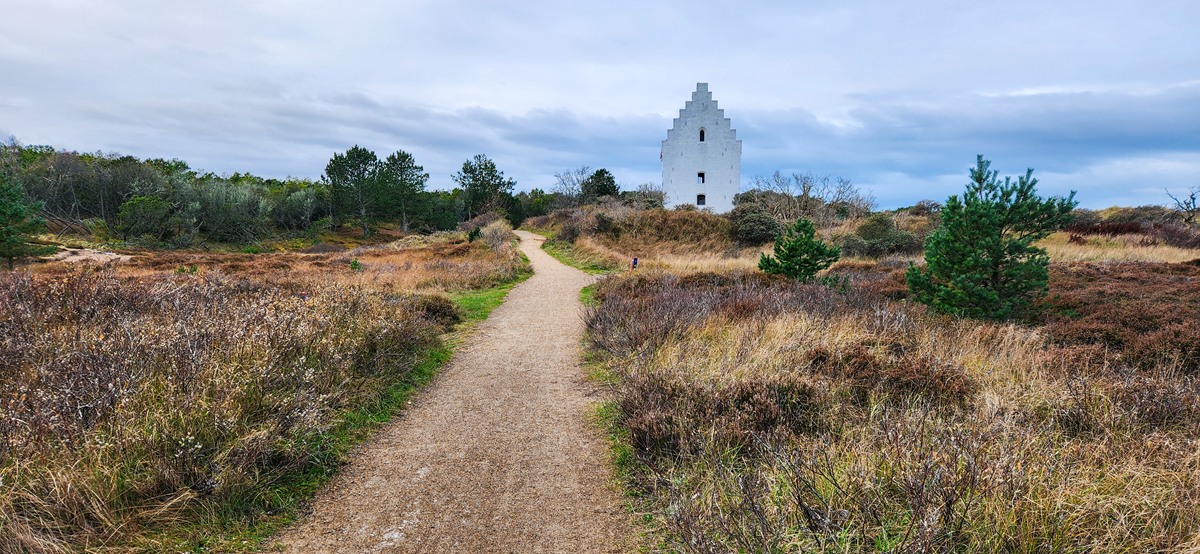
The Den Tilsandede Kirke was an absolute highlight of my visit to Skagen. I found it so beautiful. The white church in that stunning landscape. There was absolutely no one else around, and I had the whole place to myself (late November), which of course made it even more idyllic. But really: so beautiful.
It’s not for nothing that this is one of the most photogenic spots in Skagen…
Den Tilsandede Kirke (also called ‘the buried church’) is one of the most unique sights near Skagen: a medieval church that slowly disappeared under shifting sands, so that today only the whitewashed church tower still sticks out above the dunes.
The church was likely built in the second half of the 14th century. Sand drifts buried the path, the graveyard, and eventually the church. At one point, people even had to keep digging out the entrance to hold a service. In 1795, the church was finally closed for gatherings. Later, the building was largely demolished, but the tower remained as a permanent landmark.
You can climb the church for a nice view of the area. You walk to the church from Skagen; you can’t get there by car. Find Den Tilsandede Kirke here on the map.
Den Tilsandede Kirke is located in a beautiful nature reserve where you can go on lovely walks. Something I gratefully took advantage of. You can find this walk at number 15.
13. The viewpoint at Stokmilen
Another gem south of Skagen: the Stokmilen dune. Honestly, I had never heard of it, but I happened to pass it during my hike through the nature reserve around the buried church (no. 15). Truly a must-see in Skagen!
Stokmilen is a high, striking dune that you can climb, and from the top, you have an incredibly beautiful view. And by beautiful, I actually mean impressive. Skagen on one side, the coast on the other, and the beautiful nature reserve on the third. It’s like looking at three worlds from one single point.
It’s also a good spot for birdwatching.
You can drive to the Stokmilen dune, but it’s much more fun to walk. I reached it during the hike (number 15) from Den Tilsandede Kirke, and I walked back to Skagen via the beach. You can also just walk along the beach south of Skagen, and you’ll run into it eventually.
Find the Stokmilen dune here on the map.
Visiting in the autumn or winter months like I did? Wear a good windproof jacket; it gets very windy here.


The most beautiful walks from Skagen
You can go on fantastic walks from Skagen. I did two long hikes (10+ kilometers) through the beautiful nature. And I would have loved to do number 16 below as well, but unfortunately, I ran out of time. But coming back to Skagen again is definitely no punishment…
14. Hike Skagen – Grenen
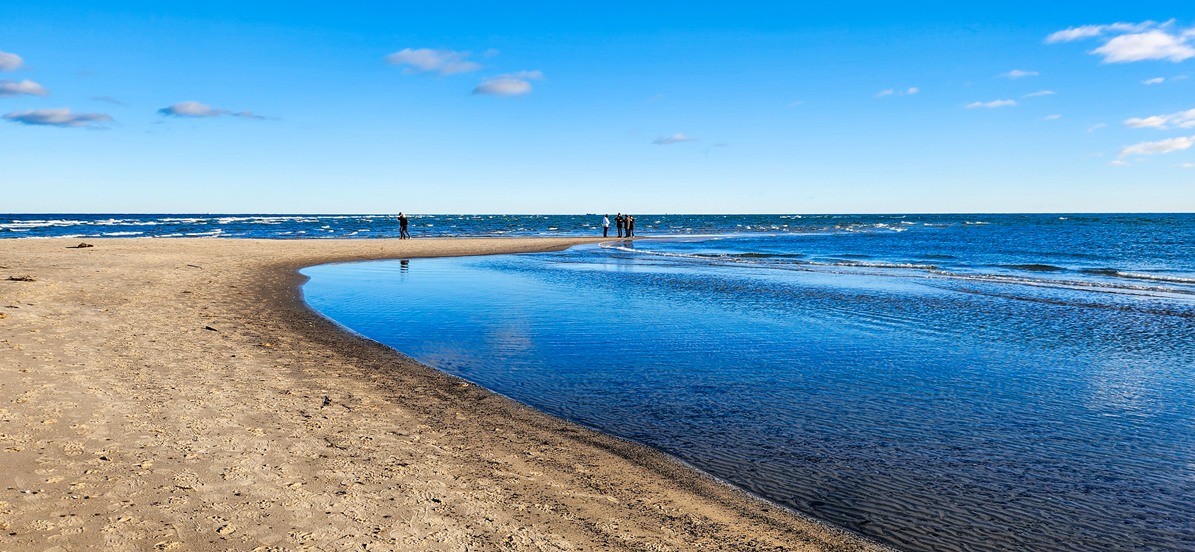
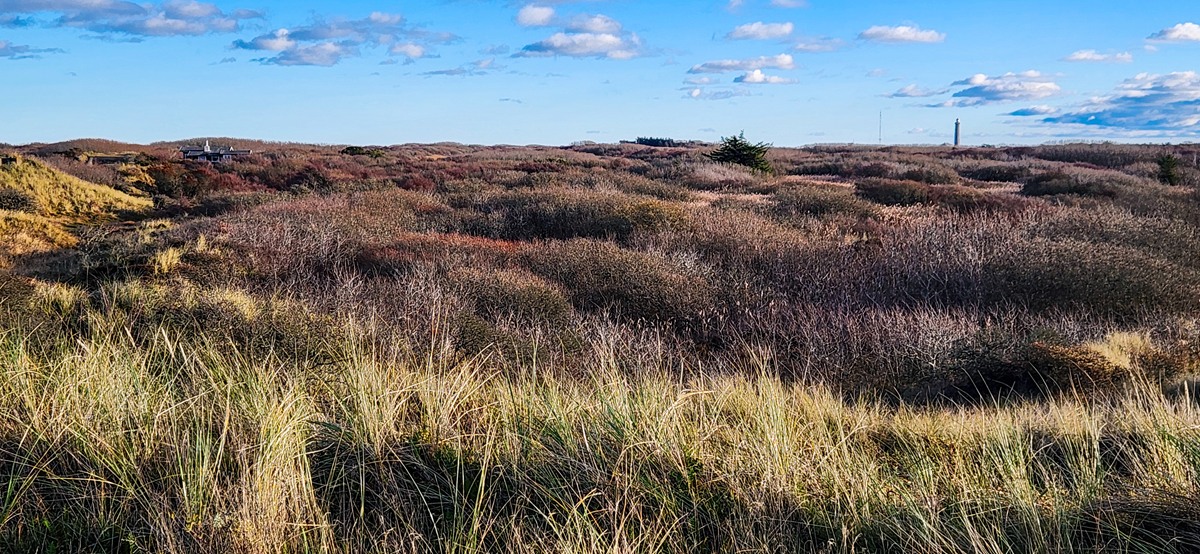
This 11.6-kilometer hike starts at Vippefyr in Skagen (no. 2), immediately offering that beautiful view. You walk along the beach and the WWII bunkers to the northernmost tip of Jutland: Grenen. Most visitors turn around there and walk back the same way to their car or Skagen, but I went the other way.
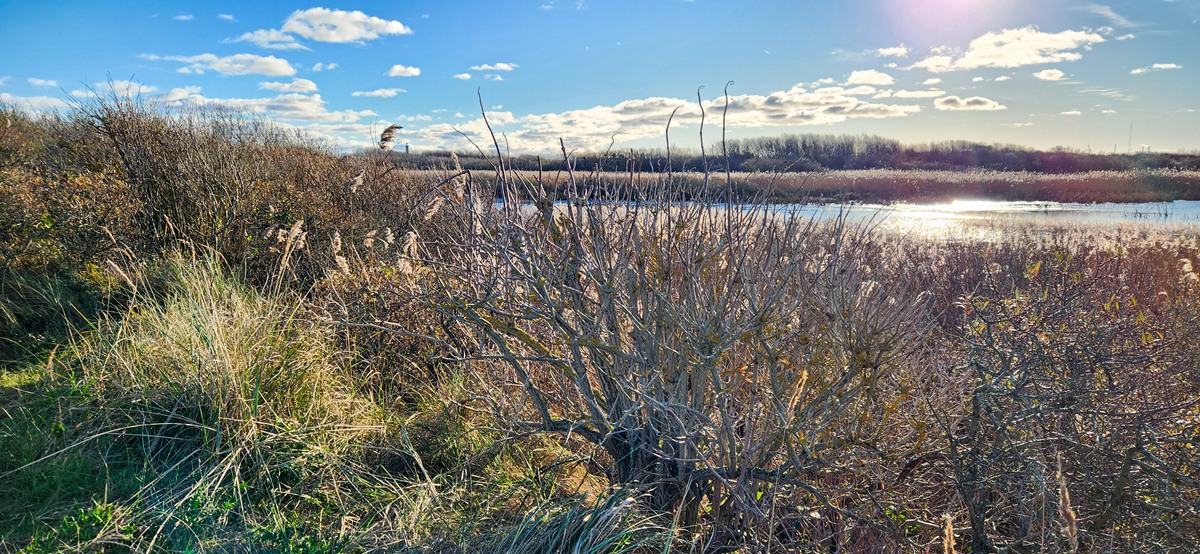
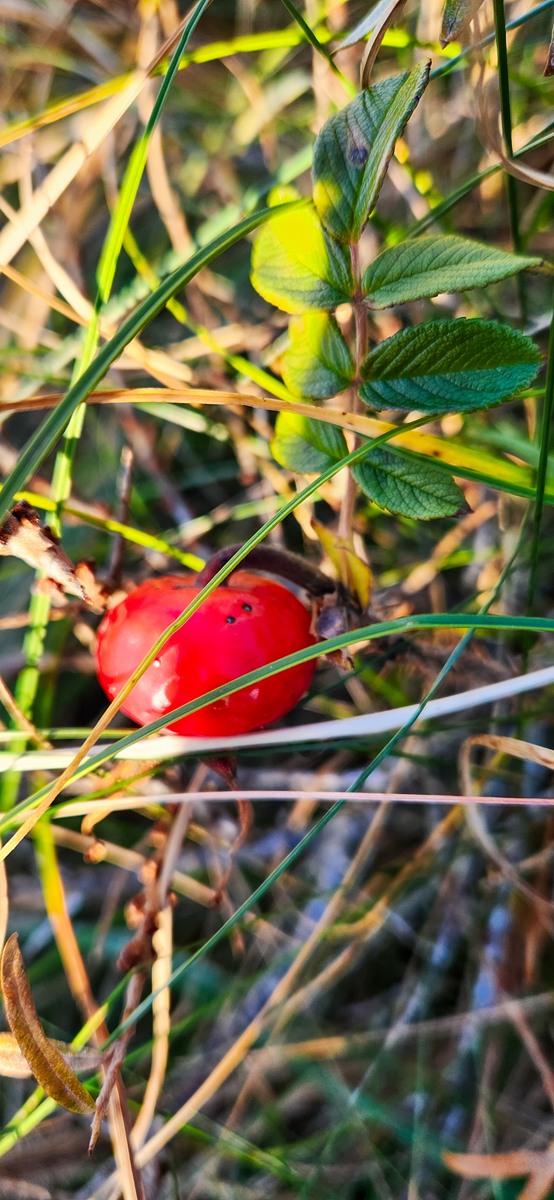
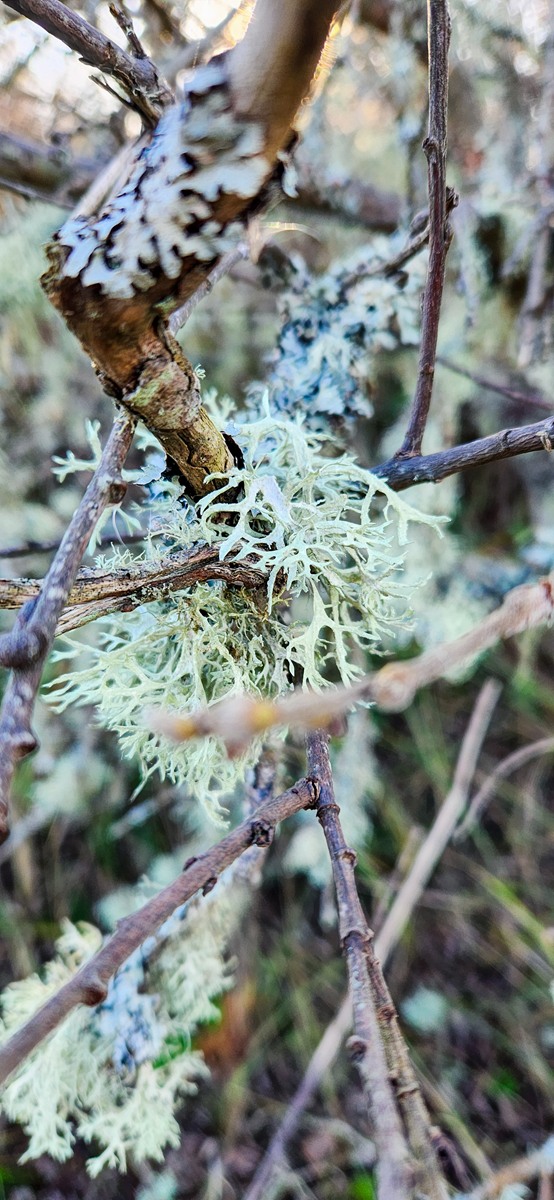
From beautiful Grenen, you don’t walk back but turn left, onto the rest of the northernmost tip. You pass through a beautiful green nature reserve with lovely views of the beach, the sea, and the hills. There was no one else doing this walk—a unique experience of peace and quiet.
After nearly 12 kilometers, you arrive back at the starting point: the Vippefyr. And you can eat your packed lunch there with that beautiful view in front of you.
I did this hike via AllTrails. The hike is called Skagens Vippe Fyr – Skagens Odde – Grenen, and you can find the route here.

15. Hike Skagen – Den Tilsandede Kirke – Flagbakken – Stokmilen
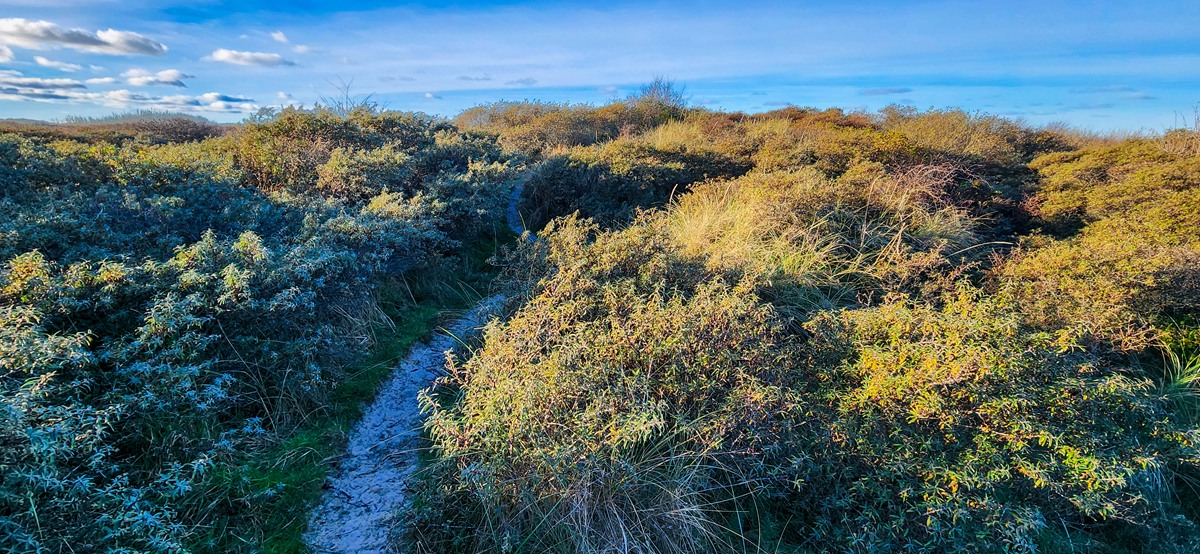
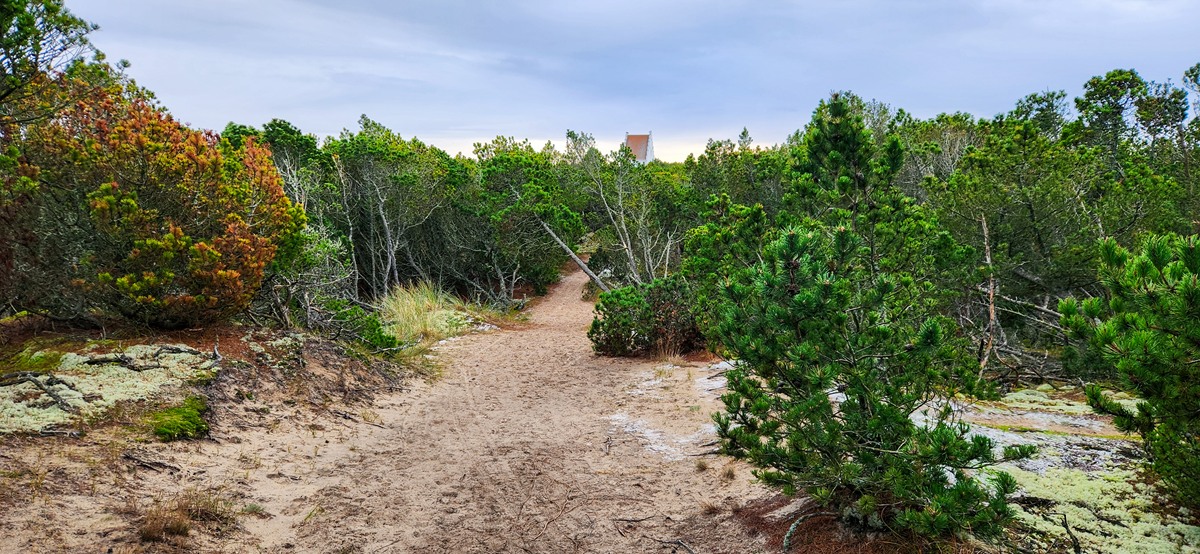
I did another beautiful walk on the south side of Skagen. First, you walk to Den Tilsandede Kirke (no. 12), and from there, I went into the forest, eventually ending up at the Flagbakken viewpoint.
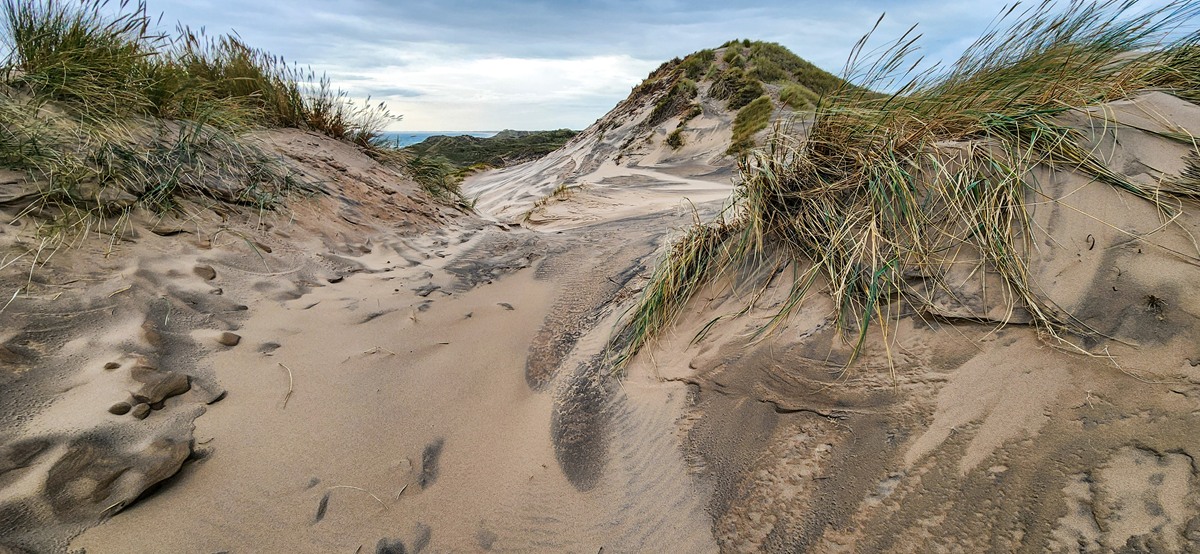
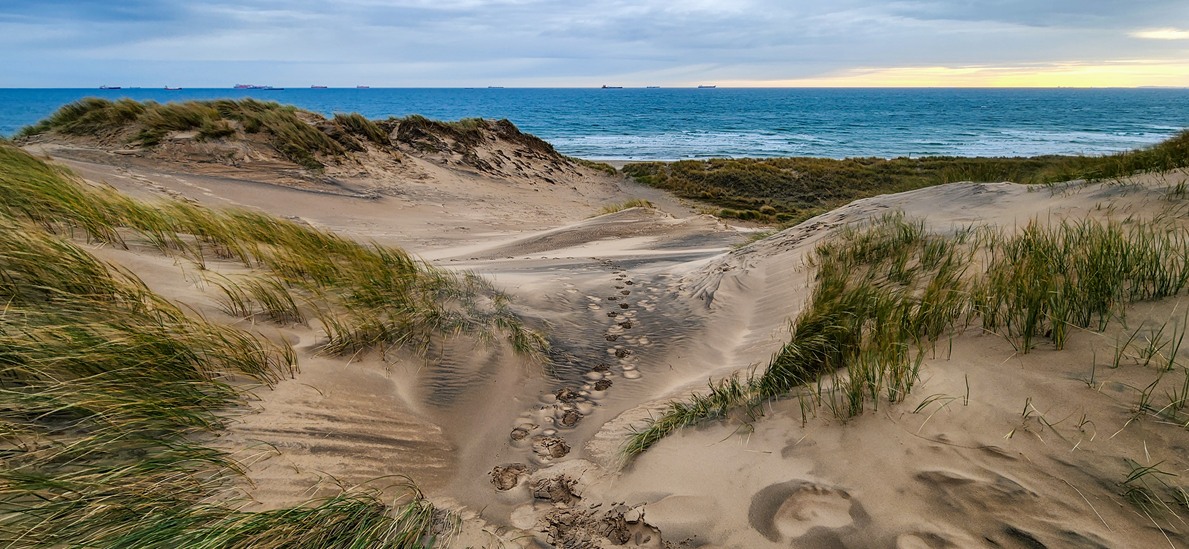
From there, I walked back to the picturesque church to walk via the other side to the Stokmilen dune (no. 13). You can follow this route for that. The walk goes from forest to dune and is absolutely beautiful. Suddenly the greenery turns to sand, and you can see the high dune ahead of you.
At that moment, the Stokmilen dune doesn’t look that high, but when you’re finally standing in front of it, it’s quite a climb through the sand. From the top, you have a truly beautiful view. I was there in late November, and it was ice cold with a lot of wind, but I still stood at the top enjoying it for at least 20 minutes.
Once back down, you walk back to Skagen via the beach. This walk is easy to combine with the Kystmuseet (Coastal Museum, no. 6). You either start there or end there. For me, the Coastal Museum was the endpoint of my walk. A perfect place to grab a hot chocolate (if you come in winter).
You can find the route here on the map, and to get to Flagbakken, simply follow the footpaths there in the AllTrails app.




16. The hike to Råbjerg Mile (the migrating dune)
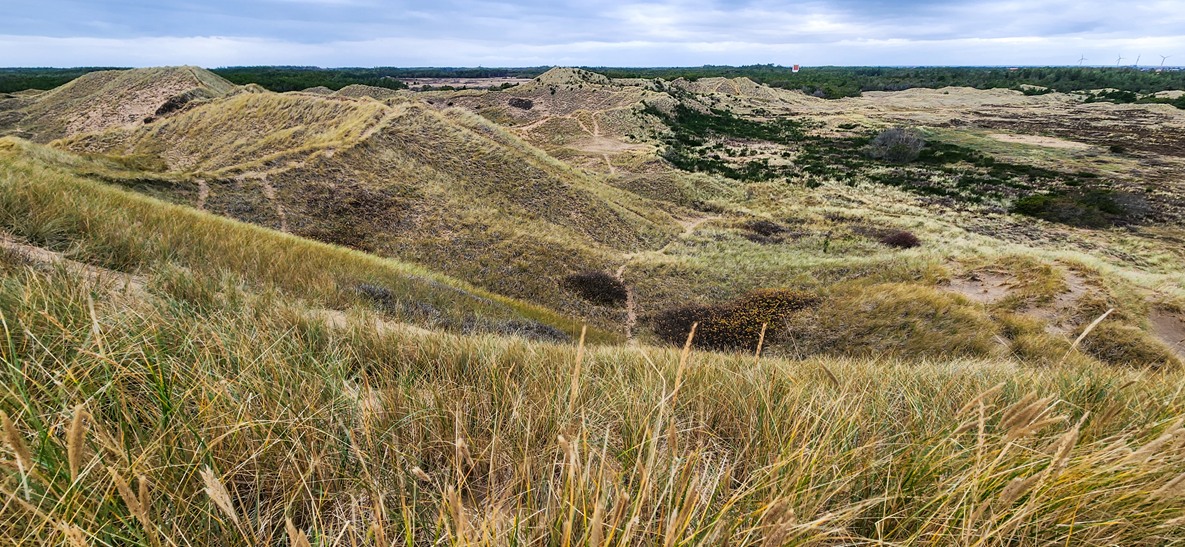
Råbjerg Mile (or the migrating dune) is one of the top highlights in Denmark. Unfortunately, I just didn’t have time to visit, but that gives me a very good reason to come back.
Råbjerg Mile is Denmark’s famous migrating dune, a massive, living mass of sand that moves a bit every year due to the wind. The migrating dune is about 1 km by 1 km and about 40 meters high. The dune moves an average of about 15 meters per year towards the northeast (towards Skagen).
From the parking lot at Råbjerg Mile, you walk via a path to the edge of the dune, and then it’s climbing, looking around, and probably taking lots of photos. From the top, you have a panoramic view of the dune landscape.
You can do various hikes at Råbjerg Mile, such as this 10.3-kilometer hike. Ideal if you come by train: get off at Bunken Station and you can start walking immediately. I would have loved to do this walk.
Råbjerg Mile is truly a must-see if you’re in North Jutland. For me, next time…
Find Råbjerg Mile here on the map.
Where to stay in Skagen?
There are many hotels and campsites in and around Skagen. Plenty of choice. I stayed at Skagen Bo Godt Kirkevej, a large house with several rooms that may or may not have a private bathroom (I had one), and a shared kitchen and living room. Very nice, well-located, and typically Danish. Just a 20-meter walk away is a bakery with delicious fresh rolls. A pleasant stay, cozily furnished, budget-friendly, and centrally located. Within walking distance of the train station.
Here you’ll find many more hotels in Skagen and the surrounding area. Would you rather stay at a campsite? Click here for campsites in and around Skagen.


Best time to visit Skagen & Grenen
The best time to visit Skagen and Grenen is actually the same as for all of Denmark: in the summer from June to September. Personally, I don’t think that’s the best time at all, because it’s incredibly crowded with tourists during those months.
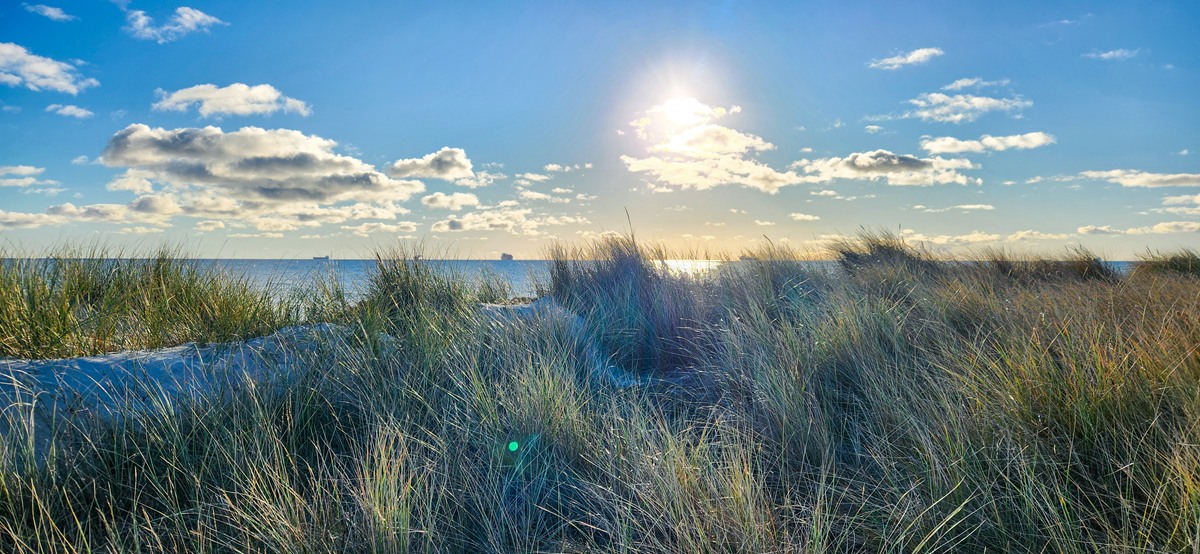
For me, the best time to visit is whenever it’s quiet. I visited Skagen and Grenen in late November. The weather was truly beautiful, very sunny, and of course quite cold. Plus, I had Skagen almost to myself. I even literally wondered if anyone actually lives in the village. There was just no one on the street… It gave me a real end-of-the-world feeling.
In short: the best time to visit depends on your own preferences. Do you want higher temperatures? Or do you prefer the cold? Would you rather avoid mass tourism? Or does that not matter to you?
It can always rain in Denmark, whether you go in winter or summer. The climate is a factor you have to be lucky with. And I was that lucky.
How many days do you need for Skagen and Grenen?
I really love slow travel—getting to know a place well instead of rushing through it. That’s why I stayed here for 4 nights. And honestly, a fifth night wouldn’t have been a luxury, as I unfortunately didn’t get to see the Råbjerg Mile nature reserve.
I visited Skagen and Grenen in winter, late November. That means it gets dark quite early (before 4 PM) and museums also close early. A lot of museums are also closed in the winter months. So you can see and do less in a day. If you go in the summer, you have more hours to walk or visit places.
It also depends on how you travel. If you travel to Skagen by car, you get to places faster than if you travel by public transport like I did. To get to Grenen, for example, I first had to walk for nearly 40 minutes (which I loved, by the way). That’s time you could spend elsewhere if you have a car. Personally, I didn’t miss having a car at all, not in all of Jutland.
My recommendation is therefore 4 to 5 nights, but you can see the real highlights in 2 nights as well. Look at your situation and your needs.

How do you get to Skagen?
Skagen is perfect for a road trip through Jutland. It’s easy to get there by car, and with a car, you can see a lot in the area. Keep in mind that it’s quite a drive to the north.
I traveled to Skagen by train myself. It’s ideal: you can just enjoy the view outside, and it’s really easy. There are direct trains from Aalborg. They go via Frederikshavn, but you don’t need to change trains there. So to travel to Skagen by train, you’ll first need to get to Aalborg — which is easy from other cities, like Aarhus.
Travelling by train through Denmark is very easy. Download the DSB app (Android or Apple), enter your route, buy your ticket in the app, and you’re all set. Read all about my train journey through Denmark here.
Once in Skagen, you can do everything on foot. I did literally all the sights above on foot, so I walked quite a few kilometers. Nice and cold under the sun… wonderful!
Skagen packing list: what to bring?
What you bring depends a lot on where you’re going, if you’re traveling alone or with others, and in which month, but I can definitely recommend this:
- A reusable lunch wrap. I used lunch wraps from WAAR, and this lunch wrap from KeepLeaf is also handy. This way, you can easily take your sandwiches with you and don’t have to throw away any waste. Note: in winter, many things are closed, so if you go for a walk, you’ll need to bring your own lunch.
- A waterproof and windproof jacket. Both in summer and winter—it gets really windy up there in northern Denmark. In winter, it’s obvious why you need a windproof jacket, but it can be very handy in summer too.
- Good walking shoes. If you’re going to do walks in Skagen, you can’t avoid walking through sand. For me, my high hiking boots worked wonders. Check out walking shoes at Bever.
- A good pair of sunglasses. The sun is brighter because of the sea and the sand.
- Wear layers. In both winter and summer. Even in summer, it can suddenly get chilly. Layers are always the solution.
- Plenty of water and a snack. Especially in winter, when few restaurants are open along the way.
- A power bank (I use this one from Anker). Traveling alone and going for a long walk? Definitely bring a good power bank. You don’t want to lose your way because your phone is dead.

Why Skagen is magical
I found Skagen truly magical. The beautiful nature, the interesting museums, the colorful houses… It touched me. The village breathes nature, culture, and art. And the delicious rolls at the bakery… I’m definitely coming back, because I still want to see all the museums that weren’t open. And Råbjerg Mile is still missing, of course. It’ll be a while before I actually go back, since I live in Colombia. At least I have something to dream about…
This article contains affiliate links. If you click on one of these links and purchase something, I will receive a small commission for it. The price remains the same for you. This helps me to create new content and maintain my website.
