


Less than 30 years ago, Medellín was known as the most dangerous city in the world. But since Medellín was voted the most innovative city on our planet in 2013, the tide has turned. Or well, even before that, of course. By now, Medellín has grown into the most popular city in Colombia. Not only among Colombians, but for several years now, Medellín has become a true stronghold for tourism and digital nomads. With all the pros and cons that come with it. Anyway: Medellín is an interesting city. One you must see when traveling through Colombia. Therefore, here is a mini travel guide to Medellín: discover the capital of Antioquia.
Table of contents
The Paisa culture
Medellín is located in northwestern Colombia, in the department of Antioquia. The city is built in the elongated Aburrá Valley and is surrounded on both sides by green mountains. With over 2.5 million inhabitants, Medellín is the second-largest city in Colombia. In the entire metropolitan area, which also includes places like Envigado, Itagüí, and Bello, more than four million people live.
The inhabitants of Medellín and the surrounding region are called Paisas. The Paisa culture primarily belongs to Antioquia and parts of the adjacent departments.
Paisas are known for their strong regional identity, entrepreneurial spirit, hospitality, and characteristic accent. Medellín is a completely different city than Bogotá, in terms of climate, environment, cultural offerings, and way of life. But the Paisa culture also makes the city different. The language, the people, social manners. Interesting to experience if you visit both cities.

Medellín was once the most dangerous city in the world: a bit of history
In the 1980s and early 1990s, Medellín became known worldwide for the violence surrounding Pablo Escobar’s Medellín Cartel.
After his death in 1993, the city continued to struggle for years with crime and major social inequality. At the same time, more and more was invested in public transport, education, and poorer neighborhoods.
For example, the Medellín Metro opened in 1995, still the only metro in Colombia (until the metro in Bogotá is completed).
Later, cable cars, libraries, and other social projects were added. As a result, Medellín gradually transformed from one of the most dangerous cities in the world into a city known for innovation and urban renewal.
Take a walking tour through the history of Medellín
The history of Colombia, and certainly of Medellín, is too complex and extensive to tell here. If you want to know more, I can definitely recommend the Free Walking Tour or the More than Escobar Tour, both of which can be booked here with Real City Tours. This way, you learn all the important points of Medellín’s history and see much of the city right away.
How many days do you need for Medellín?
For the main sights, you need at least 3 full days, so 4 nights. In three days, you can visit the center and Museo de Antioquia, take a tour of Comuna 13, and go by cable car to Parque Arví.
With 4 or 5 days you can also visit the Museo Casa de la Memoria, the botanical garden, MAMM, Laureles and Envigado. There is also plenty to do in the surroundings of Medellín (see further on in this article). You can take a few day trips; in that case, count on an extra 2 to 3 days
Medellín is not a city that only revolves around individual monuments. The greatest appeal lies in the combination of its location, the neighborhoods, the people, the public transport, and the visible contrasts between rich and poor, past and future. Want to really get to know the city? Then take your time.
Personally, I always find it nice to stay in one place a bit longer. I have been to Medellín about 3 or 4 times, for a total of about two weeks, and I still haven’t seen everything…
Where to stay in Medellín?
Medellín is a very touristy city, where in many neighborhoods fewer and fewer original residents can be found.
The most touristy neighborhood is El Poblado. This neighborhood is also one of the more expensive areas and has a very European feel. Although you’ll find plenty of hotels and hostels here, it isn’t really the best neighborhood for getting to know the real Medellín. However, if you prefer staying among other tourists in a more upscale area, El Poblado is certainly a good place to look for a hotel or hostel. Click here for hotels and hostels in El Poblado.
I personally find Laureles a nice neighborhood to stay in. This neighborhood is also very much on the rise regarding tourism. More and more hotels and hostels are appearing, but in Laureles, you still have the feeling that you are staying among Colombians. Here you still have many traditional neighborhoods and not everything is built up with hotels yet. This might be different in a few years, but for now, Laureles is a very good neighborhood to stay in Medellín. You are also centrally located and close to the metro. Click here for hostels and hotels in Laureles.
I personally like to stay at Selva House, a budget hotel with a hot shower, an extensive kitchen, a nice terrace, and a perfect location.
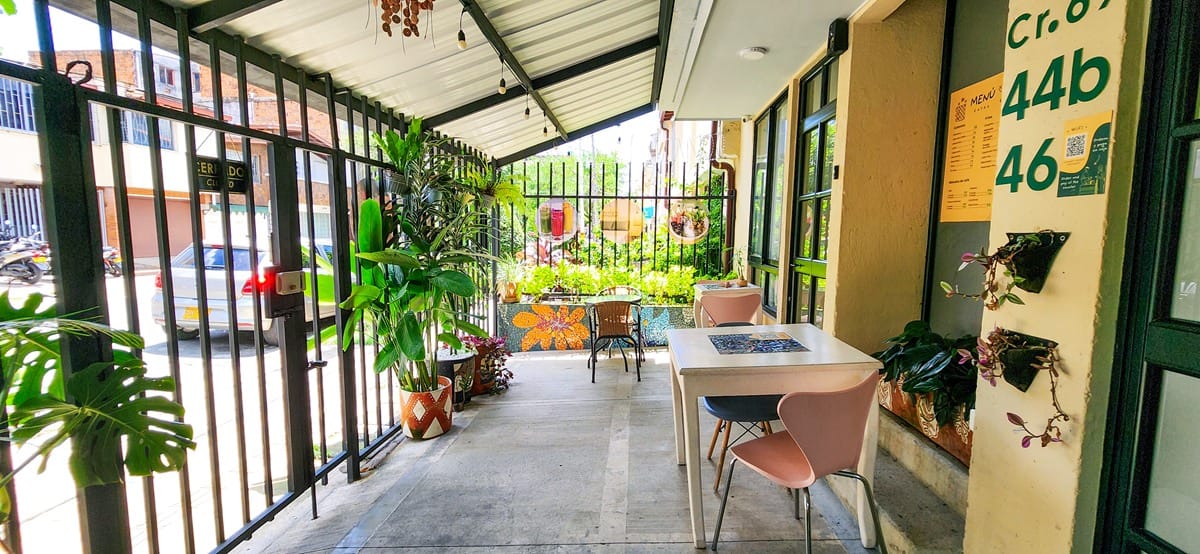

Then you also have Envigado, a small town outside Medellín, but completely attached to the big city. It is greener, quieter, and there are many restaurants and hotels. Definitely worth taking a look. Click here for hostels and hotels in Envigado.
Where can you eat and drink well in Medellín?
In Medellín, it is not hard to find cafes and restaurants. Especially if you stay in El Poblado or Laureles, there are plenty of nice eateries. Walk through the streets and you will come across them naturally.
In El Poblado, you can also go to Provenza, an entertainment area with restaurants, cafes, and nightclubs.
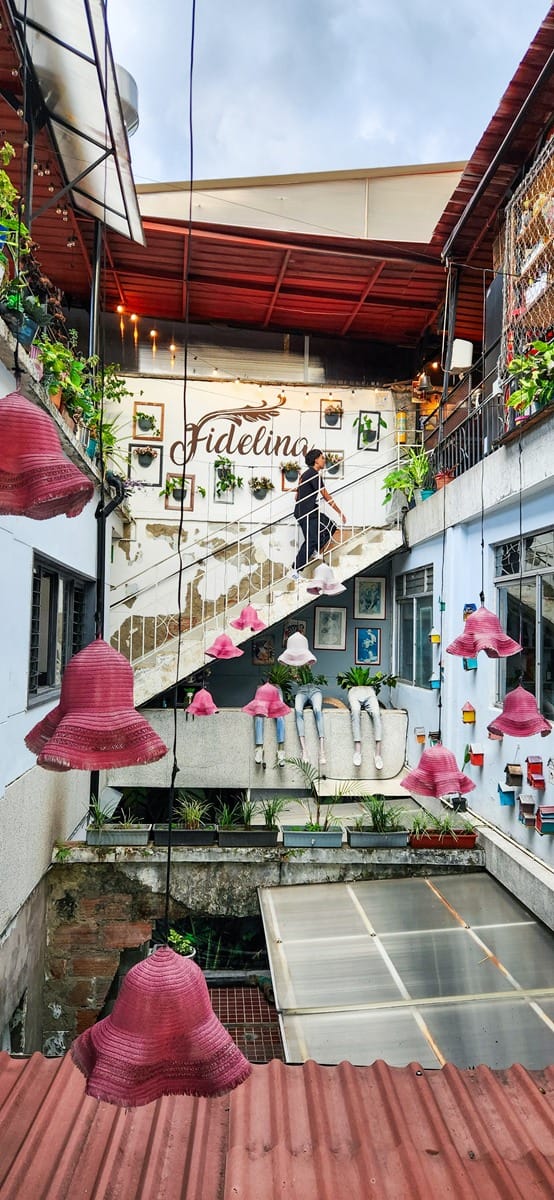
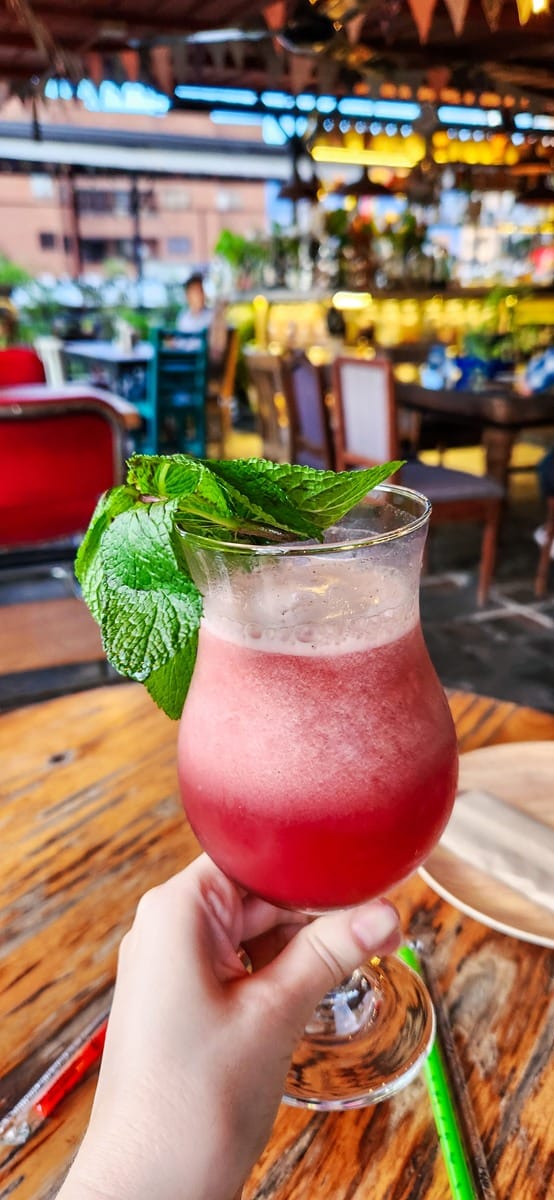
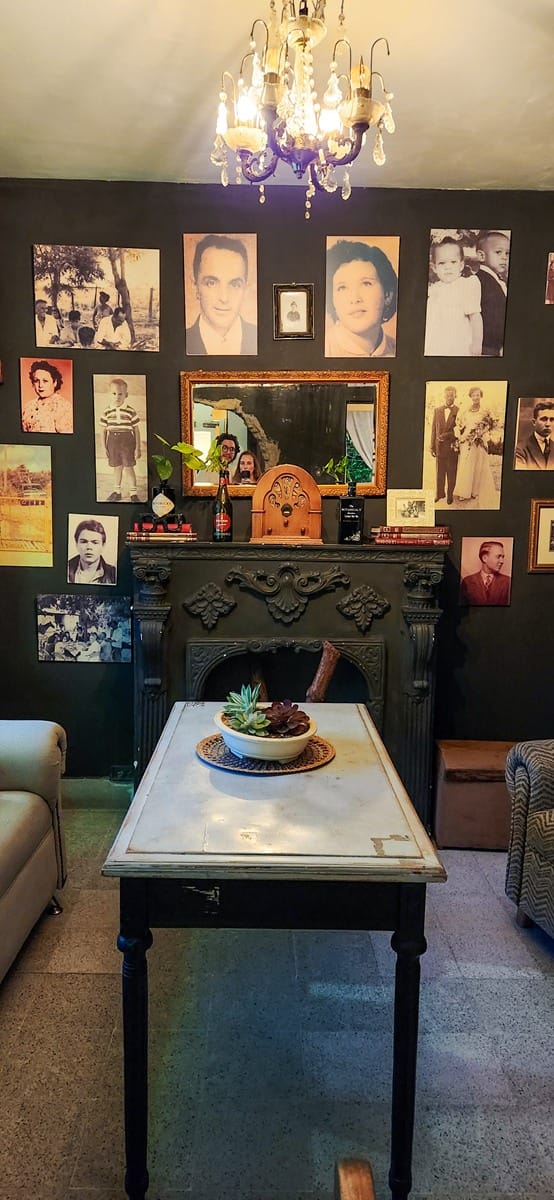
In Laureles, my favorite restaurants are Saludpan and Fidelina. I am a vegetarian and you can eat very good vegetarian food here.
Typical food from Medellín
If you want to try typical dishes from Medellín, ask for the bandeja paisa. This is absolutely the most famous dish from Medellín. Not for vegetarians, but you can have it made vegetarian by removing the meat. Bandeja paisa is a large meal consisting of beans, rice, egg, avocado, plantain, arepa, and various types of meat. As a vegetarian, I find it super delicious (without meat, of course).
If you’re not that hungry, look for an arepa de chócolo, a sweetish corn arepa often eaten with cheese.
Other regional dishes and products include mondongo, empanadas, buñuelos, and mazamorra. Medellín also has a fast-growing coffee culture with many cafes serving coffee from Antioquia and other Colombian regions.
What is the climate in Medellín?
Medellín is known as the city of eternal spring. Due to its location close to the equator and at an altitude of about 1,500 meters, temperatures remain fairly constant throughout the year.
During the day it is warm, often around 24 to 30 degrees Celsius, while in the evening and at night it can cool down to about 20 degrees. Medellín does not have seasons like summer and winter in the Netherlands. There are rainy periods and dry periods, but the temperature generally remains constant.
I don’t necessarily think the name ‘the city of eternal spring’ fits perfectly, by the way. To me, it feels more like a solid summer in Medellín.
When does it rain in Medellín?
Medellín has a humid climate and rain can occur in any month of the year. The wettest periods usually fall around April and May and around October and November. December through February and the months of June and July are on average a bit drier, but even then, a rain shower remains possible. Read all about traveling in Colombia during the rainy season here.
Due to its location in a narrow valley, the weather can vary by neighborhood. In the lower-lying center and the north of the city, it often feels warmer, while higher-lying neighborhoods and places in the surrounding mountains can be cooler. A morning can start sunny and later turn into clouds, rain, and thunderstorms.
What is the best time to visit Medellín?
You can visit Medellín all year round, whenever you want. At any time it can be warm, it can rain, or it can be clear blue and also feel quite humid. The sun is strong due to the altitude and location near the equator, so bring a hat and sunscreen.

How do you get to Medellín?
Medellín is an important international city in Colombia, and therefore there are many options to get to Medellín and to travel from Medellín to the rest of Colombia. I have done all the options below myself.
By plane to and from Medellín
Medellín has 2 airports: the small Olaya Herrera Airport in the middle of the city, and the José María Córdova International Airport near Rionegro. The small airport is mainly for domestic flights to more remote destinations, such as Chocó and Mompox. But larger flights sometimes arrive there too.
The international airport in Rionegro is for both domestic and international flights. Flights from Bogotá arrive here, for example. Note that the travel time to this airport is longer; allow for 45 minutes to an hour, depending on traffic and exactly where you are coming from.
For domestic flights from anywhere in Colombia, you can find tickets with Latam, Avianca, or Satena.
By bus to Medellín
Buses go to Medellín from all over Colombia. The bus from Bogotá officially takes about 10 hours, but in practice, it’s best to count on 12 hours of travel time. If you find that too much, you can always make a stopover, in Honda for example.
There are also buses to Medellín from the north coast, from Bucaramanga or San Gil, and from Cali. And from all other places on those routes you can think of.
You can easily book bus tickets via Busbud.
By car to or from Medellín
You can also choose to rent a car specifically in Medellín and explore the surroundings from there. The roads are good, but plan plenty of time for your route. Due to the many hairpin bends and slow-moving traffic, it takes a long time to cover few kilometers.
You can rent a car in Medellín here.
How do you travel by metro in Medellín?
It remains a strange sensation if you are used to Bogotá like I am: taking the metro in Colombia. In Medellín, it is normal. And beautiful too. The Medellín metro runs frequently, on time, is super clean, easy, and safe. So definitely make use of it: it is a lot cheaper and more fun than a taxi.
Check the map to see where the nearest metro station is and which station you want to go to. Clear route maps are posted at every metro station, so you know exactly which line you need and where you might need to transfer. You can find the route maps of the Medellín metro here, so you can check in advance if you want.
You can buy a metro card at any metro station. You can use one card for multiple people. Ask to top up the card immediately upon purchase. One ride costs $3,820 COP (2026) and you can also use the card for the bus and for the metrocable (the cable car).


In Medellín, the metro means so much more: it is a symbol of freedom
Finally, after all those years of violence, the government has given this city back to its inhabitants. Partly through this metro, which makes transport a lot faster and cleaner and ensures that the poor population on the mountain can now easily reach the center. Because this metro consists not only of a train but also of cable cars up the mountain. For about €1, you can travel through the whole city.
What to do and see in Medellín? | 11 tips
Medellín is a very interesting city with a complicated history. It is fun to get to know all aspects of the city. Unfortunately, tourism has also caused a lot of damage and some places are no longer pleasant to visit. Below I provide alternatives for those places.
1. Discover the historical center of Medellín
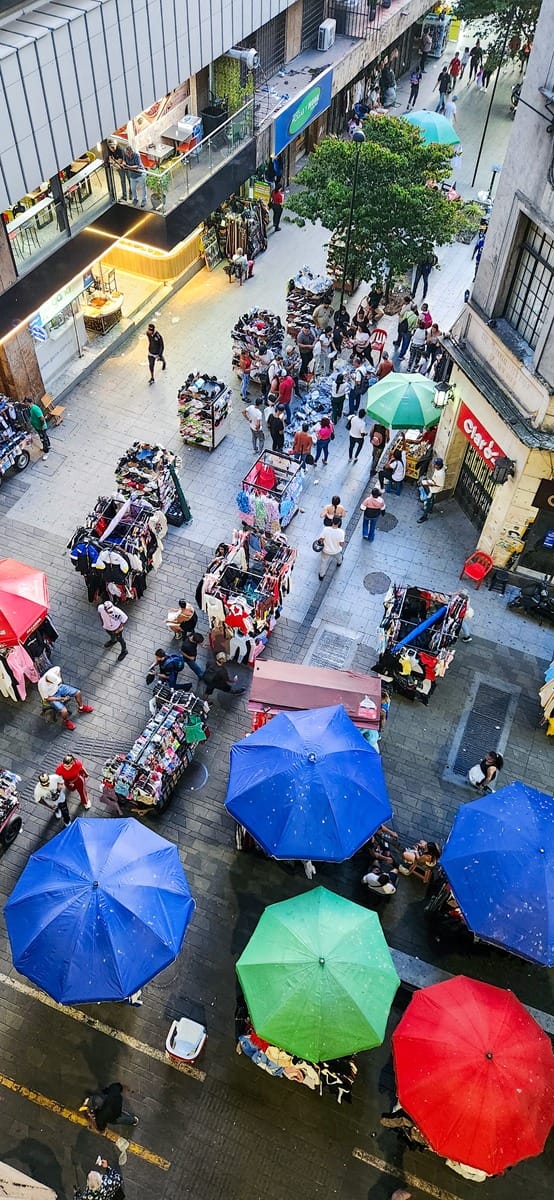
The center of Medellín, called El Centro, is busy, chaotic, and very different from the modern neighborhoods of El Poblado and Laureles. Here you walk past street vendors, small shops, churches, markets, historical buildings, and you have to squeeze through the crowds.
The center is not beautiful everywhere, but it does show an important side of Medellín. You get a better picture of daily life here and of the enormous differences within the city. Preferably visit the center during the day, bring few valuables, and pay close attention to your phone and your bag.
Plaza Botero
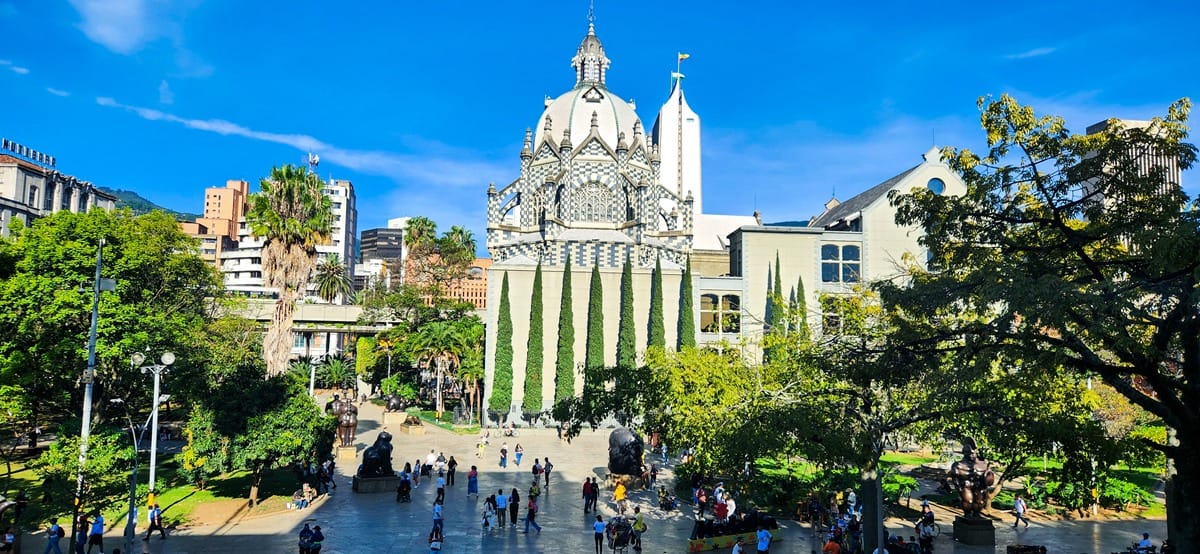
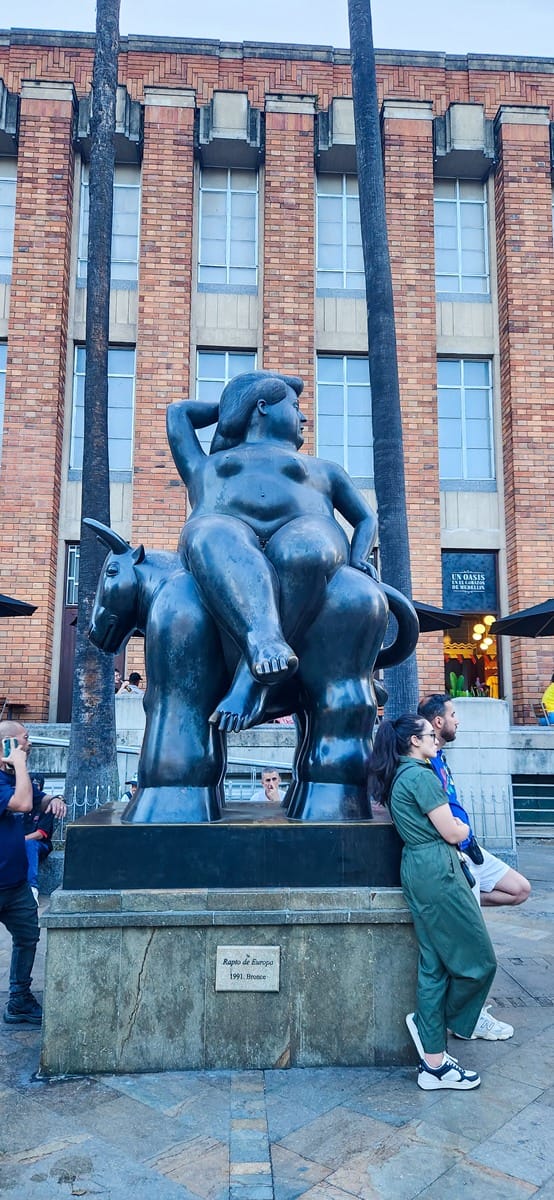
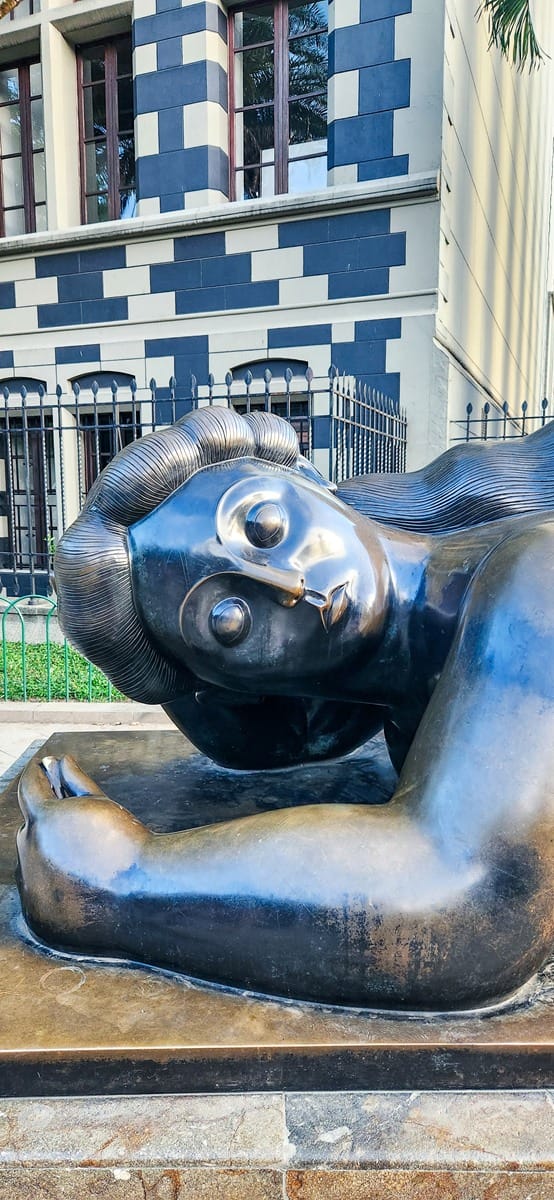
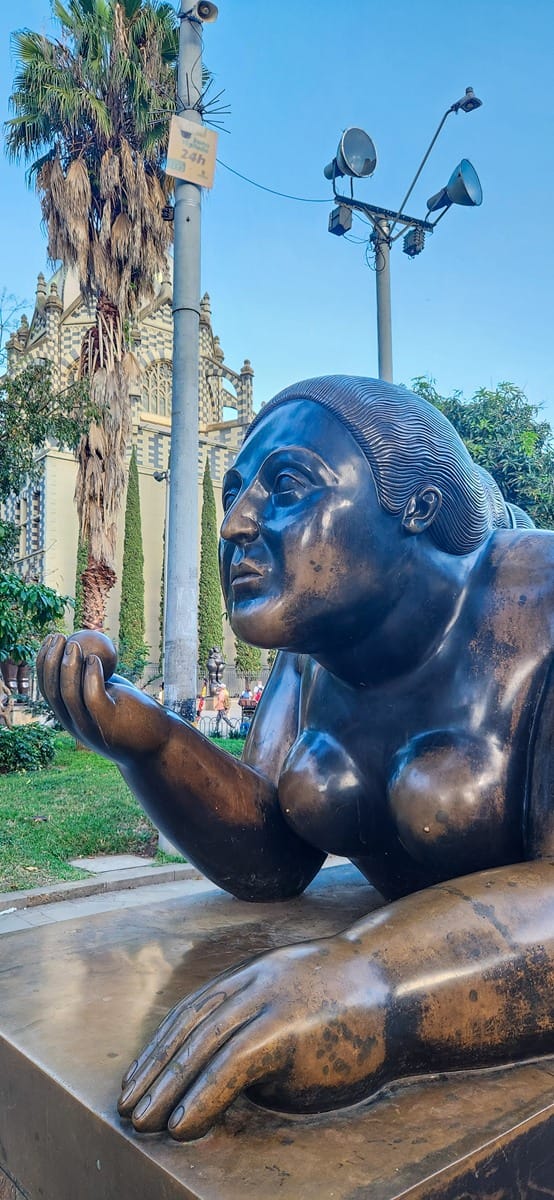
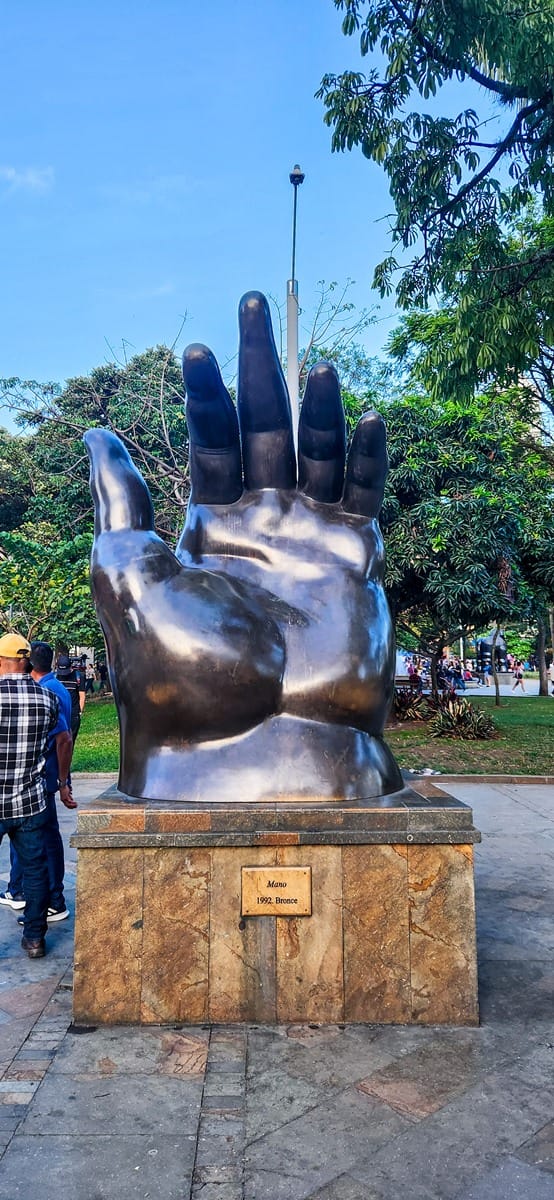
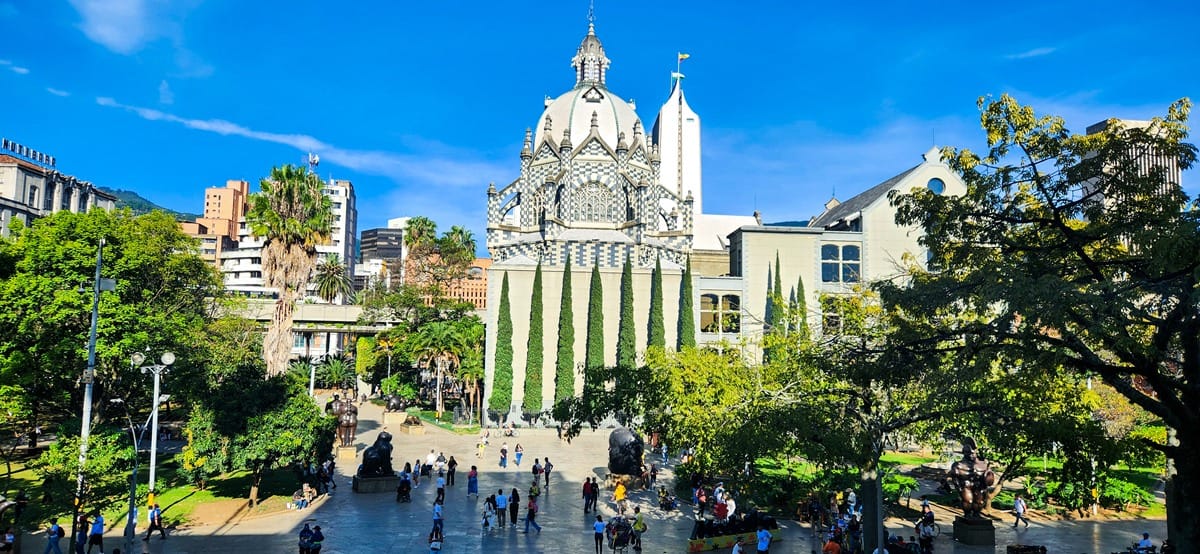
Plaza Botero is one of the most famous places in Medellín. On the square stand 23 large bronze statues by Fernando Botero, the world-famous Colombian artist who was born in Medellín. His figures are often described as fat, but Botero himself preferred to speak about the exaggeration of volume.
The statues are simply in the public space and may be touched. In the nearby museum (see the next point) and also in Museo Botero in Bogotá, you can see more of Botero’s statues and paintings. Personally, Botero is one of my favorite Colombian artists.
You can find Plaza Botero on the map here.


Museo de Antioquia
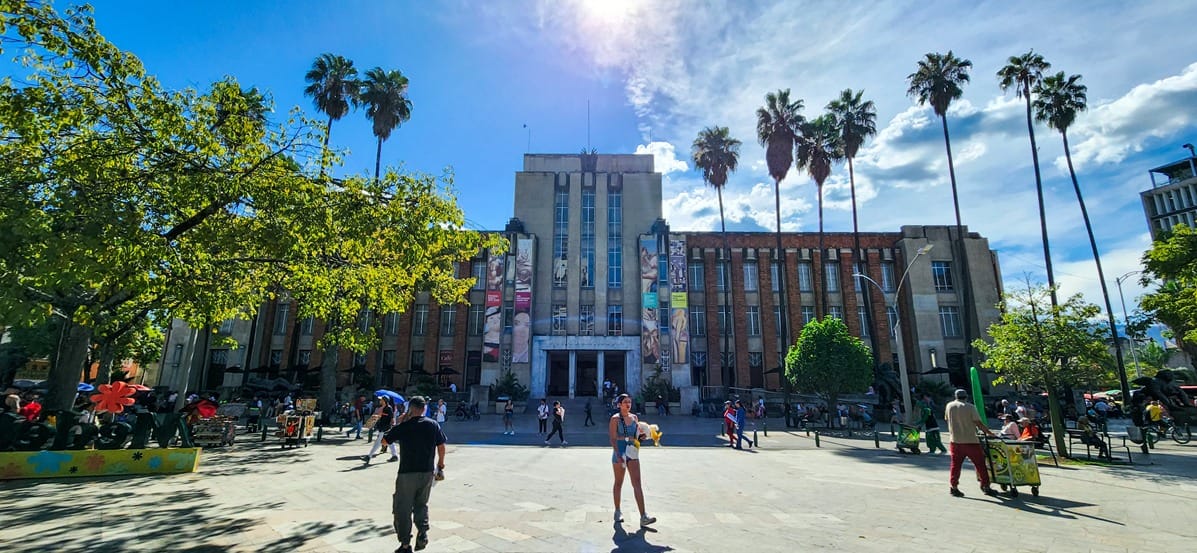
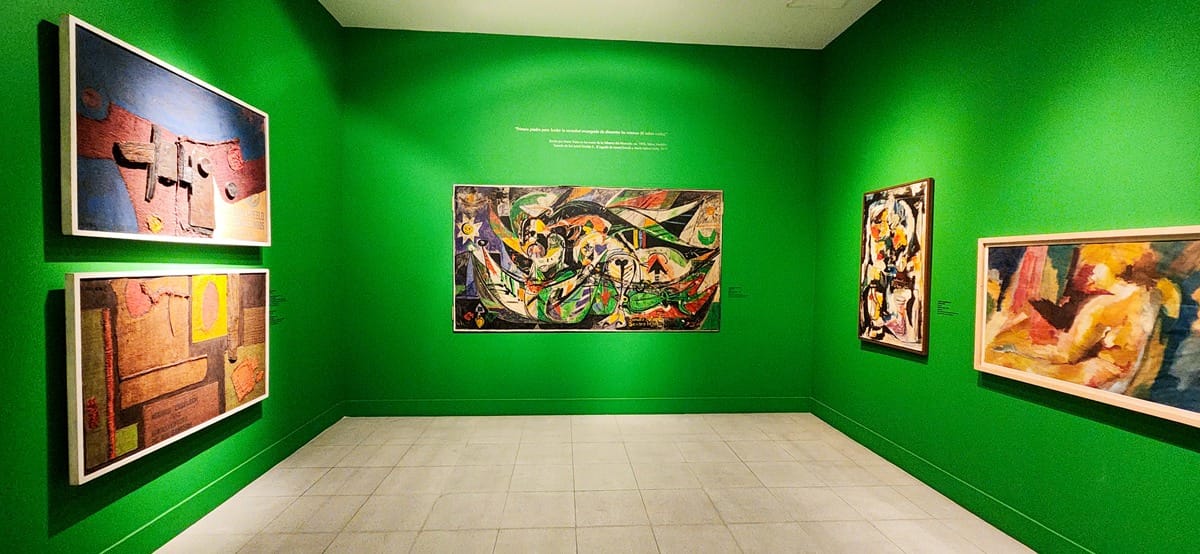
The interesting Museo de Antioquia is located on Plaza Botero. The museum owns a large collection of works by Fernando Botero and Pedro Nel Gómez, but also displays art and historical objects from Antioquia.
A visit helps to better understand the Paisa culture and the history of the region. Botero donated a significant part of his work to the museum and thus played a major role in the development of the square as a cultural landmark.
Take your time for Museo de Antioquia: I spent about 2 to 2.5 hours there. And do you have a Colombian ID card (a cédula)? Don’t forget to bring it; it gives you a huge discount on the entry costs.
You can find Museo de Antioquia on the map here.

Palacio de la Cultura Rafael Uribe Uribe
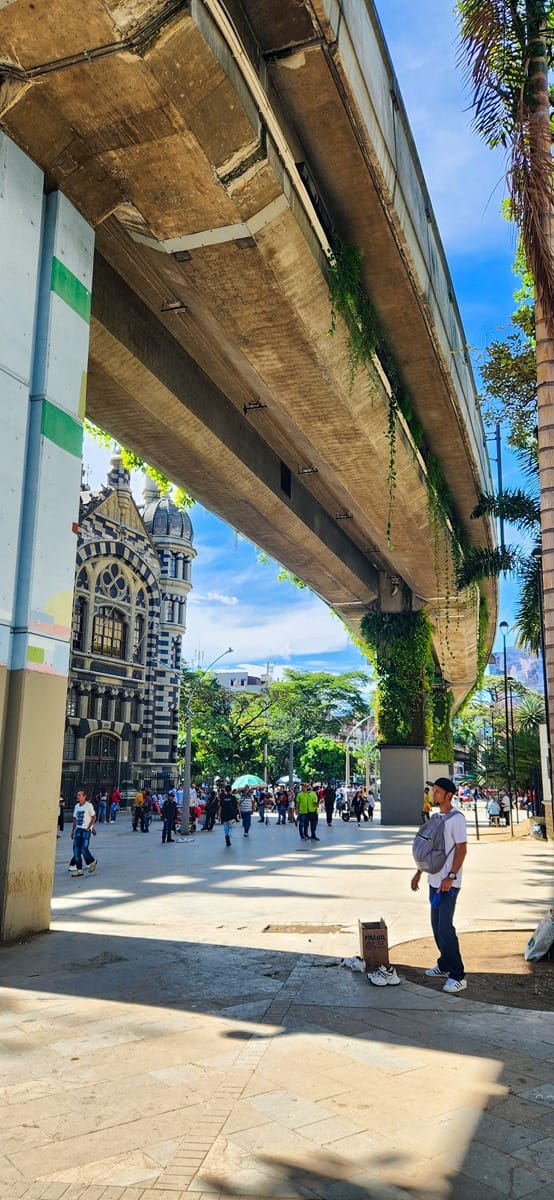
Next to Plaza Botero stands the striking black-and-white Palacio de la Cultura Rafael Uribe Uribe. The building was designed by Belgian architect Agustín Goovaerts and has a neo-Gothic appearance that contrasts sharply with the rest of the center. Ideal for taking beautiful photos.
Inside, there are regular exhibitions and cultural activities. Even without going inside, the building is interesting because of its unusual facade.
Click for the location on the map.
Iglesia de la Veracruz
Close to Plaza Botero is the Iglesia de la Veracruz, one of the older churches in Medellín. The white colonial building forms a great contrast with the bustle, shops, and high-rises around it.
Find the church on the map here.
Parque Berrío
Parque Berrío is the traditional heart of Medellín. The square is located near an important metro station and has been a meeting place for centuries. On the square stands the Basílica de Nuestra Señora de la Candelaria. Due to the crowds, music, and street vendors, you get a good picture of daily city life here. It can be a bit overwhelming if you’ve just arrived in Colombia, but this place is certainly an experience.
Click for Parque Berrío on the map.
Plaza Cisneros and the Parque de las Luces
Plaza Cisneros is known as the Parque de las Luces. On the square stand hundreds of tall light poles that create a special effect, especially in the late afternoon and evening.
The square was part of a larger project to redesign a neglected part of the center. It is thus an example of how architecture and public space were used to transform Medellín.
Click here for the location on the map.
2. Join a walking tour through Medellín
My first time in Medellín, I visited the city with an organized walk, the Free Walking Tour by Real City Tours. They also have a More than Escobar Tour nowadays, which is recommended if you want to know more about Pablo Escobar in a neutral way. Without glorifying him.
With an English-speaking guide and other travelers, you take an informative trip through the city. And the beauty is that the guide does her extra best to earn as much tip as possible from this 4-hour trip. A win-win situation then.
My guide told us about the history of the city and the country and took us to interesting places in the city center. For example, we went to Simon Bolívar Park, where many do not go because of all the drug and alcohol addicts wandering around. And we visited the chaotic streets where all the fake items are sold.
It’s a strange thought that all these people have experienced the war against drugs. All that violence in the city. Those bombs that exploded. Of which, by the way, reminders can still be seen: the exploded statue of the bird for example. Meanwhile, the center has also been considerably refurbished and made safer to walk through with the help of the government and a bit from artist Fernando Botero.


3. Visit Comuna 13
Comuna 13 is probably the most famous neighborhood in Medellín. The neighborhood is located on the western mountain slope and was for a long time a strategic area for guerrilla groups, paramilitaries, and criminal organizations. Especially at the end of the 1990s and the beginning of this century, the population faced a lot of violence.
Nowadays, large numbers of tourists visit the part of Comuna 13 around the Independencias neighborhood daily. You will find murals, viewpoints, dance performances, small shops, and food stalls.
Graffiti and street art
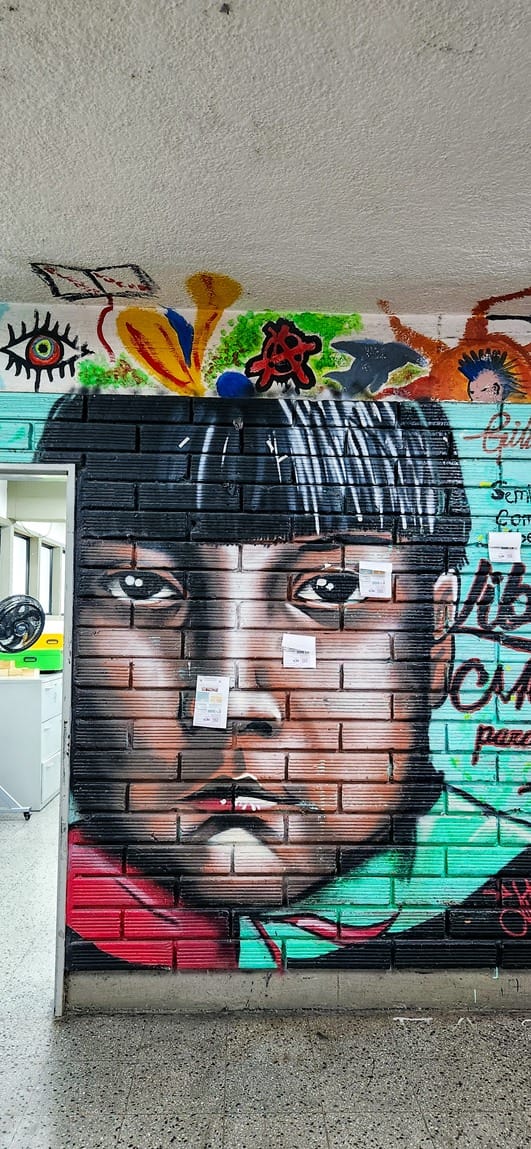
Many murals refer to the neighborhood’s past, disappeared residents, violence, resistance, and hope. A local guide can explain what the symbols and images mean. Without explanation, Comuna 13 is mainly colorful; with the stories behind it, the visit gains much more meaning.
Not all art is about violence. There are also works about nature, Afro-Colombian culture, women, music, and the future of the neighborhood.
The escalators of Comuna 13
In 2011, covered public escalators were opened to make the steep neighborhood more accessible. For residents who used to have to climb hundreds of steps, these escalators made a huge difference.
The escalators grew into a symbol of Medellín’s urban renewal. They are now also the central point of the tourist route through the neighborhood.
Mass tourism in Comuna 13
Tourism provides income for guides, artists, shops, and residents, but in recent years it has burst at the seams. So don’t expect a picturesque scene, but everything aimed at tourism.
Meanwhile, tourism has by no means solved all the problems in the neighborhood. Many residents have lost family members or witnessed people disappearing and still live with the consequences. And poverty and social problems have by no means disappeared.
Therefore, preferably choose a tour from a guide who is actually from the neighborhood. This way, a larger part of the income remains within the local community. You can also book a tour through Comuna 13 here.
In addition, Comuna 13 has now turned into a kind of Disneyland; it is very touristy. I was there myself in 2015, before the mass tourism. Now I don’t need to go there anymore. If you want something more authentic and sustainable, visit Fundación Caminos in Medellín or El Paraiso in Bogotá.

4. Take a ride with the metro and the Metrocable
Public transport is an important part of Medellín’s identity. The first metro line was opened in 1995. To this day (but not for much longer), it is still the only metro system in Colombia.
Many residents are proud of the so-called cultura metro: the idea that travelers handle the system carefully and respectfully. The metro is also remarkably clean and organized. It feels a bit European.
Metrocable to Santo Domingo
The cable car from Acevedo to Santo Domingo was opened in 2004. This was one of the first cable cars in the world to be fully integrated into the normal public transport of a large city.
The cable car was not primarily intended for tourists. It connected neighborhoods high up the mountain slope with the metro and significantly shortened travel times for many residents. From the cabins, you can see how closely the houses are built against the mountains.
Metrocable to Parque Arví
From Santo Domingo, you can transfer to the cable car to Parque Arví. This line leaves the densely built city and then floats for a long time above a green forest area.
The ride is one of the best ways to experience the scale and location of Medellín. You first see thousands of brick houses, after which you are suddenly hanging above the forest.


5. Spend a day in Parque Arví
Parque Arví is located in the mountains east of Medellín and is accessible by cable car. The protected nature and recreation area consists of forests and hiking trails.
A market is often held at the cable car station with local products, snacks, and handicrafts. For some longer or less clearly marked routes, it is wise to go out with a local guide.
Don’t expect completely untouched wilderness. Parque Arví is a large cultural landscape where people have lived and worked for centuries. It is mainly a nice change from the hustle and heat of the city.
You can find Parque Arví on the map here.


6. Street art in El Poblado
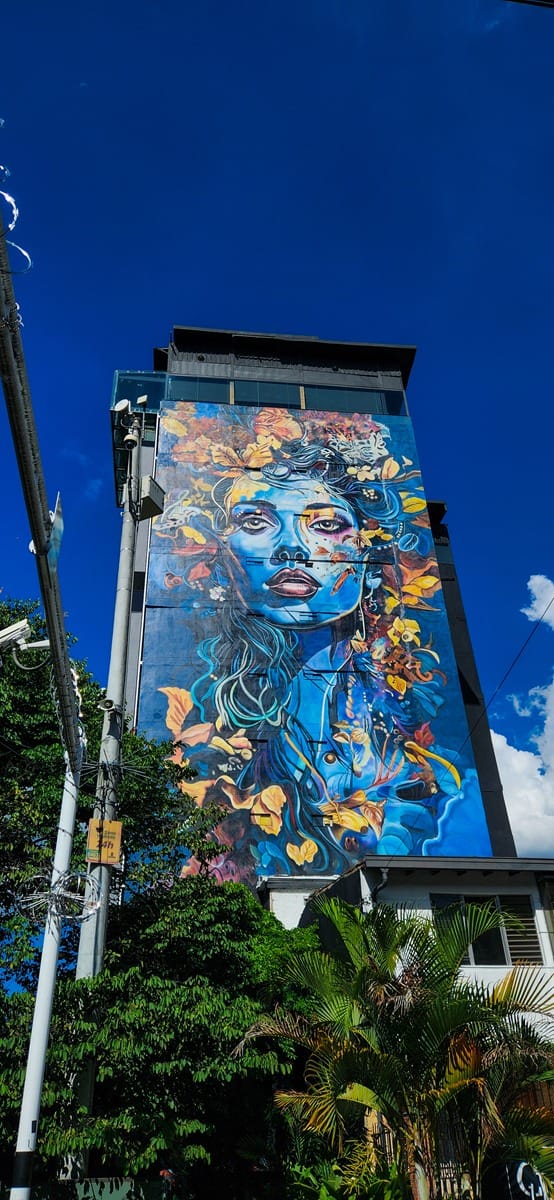
Don’t forget the neighborhood of El Poblado, one of the most popular areas of Medellín, where most tourists stay. El Poblado is an upscale neighborhood with lots of greenery and wide avenues. In recent years, El Poblado has increasingly become a street art mecca. Read all about the street art in El Poblado.


7. Discover more of El Poblado
Besides street art, El Poblado has much more. You will find hotels, restaurants, coffee bars, shops, and many nightlife venues.
Parque Lleras and Provenza
Parque Lleras was for a long time the central nightlife area. Nowadays, the nearby street Provenza is especially popular, with restaurants, terraces, and bars among lots of greenery.
The area is lively, but also very much aimed at foreign visitors. If you only stay in El Poblado, you’ll get a limited impression of Medellín. Be sure to combine your visit to this neighborhood with exploring the rest of the city.
Find Parque Lleras on the map here.
Manila
Manila is a quieter part of El Poblado with smaller hotels, cafes, and restaurants. The neighborhood has a more relaxed feel than Parque Lleras and Provenza.
Due to its location close to Poblado metro station, Manila is a practical base for visitors who want to travel a lot by public transport.
Museo El Castillo
Museo El Castillo is located in a neo-Gothic house reminiscent of a European castle. It was built in the twentieth century and later inhabited by a wealthy industrial family.
Inside, you can see furniture, art, and decorative objects from different periods. The gardens offer views over the south of Medellín and provide a quiet spot outside the busiest part of El Poblado.
8. Walk through the botanical garden
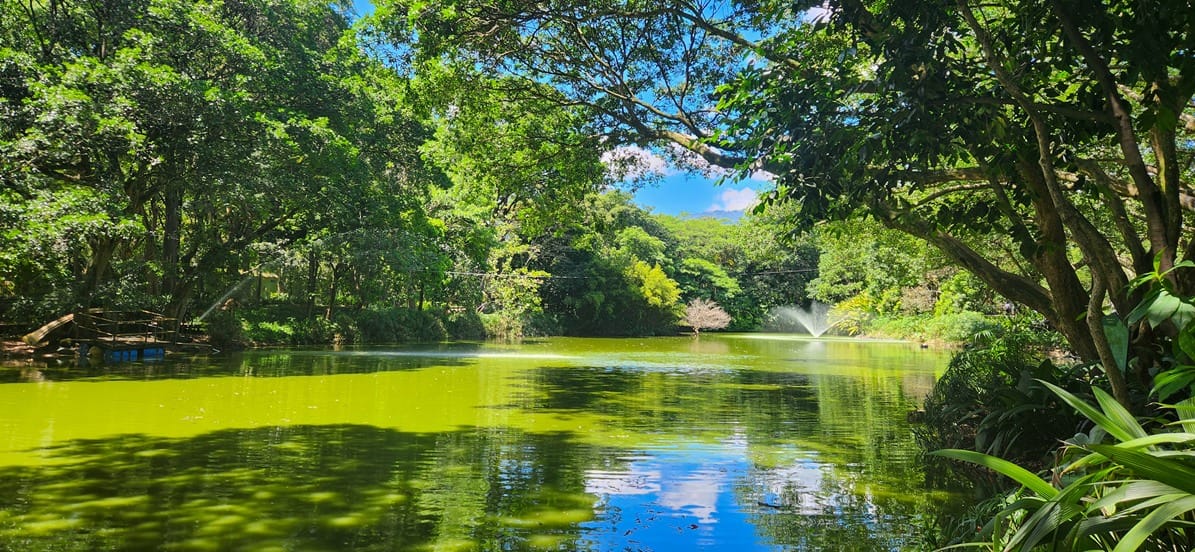
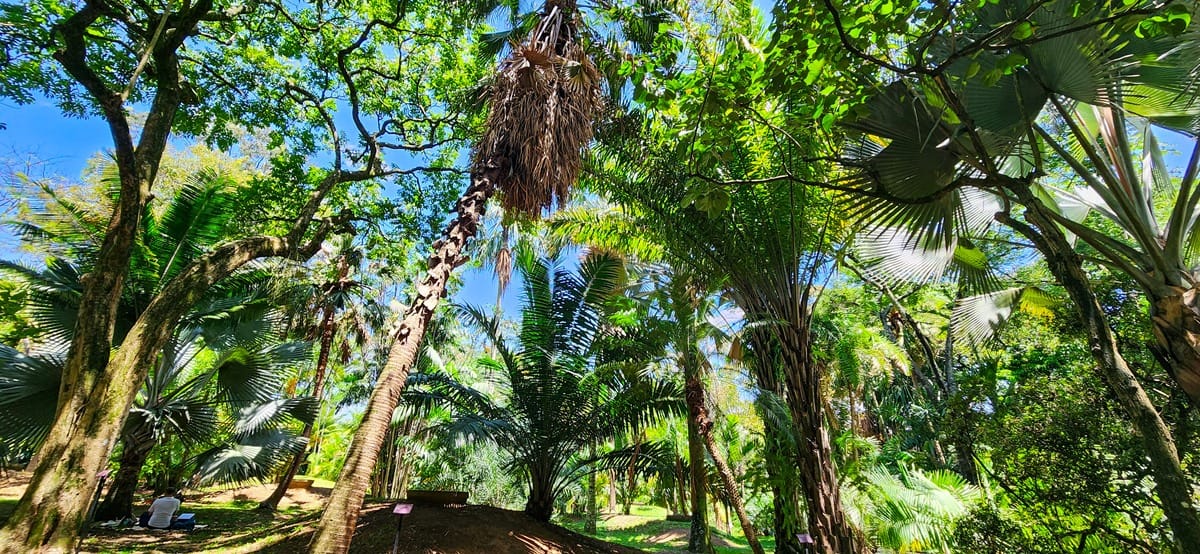
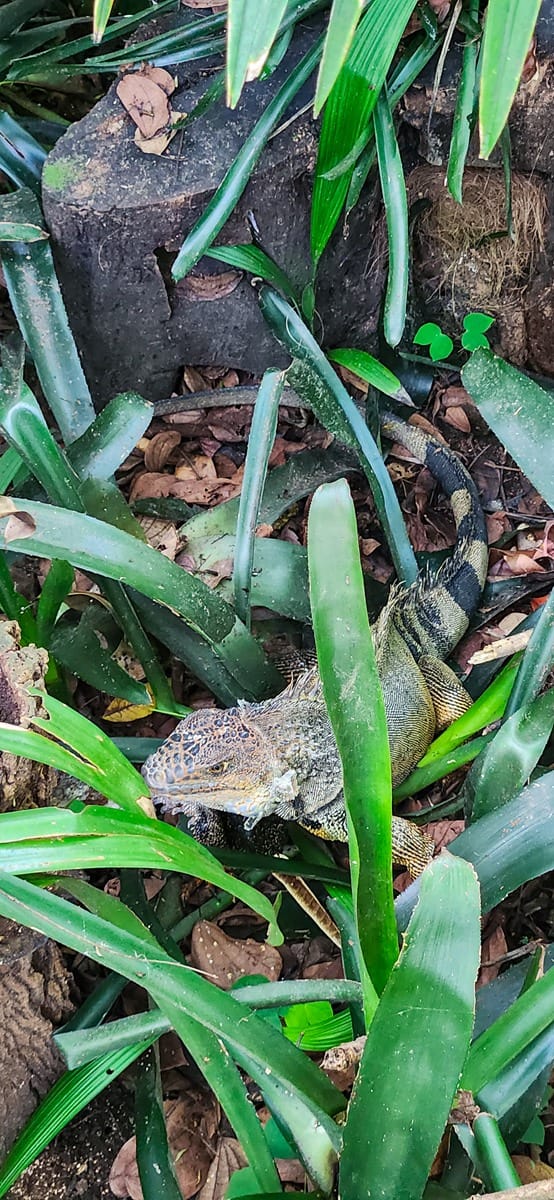
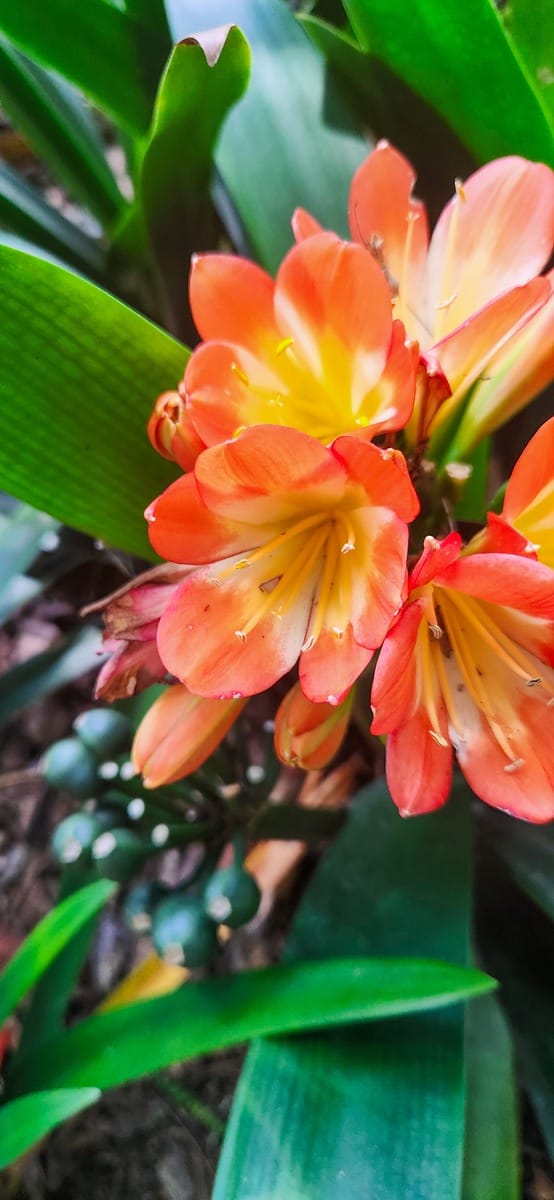
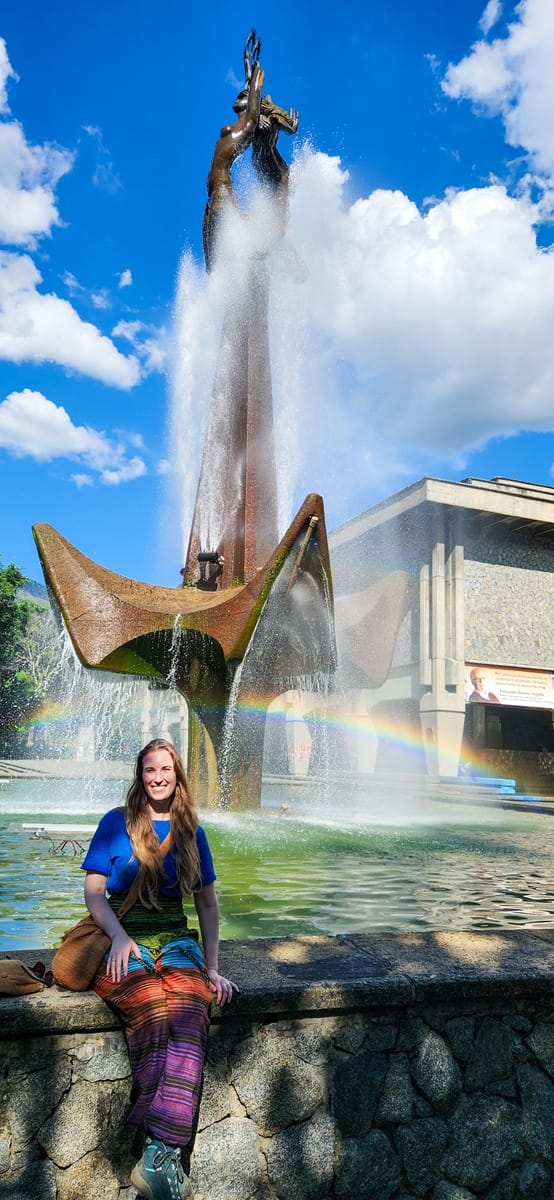
The Jardín Botánico Joaquín Antonio Uribe is a green spot in the north of Medellín. In the gardens, you will find tropical plants, palms, a lake, and various types of birds and iguanas. Additionally, I also came across a turtle and a squirrel there.
The most striking structure is the Orquideorama, an open wooden construction inspired by flowers and trees. Events and exhibitions are organized here, including activities around orchids, but also yoga.
The botanical garden is located next to Universidad metro station and is therefore easily accessible. You can combine a visit with Parque Explora and the Planetario de Medellín. Or visit point 9 below: the University of Antioquia, almost next to the botanical gardens.
You can find the botanical gardens of Medellín on the map here.



9. Universidad de Antioquia (off the beaten path in Medellín)
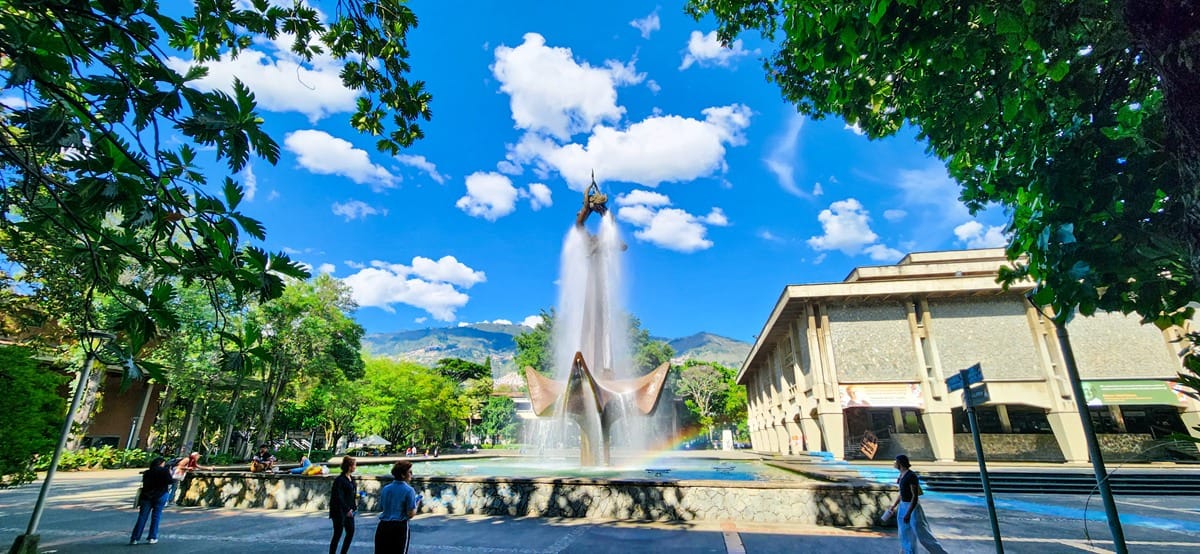
Close to the botanical garden is the Universidad de Antioquia, one of the oldest and most important public universities in Colombia. The history of the university began in 1803, when a Franciscan college was opened in Medellín. Over the course of the nineteenth and twentieth centuries, this grew into an important center for education, science, and culture in Antioquia.
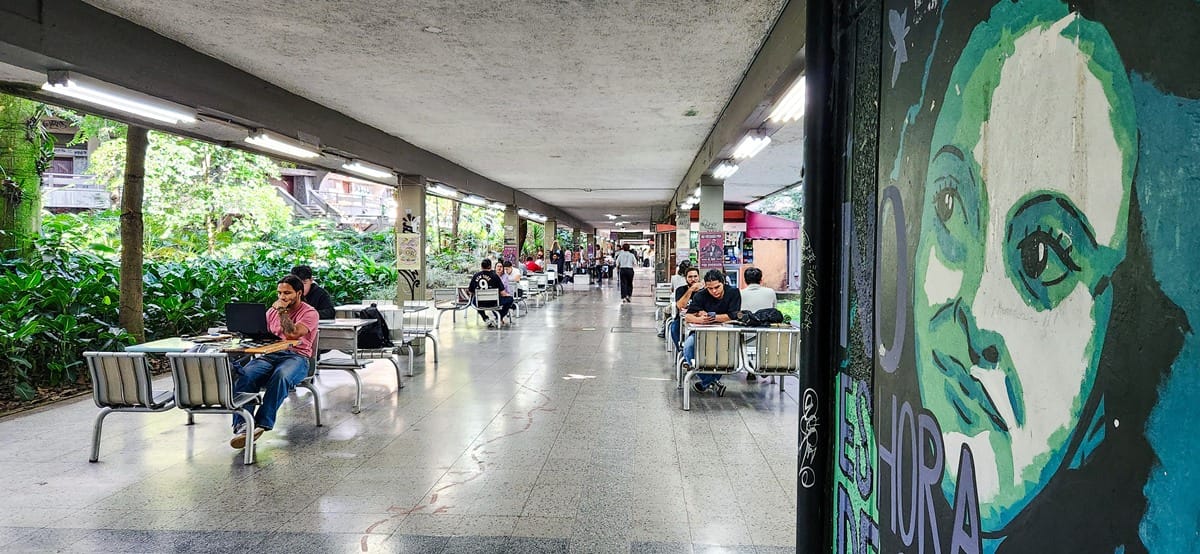
The main campus, the Ciudad Universitaria, is much more than just a place where students attend lectures. The green grounds almost form a small city within Medellín, with squares, trees, libraries, theaters, and artworks. The university has a strong cultural and social role and is known as a place where politics, social inequality, and the future of Colombia are debated.
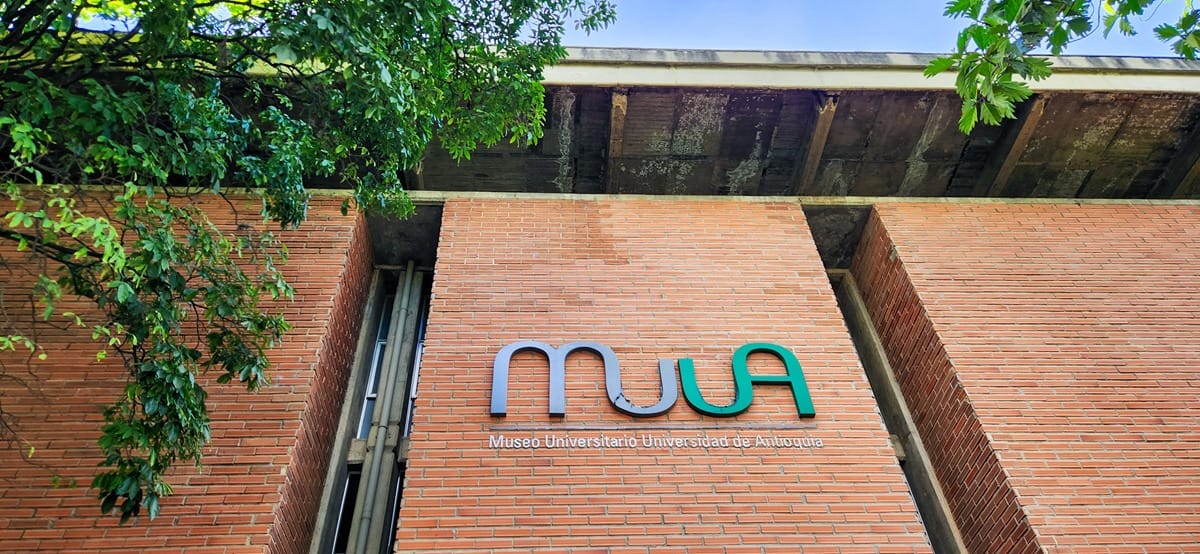
On campus, you will also find the Museo Universitario de la Universidad de Antioquia, abbreviated as MUUA. The museum was founded in 1970 and has collections on anthropology, visual arts, natural sciences, and the history of the university. In addition, artworks by various well-known Colombian artists are scattered across the campus, allowing the grounds to also be viewed as an open-air museum.
A walk across the campus gives you a different view of Medellín than the well-known tourist neighborhoods. You see the daily student life and get to know an institution that has played an important role in the development of the city and the region for more than two centuries.
To get inside, you have to pass security where I had to show my ID card myself. So bring it with you. I found it a very interesting visit, nice to see another side of Medellín.



10. Learn more about the violent past at Museo Casa de la Memoria
Museo Casa de la Memoria is one of the most important museums in Medellín for those who want to understand the city’s recent history. The museum tells about the armed conflict, drug violence, forced displacement, and the experiences of victims.
The focus is not on Pablo Escobar as a famous criminal, but on the people who suffered the consequences of the violence. Personal stories, photos, and audio clips make clear how much influence the conflict has had on ordinary families.
The museum thus serves as a counterweight to tours that present Escobar’s life sensationally. Medellín is trying more and more to distance itself from the glorification of his name, which is very logical. So definitely visit this museum if you want to know more about the violent years of Pablo Escobar.
You can find the Museo Casa de la Memoria on the map here.
11. View modern art at the MAMM
The Museo de Arte Moderno de Medellín, abbreviated as MAMM, is located in Ciudad del Río, near El Poblado. The museum is housed in a former steel factory and is worth it for that reason alone.
The collection focuses on modern and contemporary art from Colombia and Latin America. Among other things, you can see work by Débora Arango, an artist from Antioquia who became known for critical paintings about politics, religion, and the position of women.
Around the museum is a popular city park where residents exercise, picnic, and walk their dogs. Nice to observe daily life in Medellín after your visit.
Click here for MAMM on the map.
What to do in the surroundings of Medellín? | 6 Tips
Medellín is a good base to discover the surroundings, and they are beautiful, I can tell you. Antioquia has a lot to offer, from beautiful green mountains to colorful villages, many waterfalls, and special hotels.
1. Visit Envigado
Envigado is located south of Medellín and is officially an independent municipality within the metropolitan area of the Aburrá Valley. However, you notice little of that when traveling from Medellín to Envigado.
Around Parque de Envigado, you will find a traditional central square, a church, restaurants, and cafes. Envigado has a more village-like character than many parts of Medellín, although it is now also densely built and modern.
A visit is especially interesting if you are staying in the city for a longer period and want to look beyond the most famous tourist neighborhoods. Additionally, Envigado is also a good place to look for your hotel. You can reach Medellín in no time by metro, bus, or taxi. For example, go to Ayura metro station in Envigado. From there, you have to walk a bit to get anywhere, but you’ll immediately see a bit of the city.
Casa Museo Otraparte
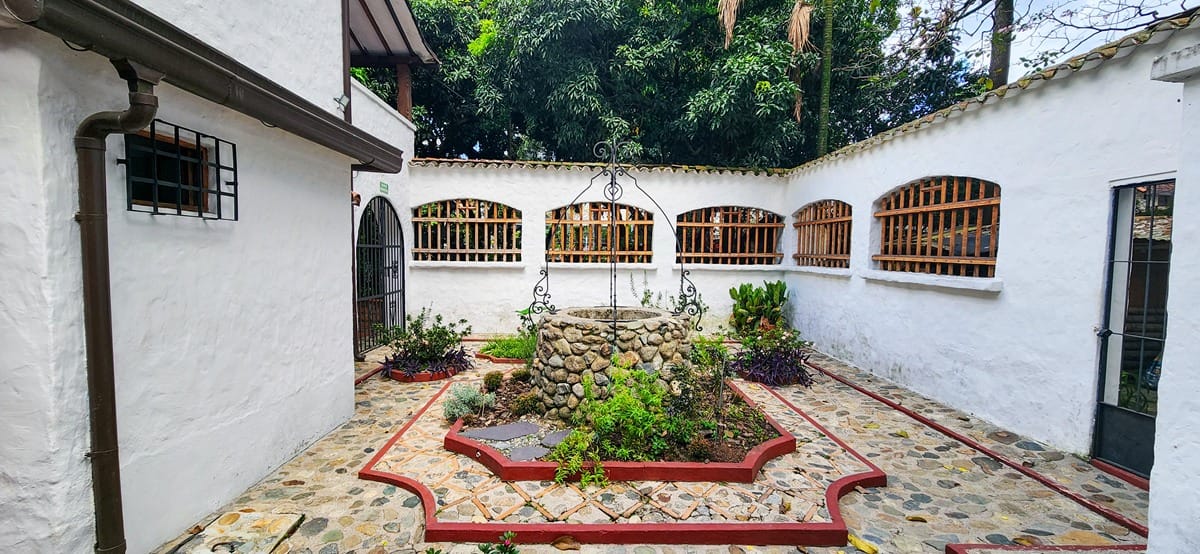
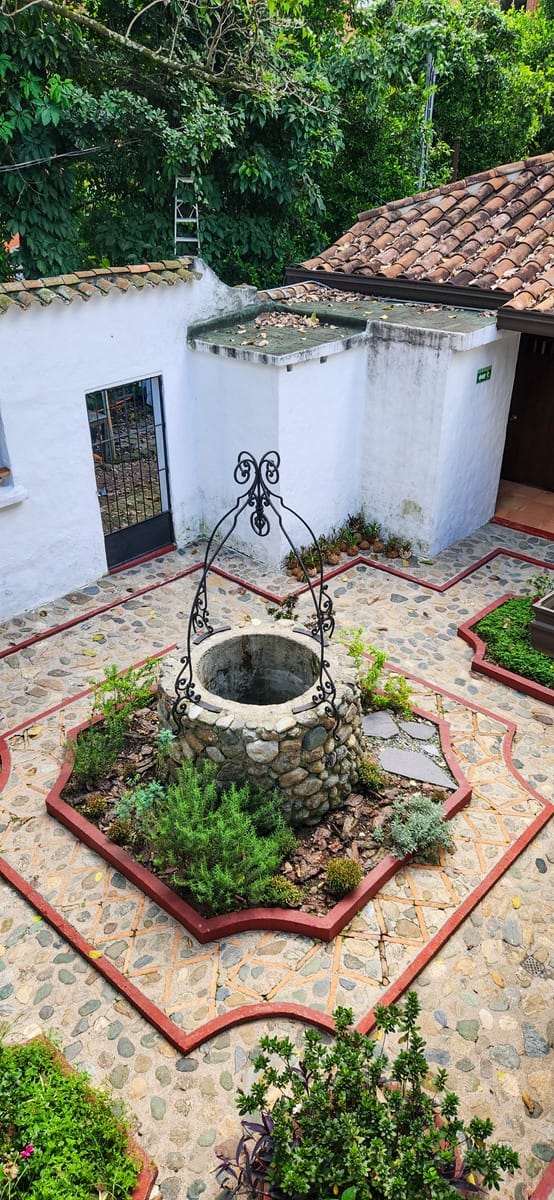
One of the most special places in Envigado is Casa Museo Otraparte, the former home of the Colombian philosopher and writer Fernando González Ochoa. He was born in Envigado in 1895 and wrote about philosophy, religion, politics, travel, and Colombian society, among other things.
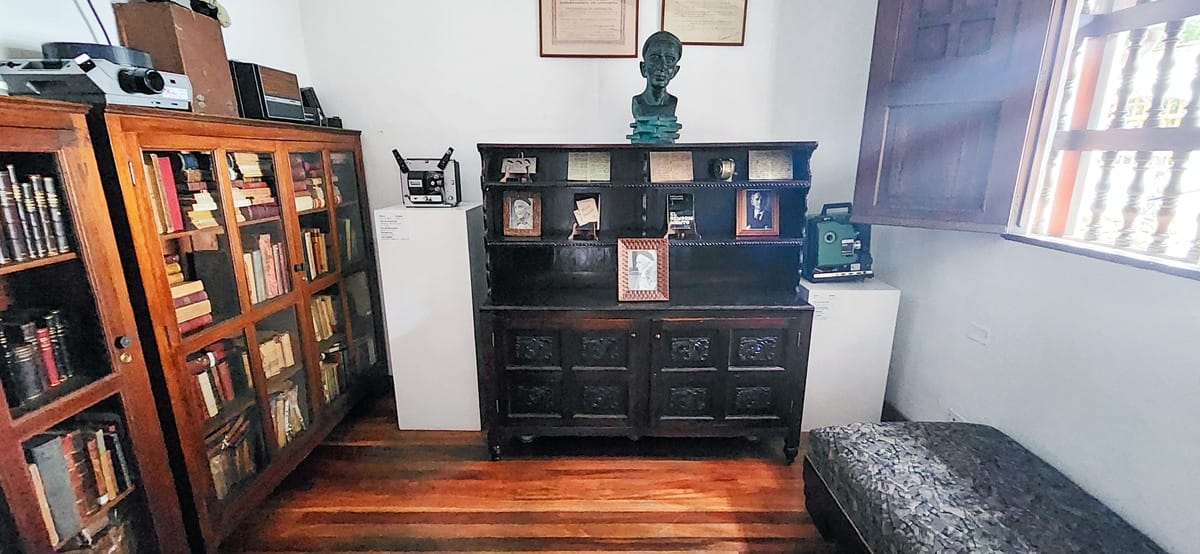
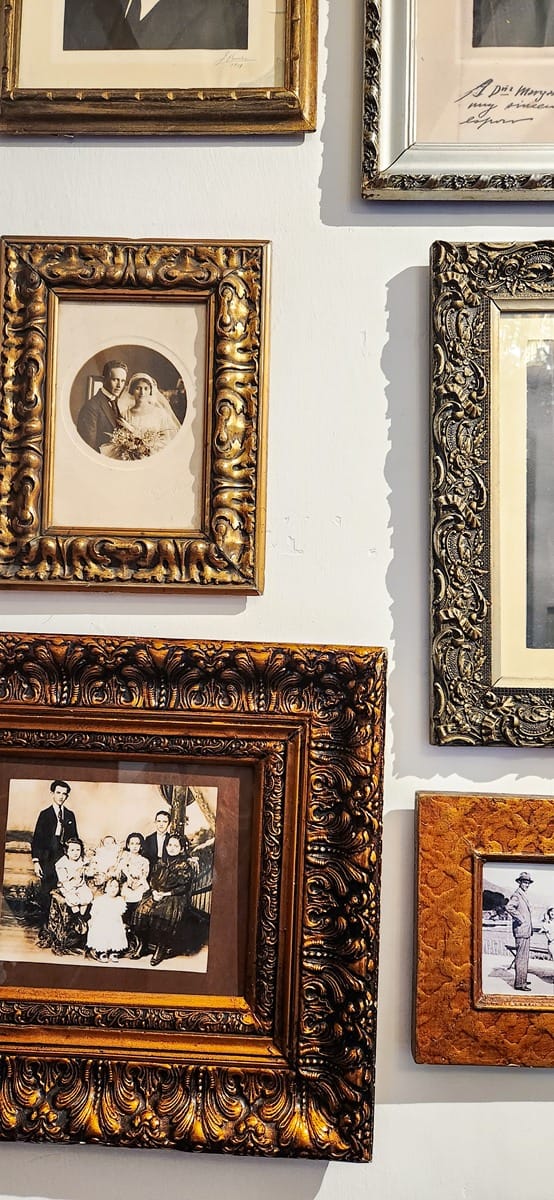
Fernando González named his house Otraparte, which literally means ‘another place’. The house was built in 1940 and grew into a meeting place for writers, artists, and intellectuals. Today, it is a museum and cultural center dedicated to his life and work. You can view his study, personal items, books, photos, and parts of the original interior.
Even if you are not familiar with his books, the museum is fun to visit. It is a beautiful, peaceful spot in a busy area, ideal for escaping the hustle and bustle. Personally, I found it a very beautiful museum, and I also sat in the adjacent garden for a while.
The museum is free.
Click here for Museum Otraparte on the map.

El Café de Otraparte
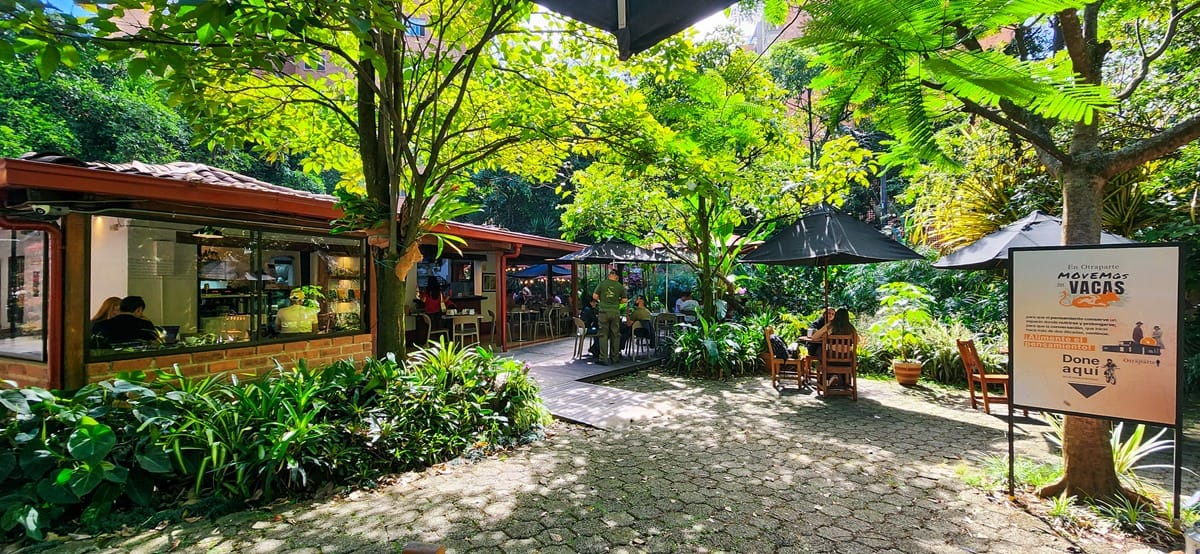
Right next to the museum is El Café de Otraparte, a charming café-restaurant in a green garden. Truly a lovely place to sit, drink coffee or tea, and have lunch (delicious food, including vegetarian options).
You can go there for breakfast, lunch, dinner, coffee, desserts, and small dishes. Various parts of the menu refer to the life and ideas of the philosopher. The café’s income contributes to the maintenance of the museum and the cultural activities of Otraparte.
Find Café de Otraparte on the map here.
Parque Lineal La Frontera
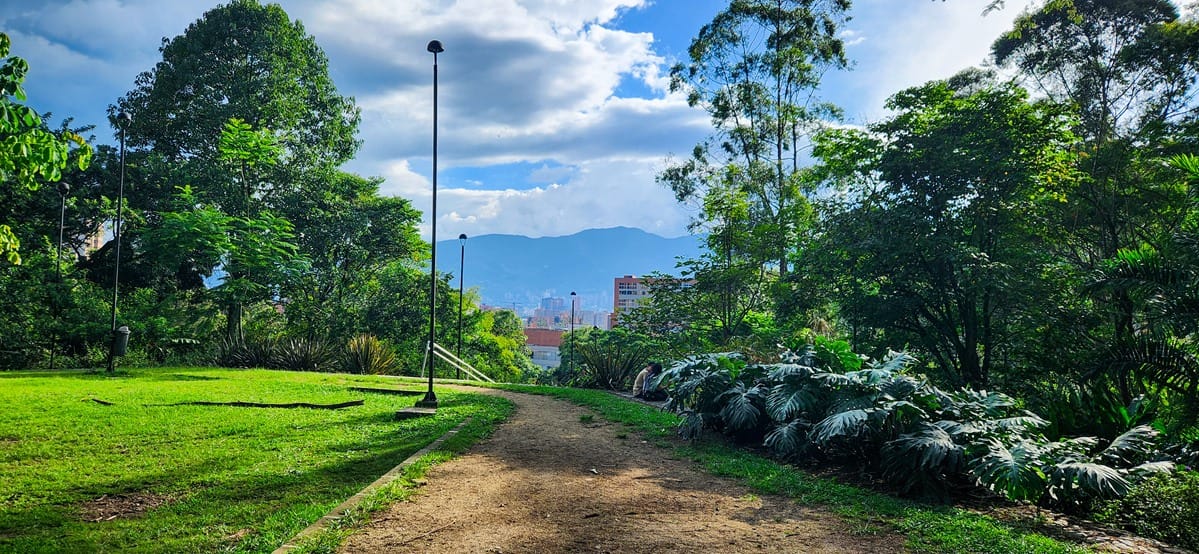
Near Casa Museo Otraparte, within walking distance, you will find Parque Lineal La Frontera, an elongated green park on the border of Envigado and the El Poblado neighborhood in Medellín. It is not called ‘La Frontera’ (the border) for nothing.
Walking paths run through the park between native trees, shrubs, palms, and guadua. The vegetation attracts various species of birds, butterflies, and other small animals.
Parque Lineal La Frontera is not a major tourist attraction that requires half a day. But it is certainly nice to visit if you are already there.
There is a section, a larger road in the park that leads to a dead end (see the map), which I didn’t find pleasant; only people using drugs were there and no one else was walking around. I turned back there. The rest of the park is very beautiful, including the view.
Find Parque Lineal La Frontera on the map here.
2. Guatapé & El Peñol
The most popular day or multi-day trip from Medellín is the colorful village of Guatapé and the nearby high rock El Peñol. Guatapé is known for its colorful reliefs, zócalos, at the bottom of the house facades.
Near the village lies the enormous rock Piedra del Peñol. You can climb to a viewpoint on top of the rock via more than 700 steps. From there, you look out over a landscape of lakes, islands, and green hills.
Preferably set aside a full day for Guatapé or stay for 1 or 2 nights.
Note: this place is very touristy. I visited it before mass tourism, so the crowds are not reflected in my photos. If you are looking for a more unique experience, check out numbers 3 and 4 below.
Read more about Guatapé and El Peñol.


3. Jardín
Just a 3.5-hour drive from Medellín, you arrive in Jardín. A wonderfully colorful village with spectacular surroundings. There is so much to do and see, so take your time. I stayed in Jardín for 6 nights myself, at the beautiful Glamping Jardín.
I bought my bus ticket with the bus company Rápido Ochoa via Busbud. Very easy. The bus departs from Terminal del Sur in Medellín.
Read my complete Jardín travel guide here.

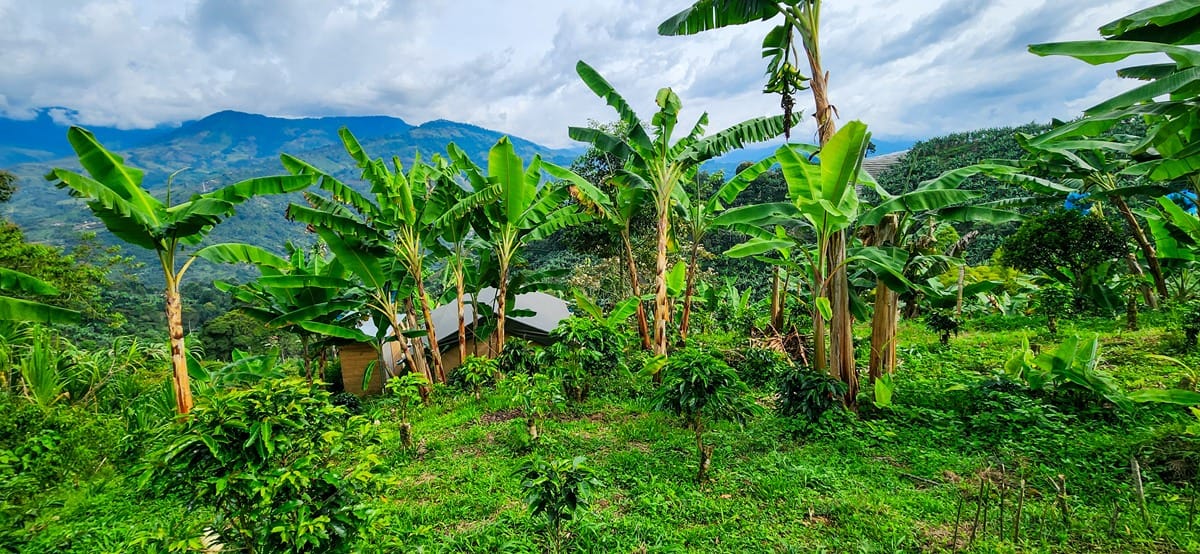
4. Cocorná: stay in magical Soplo del Tambo
Cocorná is a not-so-pretty village a 2-hour drive south of Medellín. And although the village is not very attractive, the surroundings certainly are. Cocorná is magical. The mountains are incredibly beautiful and there is plenty to do (think paragliding, visiting waterfalls, hiking, and more).
Additionally, you will find a very special hotel here, set up by the Dutch Heidi. Namely Soplo del Tambo. A place focused on well-being and tranquility. Here you are far away from all the hustle and bustle, one with nature, and you can truly disconnect from everything.
You can simply stay there, enjoy the surroundings, the delicious food Heidi makes, and meditation and yoga. Or you can participate in a retreat. Retreats are available starting from 1 person, tailored to what you want.
If you are looking for a unique experience in nature near Medellín, then Soplo del Tambo is for you.
Read all about Soplo del Tambo and the surroundings here.

5. Río Claro
A bit further from Cocorná, on the route between Medellín and Bogotá, you will find Río Claro. A nature reserve where you can do all sorts of things. Think rafting, hiking, and other extreme sports.
I was there years ago and also stayed in a hotel. Read about my experience at Río Claro here.

6. Santa Fe de Antioquia
On the other side of Medellín, to the north, you will find the village of Santa Fe de Antioquia. Once the capital of Antioquia, it is now a popular weekend and holiday destination for the Paisas. It is a colonial village and sweltering hot.
I also visited here years ago, when it was much less touristy and when international travelers hadn’t heard of this place yet. So expect more crowds and more hotels now if you go to Santa Fe de Antioquia.
It will still be beautiful, though, and sweltering hot too. Ideal for a 1 or 2-night getaway.
Read all about Santa Fe de Antioquia here.


Visit a foundation in Medellín or donate to charity
In Medellín, there are many foundations dedicated to improving the lives of the population. Especially high in the mountains where many people live in poverty. Some foundations can be visited, or you can make a donation to support their hard and good work.
1. Children of Medellín (Fundación Caminos)
In the poorer neighborhoods of Medellín, poverty, neglect, violence, addiction, and sexual harassment are part of daily life. A situation in which millions of children grow up and find it difficult to escape.
Many aid organizations are active in Colombia to help children in poverty find a better future. One of these organizations is Children of Medellín, formerly Straatkinderen Medellín. And in Spanish Fundación Caminos.
In the outskirts of Carambolas and Bello Oriente
The Children of Medellín foundation works in the center of Medellín and in the outskirts of Carambolas and Bello Oriente with about 500 children. Their own accommodation, El Paraiso (Paradise), has since grown into a large house located on the mountain with an incredibly beautiful view over the city.
Not only does El Paraiso provide support for the children and their families, the foundation also helps children study. In 2018, the first student graduated from university, followed by more. Currently, 12 young people are studying through the foundation, and this number will be expanded in the coming years.
You can visit the foundation, buy something, donate, and you can also do volunteer work there. Read all about Children of Medellín and how you can help here.


2. Digital Nomads for Good (DNfG): give something back to Medellín
In recent years, Medellín has grown into a popular destination for digital nomads and other foreigners working remotely. They benefit from, among other things, the pleasant climate, relatively low costs, good internet connections, and the wide range of cafés and coworking spaces. At the same time, their arrival also raises concerns. Foreign incomes also contribute to rising rental prices and create a growing gap between visitors and local residents.
Give Where You Live: give something back to the community in which you live temporarily or long-term
Digital Nomads for Good, abbreviated as DNfG, tries to bring those two worlds closer together. The organization works according to the principle Give Where You Live: give something back to the community in which you live temporarily or long-term. Through the platform, digital nomads, expats, and other international residents are linked to reliable local charities and social organizations.
The organization works with about 18 local organizations that focus on children, education, food aid, healthcare, the elderly, displaced families, indigenous communities, and animal welfare, among other things.
Donating, volunteering, and sharing knowledge
DNfG focuses on three ways foreigners can contribute: donations, volunteering, and sharing knowledge and skills. Through the platform, people can choose a local organization and support it financially. This makes donating easier for foreigners, as small Colombian organizations do not always have international payment options.
Additionally, DNfG organizes low-threshold volunteer activities. Participants can, for example, help with a neighborhood activity, distribute food, renovate a common area, or provide support during an event. Some activities last only one day, making them accessible to people living temporarily in Medellín or those with little time alongside their work.
Professional knowledge can also be valuable. Digital nomads often have experience in areas such as communication, web design, marketing, fundraising, photography, administration, or technology. By sharing that knowledge, they can help local organizations become more visible, work more efficiently, or reach more people.
Transparency and local impact
An important part of DNfG is transparency. The organization provides participants with updates on projects and shows what local results are achieved with donations and volunteer work. This creates more engagement than a one-time, anonymous donation.
DNfG wants to prevent foreigners from only using the benefits of Medellín without making real contact with local society. By working with organizations that are already active in the neighborhoods, the local community remains leading. The goal is not for foreign volunteers to decide what a neighborhood needs, but for them to support existing Colombian initiatives.
A response to the consequences of gentrification
The growth of tourism and the number of foreign residents has complex economic and social consequences that cannot be solved with a few donations. However, DNfG offers a concrete way to let some of the benefits that digital nomads experience flow back to local communities.
With this, DNfG also wants to change the image of digital nomads. Instead of temporary residents who only benefit from low prices and a comfortable lifestyle, they can become active participants in the city. The ultimate goal is to apply the model in other cities after the pilot in Medellín.
DNfG shows that responsible travel or temporary living can go beyond spending money at local restaurants and shops. By making money, time, or professional knowledge available, foreign residents can contribute to organizations that try to improve Medellín from the inside out every day.
Read all about DNfG here, click here to follow on Instagram and make a donation here.

3. Mi Barrio Mi Sueño Foundation
The Mi Barrio Mi Sueño Foundation stimulates change in disadvantaged neighborhoods in Medellín with innovative programs for children and women to break free from violence, discrimination, and educational barriers. Our support is focused on both body and mind, and they involve the entire community in their activities.
Andrea Gonzalez Duarte Van Der Leeuw is the founder of this foundation. Born in Bogotá and raised in the Netherlands after adoption, she is now 100% committed to empowering girls and women in Medellín.
The foundation focuses on the La Honda community in Medellín. This neighborhood consists of many indigenous people, Venezuelans seeking a better life, and families who have moved from the countryside to the city to escape conflict.
Click here to read more about the Mi Barrio Mi Sueño Foundation and see how you can help.

Is Medellín safe?
Just like in any large city in Colombia, Medellín is not safe everywhere. In fact, with increasing (drug) tourism, bad things still happen that you don’t want to experience. Do your research (for example here) and listen to the locals instead of tourists who haven’t had anything happen to them and don’t know the city well.
Dangerous things also happen in the safe neighborhood of El Poblado, especially at night. Stay away from drugs if you don’t want trouble, don’t just stop cabs (especially at night) and walking the streets drunk is asking for trouble.
Increased tourism is again creating new problems, and although Medellín is much safer than it was years ago, there are still problems.
What not to do in Medellín:
- Buy or use drugs
- Hailing a cab on the street (always book through an app)
- Especially for foreign men: using dating apps and dating women you don’t know
- Also for foreign men: do not go looking for underage girls
In addition, observe standard safety tips. Be careful with your phone on the street, watch out for pickpockets in the metro and in busy areas, and it’s best to visit the center of Medellín only during the day.
Medellín: a surprising city
Medellín is surprisingly fun. A city in the Andes mountains that feels more European than Colombian. With well-maintained roads, beautiful green mountains, many shopping centers, and one of the best hospitals in Colombia. Medellín is still developing rapidly. A must-see during your tour through Colombia.



This article contains affiliate links. If you click on one of these links and make a purchase, I receive a small commission. The price remains the same for you. This helps me to create new content and maintain my website.
