


To get right to the point: Colombia is the wettest country in the world. Nowhere falls as much rain as here. Want to change your travel plans right now? No need to. After all, Colombia is also an immense country. With huge differences per region. In this article I tell you exactly where and how much it rains in Colombia. What rainy seasons there are and what you should consider as a traveler. And discover that traveling during the rainy season in Colombia is not such a bad idea at all.
Table of contents
How much does it rain in Colombia?
There is an average of 3240 mm of rainfall per year in Colombia. Because Colombia is so large, so are the regional differences in rainfall. For example, in Chocó on the Pacific coast, rainfall averages between 8000 and 13000 mm per year. So that’s 13 meters of rain per year, making this area one of the wettest in the world. On the other side of Colombia, in La Guajira, however, only about 200 to 500 mm of rain falls per year.
Just for comparison, the average annual rainfall in the Netherlands is 850 mm, in New York it is 1141 mm and in Thailand the annual average is about 1500 mm of rain.
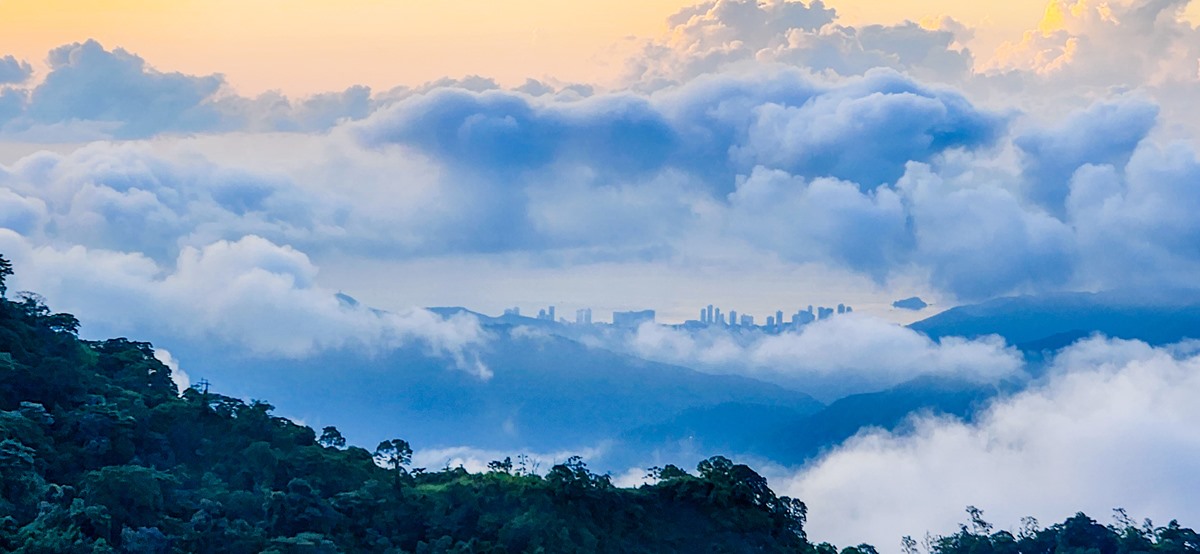
In the rainy season in Minca.
When is the rainy season in Colombia?
Colombia has unimodal (one rainy season), bimodal (two rainy seasons) and mixed rainy seasons. In addition, there are areas with almost only rainy seasons, where it rains almost all the time. So there is not one rainy season for the whole country. In addition, due to climate change, the rainy seasons are no longer as tightly defined as before. It can also rain in the dry season and it can also be beautiful weather during the rainy season.
Rainy season by region in Colombia
If you like as little rain as possible, tune your trip to the rainy seasons for each Colombian region. Keep in mind that this is not so delineated these days, but it does give an indication.
The Pacific Coast (Chocó, coastal strips of Valle del Cauca, Cauca and Nariño on the coast)
In this region, it rains almost all year round. This is the area with that world record I mentioned earlier: 8 to 13 meters per year. One of the wettest places on earth is the village of Lloró in Chocó. Where you can expect those 13 meters of rain.
Between January and March you are most likely to have some drier periods. And most of the rain falls between May and October. Because of the rain, this area is stunningly beautiful and extremely green. Chocó I have yet to visit myself, but Nariño is on one of my Colombia highlights.
The Caribbean coast (La Guajira, Magdalena, Atlántico, Bolívar, Sucre, Córdoba) and the islands
This area has predominantly one rainy season, between May and November. Between December and March it is drier. In addition, many coastal areas have a brief drier period in June and July, also called veranillo de San Juan.
Also, the islands San Andrés and Providencia have a distinctly drier period between mid-February and mid-April.
I have had the opportunity to make many visits to the Colombian Caribbean coast. Think about Montería, Coveñas, Barranquilla, Cartagena, Tayrona National Park, Minca and Palomino. And yes, everywhere I have had rain, but the amount is much less than in, say, Bogotá. I visited Minca and Palomino in the middle of the rainy season. That means short but heavy showers especially in the afternoon, and mud everywhere. I honestly thought it was a wonderful period.
The Andes Mountains (Antioquia, Cundinamarca, Boyacá, Santander, Norte de Santander, Quindío, Tolima, Huila, Nariño interior)
The Andes have two rainy seasons per year. Namely, from March to May and from September to mid-December. Between mid-December and February, and between June and August it is drier. There are many variations in this depending on the exact location and altitude. But in general, this is quite right.
Bogotá (and 4 years Sopó) is where I have lived for almost 11 years. For the first few years, the rainy season was still very tightly defined; you could almost set your clock by it. Meanwhile, those boundaries have blurred a bit. For example, in early 2025 during the dry season it literally only rained, and in 2024 it was just so hot (by Bogotan standards) and sunny that the city was in a water crisis all year (every week the water was shut off for 24 hours to conserve).
I also once spent the dry season in the Tatacoa desert with rain, were all trips in Boyacá on hope of a blessing, and in Santander (like in Barichara), on the contrary, it has become extremely dry.
Los Llanos/Orinoco (Meta, Casanare, Arauca, Vichada)
This area is unimodal: wetter between April and November and drier between December and March. Ideal for savanna landscapes and river trips in the dry season, and enjoy the mega-green landscapes in the rainy season.
The Amazon (Amazonas, Caquetá, Putumayo, Guainía, Vaupés)
It can always rain in the Amazon, but there is a distinct rainy season between November and April/May. The Amazon is one of those areas that looks completely different in the rainy season than in the dry season, as the Amazon River rises by as much as 10 meters. You are then much closer to the treetops and the animals that live there.
I myself visited the Amazon in the dry season, and I still want to go back once in the rainy season.

What is the best travel time for Colombia?
There is none, although you are most likely to have the least rain between mid-December and late February. But you can travel in Colombia just fine all year round. Yes, you are more likely to get rain in April, May, October and November, for example, but even in the drier seasons it rains regularly. I would say go to Colombia when it suits you. With the climate in Colombia, you have to be lucky and it is impossible to predict in advance.
The question is also what is more important for you: less rain or less tourism. The extreme amounts of rain that fall in Colombia create clearly defined tourist seasons: December and January and July and August. Both international and local tourists clog up the country. Resulting in mass tourism, higher costs and noise. But in the rainy season? Then you have the country largely to yourself. Here you can read about the best travel time in Colombia based on Colombian holidays.
I too regularly travel during the rainy season. In the high season, I actually never travel. Then I enjoy the peace and quietness of Bogotá.
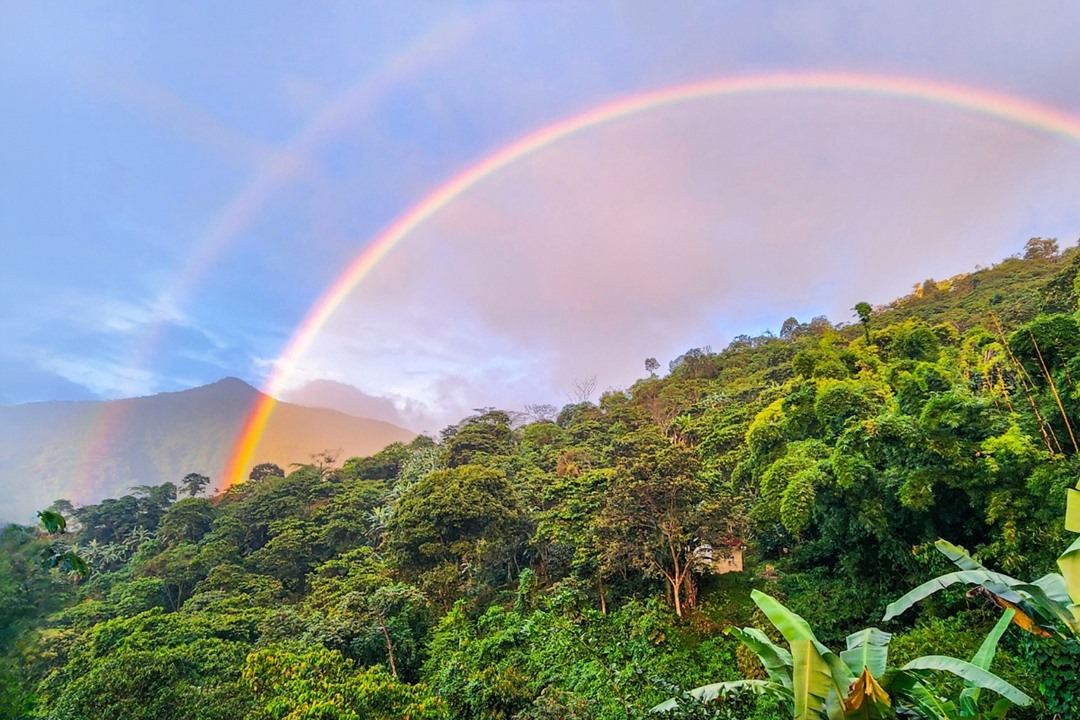
After heavy rain in Minca.
How do you adapt your trip through Colombia to the rainy season?
Colombia is a country of extremes. You will find dry deserts, the wettest place on earth, white sandy beaches, snow-capped mountain peaks and everything in between. It is therefore useful to take these conditions into account. Especially if you go in the rainy season.
What kind of trip will you take?
How you prepare for Colombia’s climate depends very much on what you want to do. Are you going to spend 2 weeks at the beach? Or are you traveling for 2 months through all corners of the country and want to do activities such as hiking, lying on the beach and visiting cities?
Of course, both trips require different preparation. So look carefully at what you need.
Packing list Colombia for the rainy season
If you’re only going to the beach then you won’t need that much, but if you’re going to travel through several areas in Colombia then it’s helpful to put at least this in your suitcase:
- Hiking boots that are allowed to get wet and dirty
- A thin rain jacket
- A small umbrella
- Clothing for the different destinations (at least one warm sweater and one pair of long pants)
- Quick-drying clothing for hikes
- A rain cover for your backpack
Not going to travel during the rainy season? Even then it’s handy to bring this (besides the umbrella), since it can be rainy and muddy even in the dry season.
Plan enough time to get from A to B
Many travelers misjudge the vast distances in Colombia. And when it rains, a trip takes even longer. In addition, landslides can block roads and it is very common to have a few hours of delay on a flight when it rains a lot.
Is the weather good? Then this won’t bother you as much. But if you come in a period with a lot of rain, take this into account. Plan enough time between flights or leave early by bus to your next destination. If roads are closed, it is best to take the plane to your next destination.
Are you somewhere and it’s raining a lot?
Then you can do two things.
- Enjoying the rain. Because rain also means more beautiful waterfalls, greener nature, beautiful skies at sunset and better opportunities for water activities like rafting. I can no longer count on one hand the number of hikes I’ve done in the rain. Boring? Well no, it was always beautiful! Check out this 12km hike in the rain.
- Find a destination where the sun shines. That can always be found in Colombia. Go to the desert, move a few hundred kilometers or ask fellow travelers or in Facebook groups where the weather is currently nice. This is a risky solution by the way, because it can be beautiful weather on Monday and pouring rain on Tuesday. So herewith no guarantee that this will solve your problem.
Where should you be at what time?
Scroll up a bit and check out the rainy seasons by region in Colombia. But again, Colombia’s climate is absolutely unpredictable. You can adjust your entire trip to it and still have rain everywhere. If you want the most chance of sunshine you should be in Colombia between mid-December and late February, but then you’re also stuck with mass tourism. And it is not guaranteed that you will only have good weather then. So it’s best to plan your trip not with the rainy seasons in mind, but based on what you want to see and do.


The pros and cons of rain in Colombia
Rain has lots of benefits, but too much rain can also cause problems.
The benefits
Colombia is the second most biodiverse country in the world, after Brazil, and that is no coincidence. To sustain such extraordinary biodiversity, a country needs plenty of rain, and Colombia certainly gets its fair share.
With more than 3,500 species of butterflies, 700 species of frogs, 456 species of mammals, 520 species of snakes, 7,000 species of beetles, 270 species of palm trees, including the famous wax palms of the Cocora Valley, 4,000 species of orchids and 1,900 species of birds (hummingbirds are my personal favourite), Colombia’s breathtaking nature never ceases to amaze.
Without the rain, Colombia would not be as biodiverse, so be thankful for it.
In addition, rain is needed for drinking water and electricity. Due to extreme drought in 2024, Bogotá experienced water shortages for about 10 months. Every week and later every 2 weeks, water was shut off everywhere for 24 hours to conserve. So millions of people were very happy when it started raining again and the water reservoirs were refilled.
The dangers in Colombia’s rainy season
During the rainy season, floods and landslides are frequent in Colombia. These range from minor to severe.
For example, in Bogotá the roads quickly turn into small rivers after a heavy shower in just a few minutes. Resulting in endless traffic jams and wet socks.
But it can be much more serious. Landslides where everything on the route is taken. Think houses and roads. These regularly result in deaths. In 2017, for example, a major natural disaster took place in Mocoa due to heavy rainfall. Also in June 2025 and in July 2025 there were major problems due to rain in Colombia.
It sometimes happens that airports are closed for a few hours during heavy rainfall, resulting in delays. And when there are floods or landslides on major roads, those roads are sometimes closed. Also in 2025: the road between Medellín and Jardín was closed for weeks as a result.
As a traveler during the rainy season, you may face delays on flights, and sometimes road closures, in particular.
Frequently asked questions about the rainy season in Colombia
Do you have questions about rain in Colombia? You may find the answer here.
1. Does lots of rain also mean low temperatures?
No, generally not. Temperatures in Colombia are very stable. In Cartagena, for example, it is still 30 degrees when it rains.
It does depend on the altitude. In certain higher elevations (such as the coffee region and Bogotá), the temperature does tend to drop when there are lots of clouds, and rise slightly when there is sun.
But these are not huge differences. Think 16 degrees in Bogotá on a cloudy rainy day and 18 to 22 degrees when the sun shines. It can also cool down quite a bit in the coffee area if it rains a lot, but not to winter temperatures.
So you don’t have to worry about the temperature in Colombia, which remains nice and stable all year round.
2. In Colombia, does it rain all day or are they showers?
In many tropical areas, showers are intense but often short, especially in the afternoon and evening. You see this in places like Montería, Cartagena, Tayrona, Minca and Palomino. The weather can suddenly turn, but the rain is often (not always) short-lived as well.
On the Pacific coast, it often rains longer. And in the Andes Mountains, it can rain all day, although not usually. In Bogotá, it depends a bit on the day: sometimes it is drizzly and cold all day, while on another day the sun shines all day and suddenly it starts pouring around 4 or 5 o’clock.
Rain is also often very localized. For example, in the historic center of Bogotá, it can come down with buckets of rain while in the north of the city the sun shines. The climate in Bogotá is actually a story apart anyway.
3. Is Colombia a sun-safe destination?
No, absolutely not. You may just get lucky and have only sunshine during your trip, but usually it’s best to be prepared for a combination of sun, clouds and rain. If you want only sun, then Colombia is not your destination.
4. How do El Niño and La Niña affect Colombia’s climate?
Besides climate change causing a less clear division between the rainy and dry seasons, you also have natural phenomena that cause the weather to be different than expected.
The natural phenomenon El Niño causes more drought and heat, while during La Niña it is much wetter. The exact influence varies from region to region, just like everything else. But that it has an influence is very evident. For example, the dry season of early 2025 was actually skipped, and 2024 was actually extremely dry and hot.
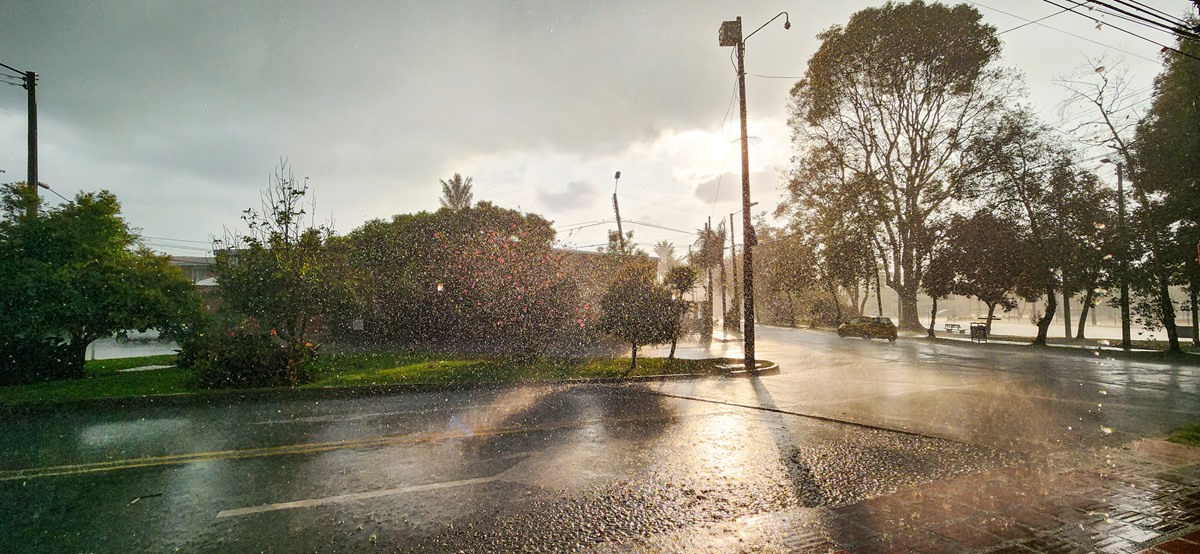
Here it’s raining, while on the other side of Bogotá the sun is shining.
Can the weather in Colombia be predicted?
No, unfortunately not. You can sometimes predict the weather right beforehand. Or if you’re at your destination and see dark clouds coming, that’s also usually a good prediction of what’s coming. But asking in April if it rains in November is absolutely useless. Asking other travelers for experiences is also totally useless. Those literally say nothing about how you are going to experience it.
Because:
- Each region has different climates
- It varies by day, even by hour
- Colombia is immense, so there is always rain somewhere and always sun somewhere
- Locally, the differences are big: someone staying in southern Bogotá may have rain while a traveler at the same time in northern Bogotá may have beautiful weather
- Every year is different
- La Niña and El Niño always throw all standard predictions into disarray
So: go to Colombia when you want and visit the places you want. Are you going in a period where you know there is normally more rain? Prepare for that and enjoy the beautiful nature it brings.
Apps and websites to predict the weather in Colombia
As mentioned, sometimes you can see something about the weather forecast in Colombia just beforehand. Here some apps and websites:
- IDEAM. Each month a weather report for that month is published. Useful to know a little bit about what it will look like at the beginning of your trip (although as mentioned, this gives no guarantees).
- Medellín Region. View the weather map for current weather.
- Weather radar by region. Check out the current climate by region in Colombia.
- Weather in Bogotá. This map gives a pretty good idea of the rain in the next hour in Bogotá, but is not always accurate.
So these are not ways of knowing whether or not it will rain somewhere a week from now, but more for the moment. And this is by no means always correct. I myself never use weather maps in Colombia.
Going to Colombia in the rainy season?
Yes! Bring the right clothes and shoes and set yourself up for a fantastic experience. Beautiful green nature, the most beautiful birds, boating among the treetops in the Amazon, amazingly beautiful waterfalls and cloudscapes that you just want to keep photographing.

In the heart of rainy season in Palomino.
