


Cartagena: the most famous and touristy city in Colombia. Where I have been 5 times. It’s no wonder, because Cartagena is beautiful, lively, historic, and the city is also a great base for visiting the Rosario Islands. A relaxed spot on Colombia’s Caribbean coast, where the locals are in no rush and dance through life. And despite the negative impacts of mass tourism, Cartagena is a city you simply have to see when you’re in Colombia. In this article, you’ll read everything about Cartagena: a bit of history, sights, where to stay, handy tips, and the surrounding area.
Table of contents
The history of Cartagena
Cartagena has a history that is anything but boring. The city was founded in 1533 by the Spanish and quickly grew into one of the most important and wealthiest port cities. This made Cartagena a favorite target for pirates.
To protect the city, the famous walls and forts were built, which still stand today.
In 1811, Cartagena was one of the first cities in the region to declare independence from Spain, earning the city the nickname La Heroica.
With a 13-kilometer-long old city wall and a historic center that is a World Heritage site, there is so much to see here. Strolling through Cartagena is like walking through an open-air museum.


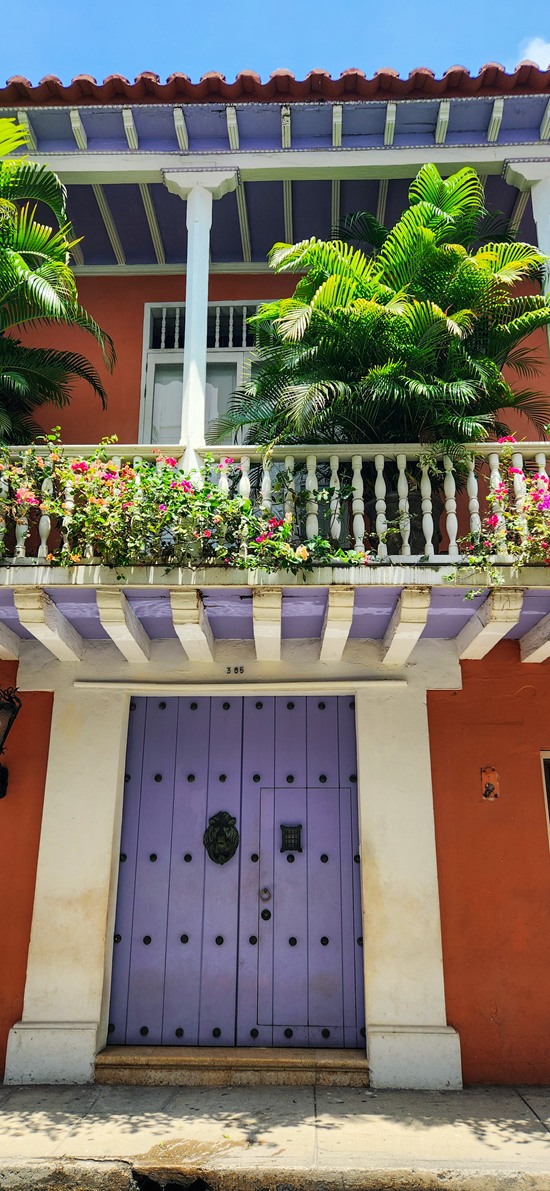
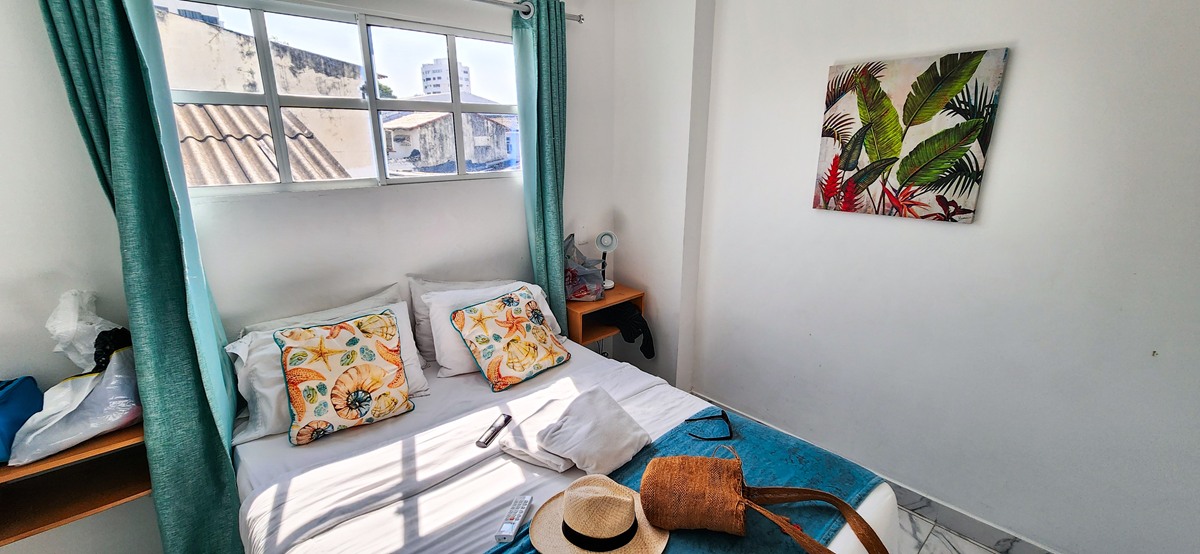
Where to stay in Cartagena? Hotels & hostels
Cartagena is packed with hotels, hostels, and Airbnbs, and there’s something for everyone. The most well-known neighborhoods to stay in Cartagena are El Centro and San Diego (inside the city walls), Getsemaní, and Bocagrande. Additionally, there is the less touristy neighborhood of Manga, where you’ll find some beautiful hotels and where it’s a lot quieter and cheaper than the neighborhoods mentioned above. These neighborhoods are all very different, so exactly where you stay makes a big difference to your experience in the city.
I personally stayed in the city center within the city walls for my first 4 visits to Cartagena
From there, you can walk to Getsemaní in about 15 minutes, and you’re almost in the city center. Manga also has a very nice boulevard to walk along, which I highly recommend.

The most popular neighborhoods in Cartagena for overnight stays
Here are the different neighborhoods highlighted, so you can make the choice that best fits your needs.
El Centro & San Diego
El Centro and San Diego are two neighborhoods within the city walls, the historic center of Cartagena. El Centro is a bit busier than San Diego, and San Diego is a bit more expensive than El Centro. You can also see this reflected in the restaurants you’ll find there.
If you’re looking for a luxury experience, then hotel Santa Clara might be for you. This is one of the most famous and expensive hotels in Cartagena, located in San Diego. Santa Clara is also a very good location for a wedding. I once attended a wedding in Cartagena myself, at hotel Santa Clara.
Click here for an overview of hotels in San Diego.
Find all hotels in El Centro here.

Getsemaní
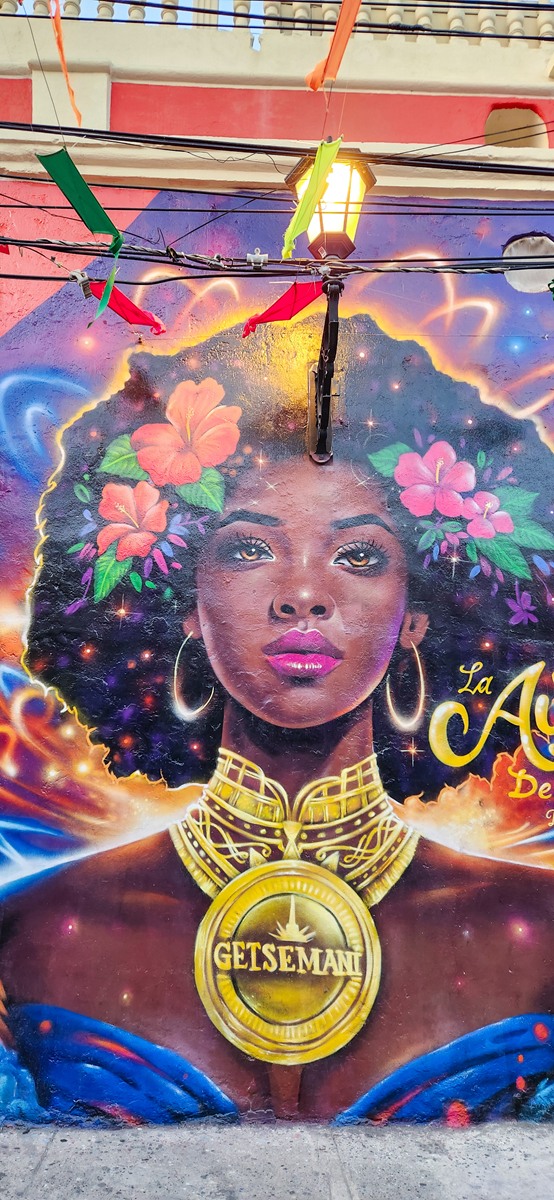
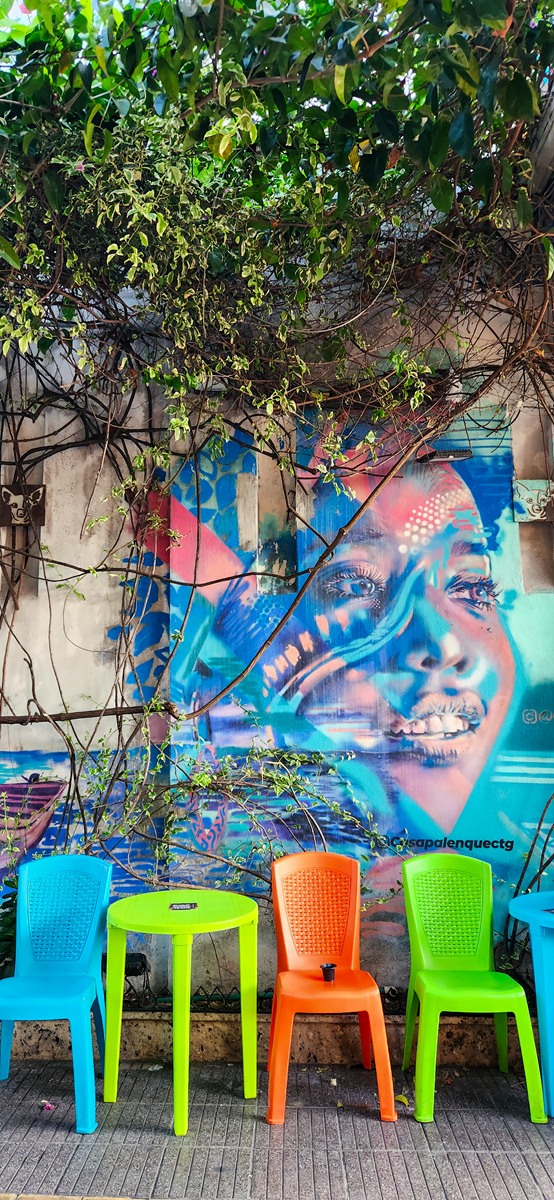
For a few years now, Getsemaní has been the go-to place for many travelers looking for a hotel in Cartagena. It’s lively, colorful, full of restaurants and street art, and lots of music. It’s a real tourist neighborhood, where almost no original residents live anymore, but more on that later.
In Getsemaní you will also find lots of parties, music, and bars. If you love that, this is the place for you. If you’d rather sleep peacefully, another neighborhood might be a better idea.
Click here for hotels and hostels in Getsemaní.

Bocagrande
When you arrive in Cartagena, you’ll recognize Bocagrande immediately, even from your plane window. Bocagrande literally towers over everything. It’s not for nothing that this neighborhood is also called the Miami of Cartagena. High-rise buildings, with many hotel chains and Airbnbs, shopping malls, and crowds. You’re also right on the beach, though it’s not a very pretty beach. It’s not recommended for a beach holiday (you can read about which beaches are better later on).
Bocagrande is actually the exact opposite of the colonial city center and Getsemaní.
Click here for an overview of hotels in Bocagrande.

Manga
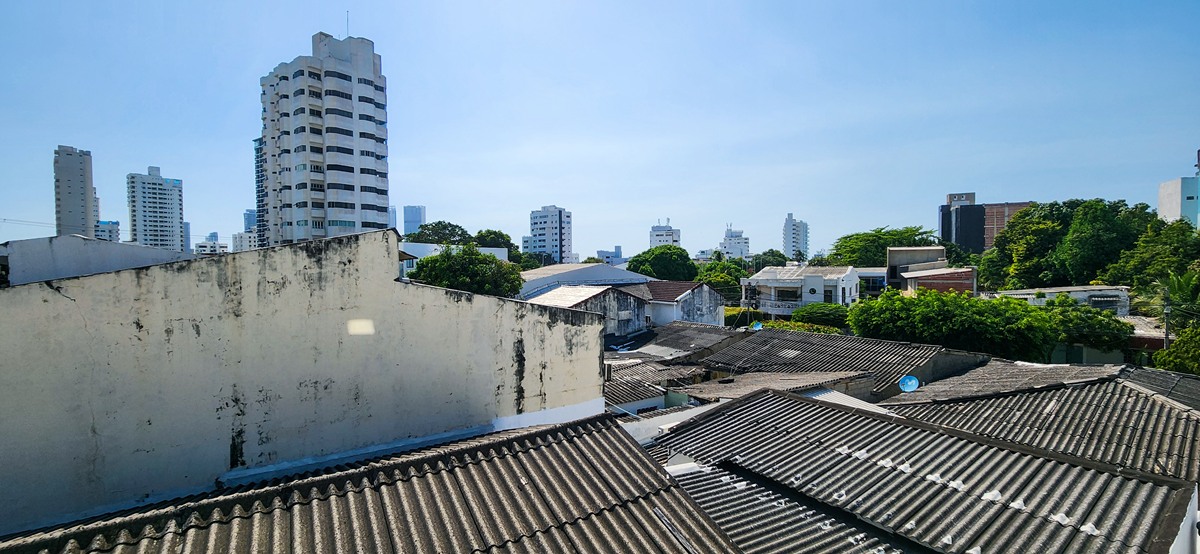
The Manga neighborhood lies south of Getsemaní, on the other side of the bridge. It’s a neighborhood still unknown to tourists, making it ideal for anyone who wants a quiet and more affordable stay.
I stayed at Le Marie B&B, which I highly recommend. Besides a pool, a warm shower, a tasty breakfast, and a great bed, they also have bikes you can use to explore the city.
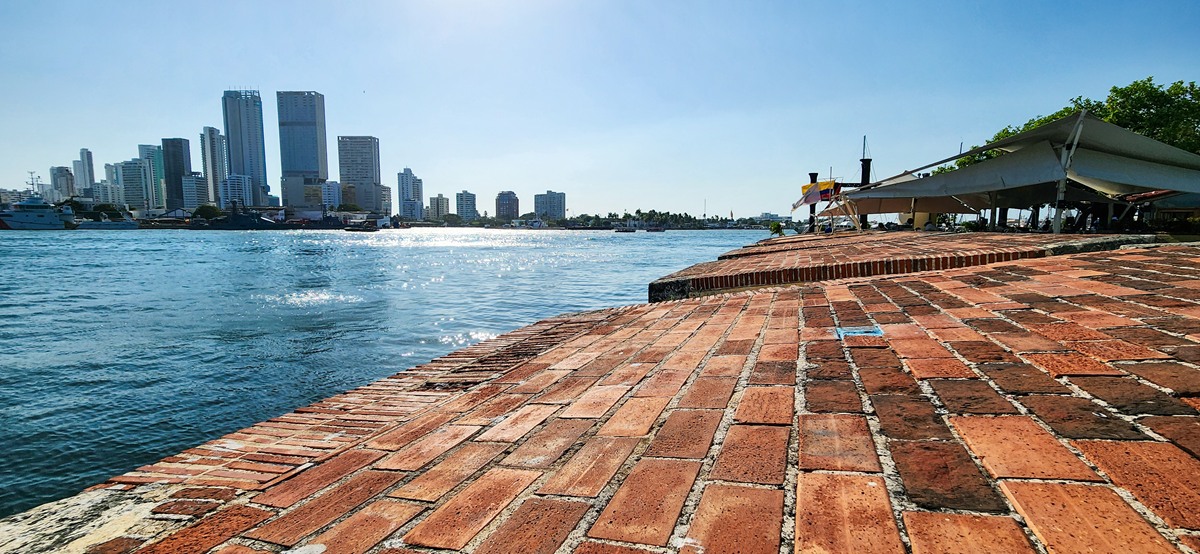
Manga is a safe neighborhood with white houses, nice little restaurants, and a long boulevard with views over the harbor and Bocagrande. It’s lovely to walk along. You can walk from Manga to Getsemaní via the bridge, which gives you a beautiful view of Cartagena and the castle.
Click here for all hotels in Manga.


23x things to do and see in Cartagena
There is a lot to do and see in Cartagena; here is an overview of the best sights.
14 Sights in El Centro & San Diego: the colonial center of Cartagena
Everyone visits Cartagena to admire the beautiful colonial center. Here you’ll find the most important sights in the center, but there is much more. Stroll through the picturesque streets, take photos of the brightly colored houses, and eat at one of the many great restaurants.
1. The city walls of Cartagena
The famous city walls are perhaps the most well-known symbol of Cartagena. They were built starting from the end of the sixteenth century, after the city was attacked by Francis Drake in 1586. The walls were meant to protect Cartagena from pirates and other enemies, and remain one of the best-preserved fortifications in Latin America.
Take a stroll along the wall and walk around Cartagena’s historic center. Along the way you will pass various squares, cannons and the sea. In addition, the walk gives you beautiful views of colorful streets and you can see the contrasts between the old center and the skyscrapers in the city’s newer neighborhoods.

2. Torre del Reloj and the Puerta del Reloj
The Torre del Reloj was the historic main entrance to the walled city. Originally, the Boca del Puente gate stood here, and the famous clock tower was added later. It still feels like the symbolic entrance to old Cartagena: you literally walk into history.
Find the Torre del Reloj on the map here.

3. Plaza de los Coches
Directly behind the Torre del Reloj lies the Plaza de los Coches, a square that had an important commercial function in colonial times. This is where trade, traffic, and city life converged, forming the transition between the harbor world outside and the elite of the walled city inside.
Nowadays, you’ll find souvenir shops and stalls with typical sweet treats from Cartagena here.
Find Plaza de los Coches on the map here.

4. Plaza de la Aduana
The Plaza de la Aduana is the largest square in the old center and was once the administrative and commercial heart of Cartagena. The colonial administration was based here, and the house of founder Pedro de Heredia also stood on this square. This makes it not just a beautiful square, but a place directly linked to the city’s founding and power.
I was once in Cartagena at Christmas, when this square is beautifully lit up.
Find Plaza de la Aduana on the map here.

5. Palacio de la Inquisición
The Palacio de la Inquisición is one of Cartagena’s most famous colonial buildings. From 1610, this was the seat of the Holy Office, where people were tried for alleged crimes against the faith. Today it is a museum, but the building still serves as a reminder of a dark chapter in the city’s colonial history.
Find the Palacio de la Inquisición on the map here.
6. Parque de Bolívar
The current Parque de Bolívar was formerly known as the Plaza de la Inquisición, as it lies directly next to the Inquisition Palace. It was only later that the square received its current name, featuring an equestrian statue of Simón Bolívar. It’s a nice place to find some shade and watch local life in Cartagena go by.
Find the park on the map here.
7. Catedral de Santa Catalina de Alejandría
Cartagena’s cathedral is among the oldest bishoprics in the region, dating back to the sixteenth century. Over time, the building has endured fire, collapse, and damage from Francis Drake’s attack, and was subsequently modified several times. As a result, you see not only religious history here, but also how Cartagena had to rebuild itself time and again.
Find the cathedral on the map here.
8. Iglesia en Claustro de San Pedro Claver
The Iglesia de San Pedro Claver is one of the most important religious sites in Cartagena. The church and monastery were built between the sixteenth and seventeenth centuries and are associated with the Jesuit Pedro Claver, who became known for his dedication to enslaved people arriving in Cartagena.
The church is one of the most popular tourist attractions; be sure to take a look.
Find the church on the map here.

9. Museo del Oro Zenú (the Gold Museum in Cartagena)
The Museo del Oro Zenú shows that Cartagena’s history doesn’t start with the Spanish. The museum focuses on the Zenú culture, a pre-Columbian civilization from this region, and displays goldwork, ceramics, and information about their society. I visited years ago and found it to be a very beautiful museum.
Find the Gold Museum on the map here.
10. Las Bóvedas
Las Bóvedas was the last major colonial addition to Cartagena’s defense system. The complex consists of 47 arches and 23 vaults and served first as barracks and storage, and later as a prison for patriots during the independence period. Today, it houses shops and galleries where you can find nice souvenirs to take home.
Las Bóvedas is also one of the places where you can walk up onto the city wall.
Find Las Bóvedas on the map here.

11. Plaza de Santo Domingo en Iglesia de Santo Domingo
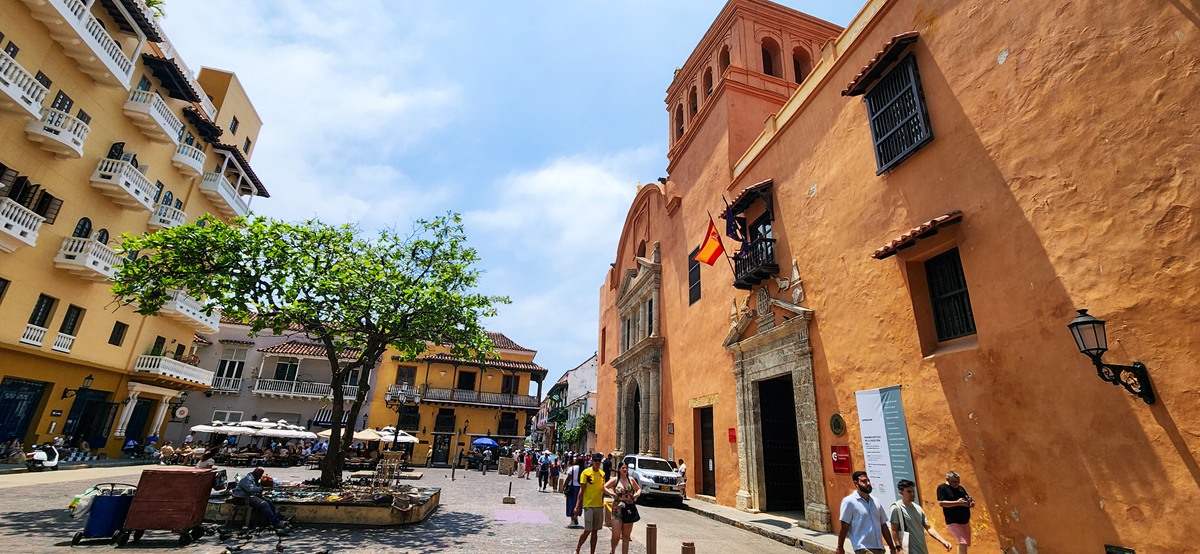
The Plaza Santo Domingo is one of the liveliest squares in the city, but it also has a long history. The accompanying church and monastery date back to the colonial period, with construction taking place in several phases starting from the end of the sixteenth century. Be sure to check out the inside of the church; it’s very beautiful.
Definitely pop into the coffee shop Café San Alberto Cartagena for some great coffee and a pastry.
Find Plaza de Santo Domingo on the map here.

12. Teatro Adolfo Mejía
The Adolfo Mejía Theater showcases a different side of Cartagena. The theater was inaugurated in 1911 as part of the celebrations for the centenary of Cartagena’s independence. This makes it a fine example of how the city wanted to present itself in the twentieth century as an elegant, modern cultural city.
Find the theater on the map here.
13. Universidad de Cartagena
The University of Cartagena is one of the city’s classic institutions and was founded in 1827, shortly after the independence period. The historic monastery building in particular beautifully reflects that mix of old heritage and a living city. You can walk into the university and look around; it’s very interesting.
Find the university on the map here.

14. Museo Naval del Caribe
The Museo Naval del Caribe is interesting because it explains the maritime history of Cartagena, a vital part of the city. For centuries, Cartagena was a key port in the Spanish Empire, and much of its wealth, conflicts, and fortifications are directly linked to the sea. In this museum, you’ll learn why Cartagena became so important in the first place.
Find the museum on the map here.
15. Castillo San Felipe de Barajas
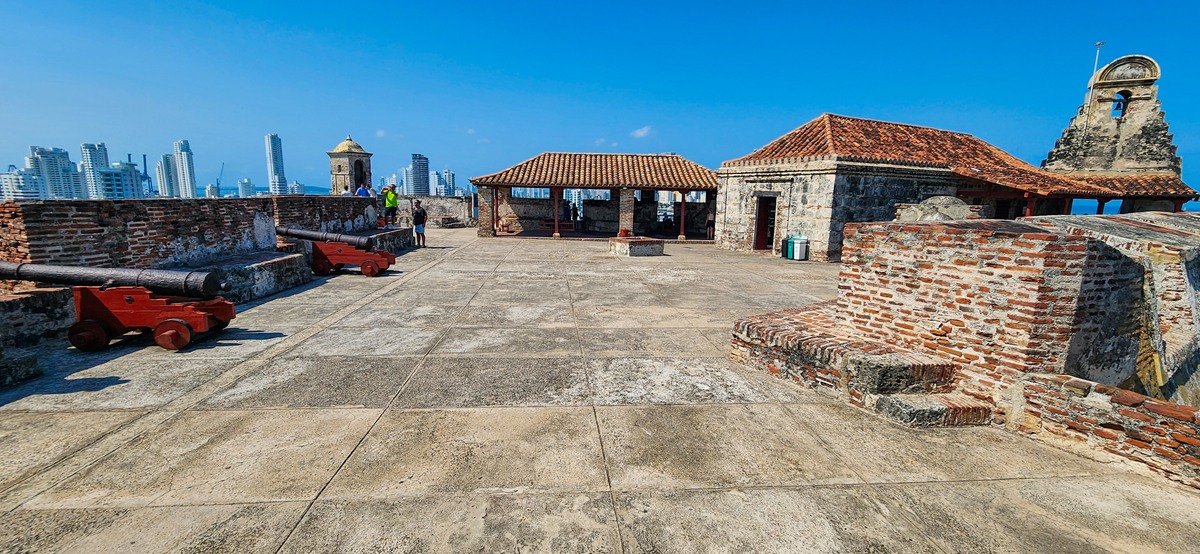
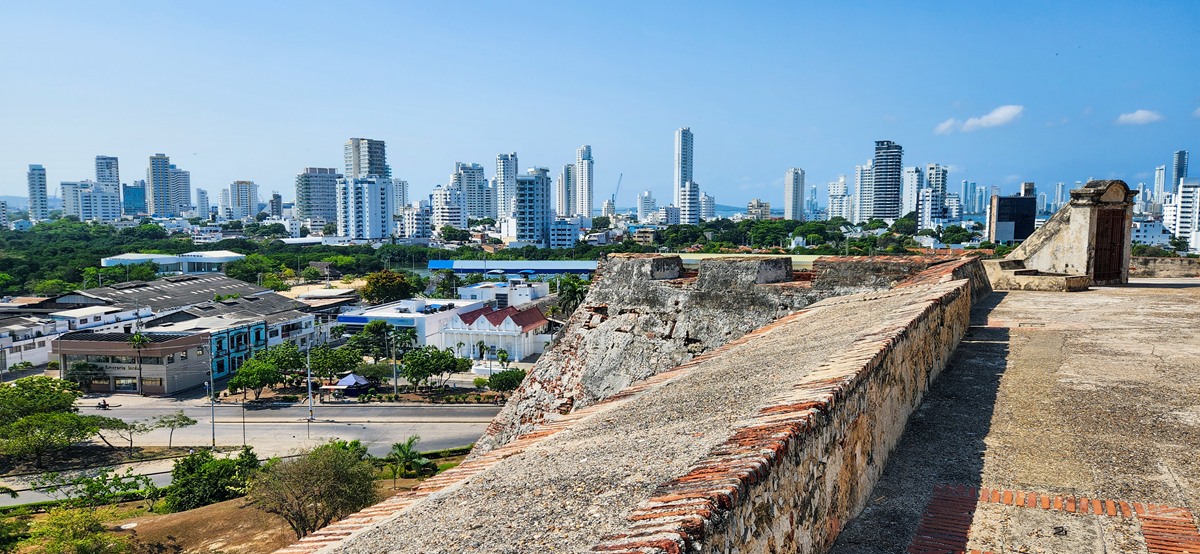
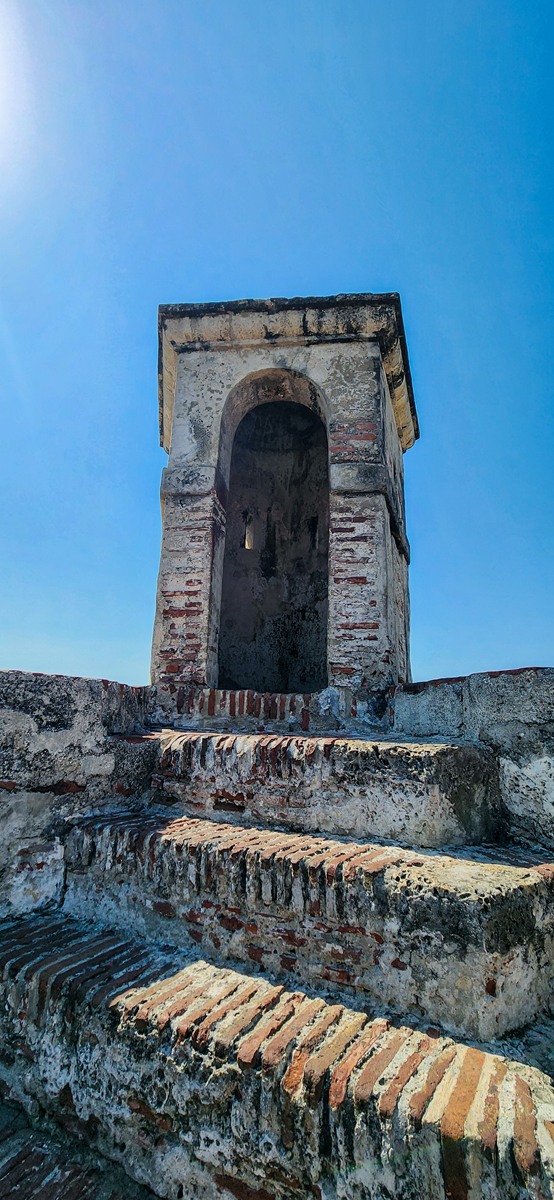
The Castillo San Felipe de Barajas is Cartagena’s most impressive fort and one of the most important Spanish fortifications in the Americas. The fort was built on a strategic height and later expanded so that enemies could be stopped from afar. What makes it extra special is that it’s not just large, but also cleverly designed, with tunnels, viewpoints, and crossfire positions.
San Felipe is not only beautiful and interesting to see, but from there you also have a stunning view over the city.
Read all about Castillo San Felipe in Cartagena here.
Tip: visit the castle early in the morning or in the late afternoon. There is very little shade and you have to walk uphill. In short: it’s sweltering. Bring plenty of water (or buy it there) and wear a hat.
Find Castillo San Felipe on the map here.


16. Convento de La Popa
The Convento de La Popa is located at the highest point of Cartagena and was founded in the early seventeenth century. Because of its location, it was not only a religious site but also a strategic viewpoint over the city and the bay. This makes it a place where faith, defense, and views literally come together.
You can visit the monastery. Don’t walk there; take a taxi instead. Or book this tour to the monastery in Cartagena.
Click here for the monastery on the map.
17, 18 & 19: See and do in Getsemaní
17. Parque del Centenario
Parque del Centenario is a well-known city park in Cartagena, right at the transition between the walled inner city and Getsemaní. It was laid out in 1911 to commemorate 100 years of Cartagena’s independence, so it has historical as well as green significance.
The park reopened in 2025 after renovations. When I first visited in 2014, it looked very different than it does now.
You’ll naturally pass the park when walking from the city center to Getsemaní or vice versa. Don’t forget to look around carefully; if you’re lucky, you might spot sloths or iguanas.
Find the park on the map here.

18. Getsemaní
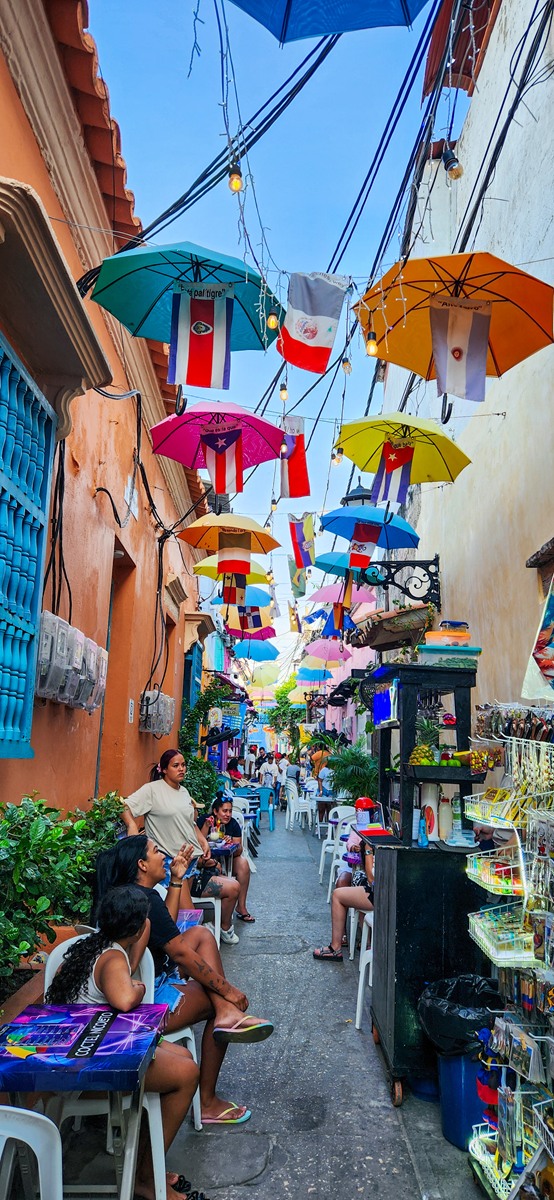
Getsemaní is nowadays one of the most beloved neighborhoods in Cartagena, but historically it was always a working-class neighborhood where artisans, laborers, and a large part of the Afro-Caribbean population lived. Most of these original residents have been displaced by tourism, but you can read more about that later in this article.
Today, Getsemaní is the place to party, eat, admire street art, stroll through the colorful streets, and find your hotel or hostel.
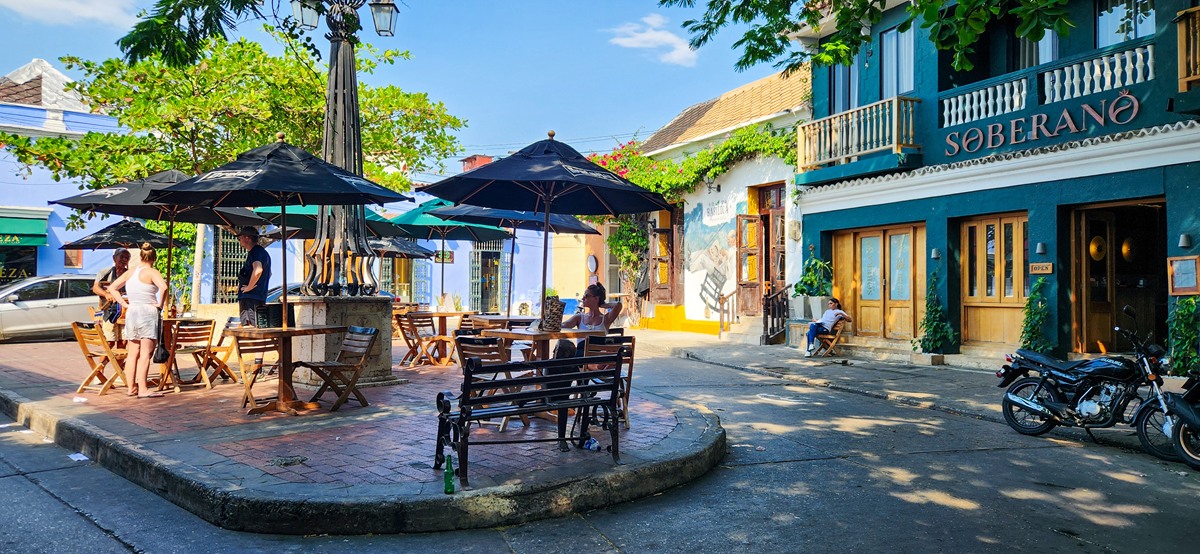
There are a few nice little squares to sit and enjoy some good food (like Plaza del Pozo, for example), and strolling through the streets is definitely recommended. For me, however, this isn’t my favorite neighborhood. Too touristy and too noisy. But if you love that, then this is your spot.
Find Getsemaní on the map here.


19. Plaza de la Trinidad
In the heart of Getsemaní lies the Plaza de la Trinidad, named after the bright yellow church built there in the seventeenth century. The square later gained strong symbolic meaning as the residents of Getsemaní gathered here in the lead-up to the independence of 1811. It’s a lively city square, perfect for watching daily life.
Find Plaza de la Trinidad on the map here.

20. The Manga boulevard
If you go outside the touristy neighborhoods of Cartagena and cross the Puente Román bridge from Getsemaní, you’ll enter the Manga neighborhood. This not-yet-touristy neighborhood offers a completely different experience than the rest of the city.
You’ll find all sorts of restaurants, nice hotels, and a boulevard where you can enjoy a lovely walk.
The Muelle Bahia de Manga is a joy to walk along. It’s quiet, you’ll see almost no tourists, but you will see a fantastically beautiful view over the harbor and Bocagrande. This is where all the boats and ships are ready to let visitors discover Cartagena.
Along the boulevard, you’ll also find several good restaurants.
Find the Manga Boulevard on the map here.

21. Bocagrande
Bocagrande is the modern, lively part of Cartagena, directly south of the old city center. The neighborhood is known for its high-rise hotels and apartments, the city beach, many shops, and the seaside boulevard. While the historic center is colonial and atmospheric, Bocagrande is sleek, busy, and modern, which is why it’s also called the Miami of Cartagena.
Many travelers stay here for the combination of beach and comfort: you have many hotels, restaurants, and amenities within walking distance, yet you’re still close to Centro and Getsemaní. However, it’s good to know that while a beach on your doorstep sounds nice, these are far from the most beautiful beaches in the Cartagena area.
Find Bocagrande on the map here.
22. The Botanical Gardens of Cartagena
The Jardín Botánico de Cartagena ‘Guillermo Piñeres’ is located just outside Cartagena in Turbaco. An ideal place to escape the hustle and bustle of the city and get into nature.
The botanical gardens in Cartagena are primarily focused on the flora of the Colombian Caribbean, featuring a tropical dry forest. On the grounds, you’ll find various zones, such as medicinal plants, fruit trees, palms, ornamental plants, and sections of indigenous forest.
The garden has existed since 1978 and, besides recreation, plays a role in research, education, and biodiversity conservation.
Take your time for the botanical gardens, as you won’t be through in just a few minutes. Ideal for a whole morning or afternoon. The botanical gardens are closed on Mondays.
Find the location and current opening hours here.
23. La Boquilla
La Boquilla is a fishing village just outside Cartagena, north of the city. Located in a nature reserve near the Ciénaga de la Virgen and mangroves, it represents a literally totally different side of Cartagena.
You don’t go to La Boquilla for the beaches, but to discover nature and the fishing community. You can do that with a canoe tour, for example, this one from Ecotours Boquilla.
During the tour, you’ll paddle with a local guide through the mangrove tunnels and lagoons of La Boquilla, through the Juan Polo marshes and parts of the Ciénaga de la Virgen.
Another activity La Boquilla is known for is kitesurfing and paddleboarding.
Find La Boquilla on the map here.
Eating and drinking in Cartagena
Caribbean cuisine is a big part of Cartagena’s charm. Lots of fish and seafood, but also fried snacks, rice dishes, soups, stews, coconut, and bold flavors.
Typical food in Cartagena
If you are in Cartagena, you should definitely try the typical arepa ‘e huevo (arepa with egg). As a breakfast or a snack. Don’t forget the mote de queso, a hearty soup with yam and salty costeño cheese. And of course, the typical arroz con coco (coconut rice), popular along the entire north coast and very delicious. Additionally, you have dishes like cazuela de mariscos (seafood), arroz con chipi chipi, fried fish with patacones, and posta negra. The latter is a slow-cooked beef dish with a dark, slightly sweet sauce and is one of the most famous classic dishes from Cartagena. These last dishes are not suitable for vegetarians, so I have never eaten them myself.
The street food is also part of the experience. Think of empanadas, carimañolas, deditos de queso, and of course, once again, that arepa ‘e huevo, which is almost an institution in and around Cartagena.
Drinking in Cartagena
In and around Cartagena, you’ll often come across drinks like limonada de coco and corozo juice (both very tasty), alongside cocktails where tropical fruit and Colombian ingredients take center stage.
Restaurants and eateries
You’ll find many good restaurants in Cartagena. Restaurants with typical dishes that are well-known in the city include La Cocina de Pepina and Celele. But if you just walk around, you’ll naturally come across all sorts of places.
It’s also fun to visit one of Colombia’s most famous and best restaurant chains: Crepes y Waffles. The branch in Cartagena’s city center is also very beautiful. And if you’re lucky, the roof terrace will be open, offering a great view.
Other nice places to eat and drink:
- Ábaco Libros y Café: a bookstore with a little cafe inside, very charming
- GIA Gelateria: for the best ice cream in Cartagena
- Basilica Pizzería Café: with a very nice quiet terrace in Getsemaní, and super tasty food


Where are the best beaches in Cartagena?
Cartagena isn’t known as the best beach destination. For example, there are city beaches in Bocagrande, but it’s not exactly idyllic. Therefore, the beaches in the city itself are not recommended.
If you’re looking for a beautiful beach with clear water, it’s best to take a day trip or have a beach holiday in Barú or the Rosario Islands (see below for more on that).
If you just want something easy and close by, Bocagrande is the most convenient. You’re right by the sea there, close to hotels and restaurants, but it’s more of a city beach than an idyllic Caribbean one. You’ll also be approached by vendors a lot.
If you want something quieter and a bit more pleasant in the city, Castillogrande is often seen as nicer than Bocagrande because it generally feels less chaotic.
But if you’re really looking for a beautiful beach spot, travel from Cartagena to the Rosario Islands or Barú. Click here for hotels in Barú.
From Cartagena to the Rosario Islands
The Rosario Islands are an archipelago of small coral islands in the protected area of Parque Nacional Natural Corales del Rosario y de San Bernardo, a national park with extensive coral reefs and coastal ecosystems. The park lies off the coast of Cartagena and protects one of the largest coral areas of the Colombian continental Caribbean.
The Rosario Islands are among the most popular excursions from Cartagena.
Find the Rosario Islands on the map here.
How do you get from Cartagena to the Rosario Islands?
From Cartagena, you travel by boat to the Islas Rosario, departing from Muelle La Bodeguita near the old town. Boats usually leave between 7:00 and 10:00 AM, and the crossing normally takes between 1 and 2 hours. In practice, this depends on the type of boat and which island or beach club you’re heading to: faster boats make some stops in about 45 to 60 minutes.
You can book the boat directly at the harbor, via Get Your Guide, or through your hotel if you’re staying on one of the islands.
How much time do you need for the Rosario Islands?
How much time you want to spend on the Islas Rosario depends on how much time you have and what your preferences are. You can easily enjoy the turquoise water, the beach, snorkeling, and good food on a day trip. If you want more of a beach holiday in Colombia, stay for a few nights. Especially if you go to Isla Grande, as there is more to do there.
Click here for the many excursions and activities you can do on the Rosario Islands.
Which islands near Cartagena are the most beautiful?
Which islands are the most beautiful or best depends on what you’re looking for. However, many travelers choose Isla Grande for a nice mix of nature, clear water, hotels, and beach clubs. It is also the largest island in the archipelago and, for many travelers, the best choice for a day trip or a multi-day beach holiday.
If you’re looking for a party vibe, Cholón is often chosen: it’s the party spot where boats gather, music is loud, and the atmosphere is much more exuberant. So that’s fun if that’s what you’re after, but less suitable if you’re looking for silence or an idyllic island feel.
Does Barú also belong to the Islas Rosario?
No, although Barú is often mentioned in the same breath as the Rosario Islands, and many tours combine them. Barú is a peninsula and a popular beach destination. Playa Blanca on Barú is particularly famous, but also busier with tourists.
What is there to do on the Rosario Islands?
The classic activities on the Islas Rosario near Cartagena are swimming, sunbathing, snorkeling, a day pass at a beach club or hotel, diving, and partying. There are also several eco-tourism attractions, such as certain beaches, mangrove environments, and underwater trails. Around Isla Grande, snorkeling and diving excursions are explicitly offered.
Practically speaking, it’s smart to decide beforehand what kind of day you want. Many cheap island-hopping tours try to do a lot of stops in a short amount of time. That sounds nice, but it often means a lot of time on the boat and very little rest. So check carefully what you’re booking beforehand.
Where to stay on the Rosario Islands?
While you can easily do a day trip to the Islas Rosario, most travelers want to stay for a few nights. It’s also the ideal place to end your trip through Colombia.
Click here for the most beautiful hotels and hostels on the Rosario Islands.

How many days do you need for Cartagena?
How many days you need for Cartagena depends on your own wishes and preferences. Cartagena is a city that not everyone loves. Because of the noise, the heat, and the crowds, you can get tired of it quickly. But: maybe you’re the kind of person who loves exactly that.
My preference is for 2 to 3 nights in Cartagena, but I’ve also stayed for 5 nights before. For me, Cartagena—especially now in 2026—is too busy. There’s so much noise, street vendors are constantly present (that wasn’t the case when I first came here), lots of tourism, it’s sweltering, and there’s a lot of traffic in the narrow streets.
On the other hand, it’s also a wonderful city to be in. Nobody is in a rush in Cartagena, the architecture is beautiful, there are many cozy terraces and lovely restaurants, and there’s a lot to see.
I would at least recommend that you, like the costeños, take your time. Don’t go racing through the city to see all the sights in one day. It’s better to stay an extra day. Enjoy the laid-back mentality of the Colombians and the beautiful streets in the city.
For most travelers, 2 to 3 nights will be enough in Cartagena.


A bit of background: how tourism has changed Cartagena
Cartagena has evolved from a historical destination into a tourist hotspot. In the second half of the twentieth century, the city was already being deliberately positioned as a major tourist attraction in Colombia. Since then, tourism has continued to grow.
I’ve been to Cartagena 5 times myself; the first time was in 2014. In that year, about 187,000 international visitors came to Cartagena via the airport, along with some 311,000 cruise passengers. Together with domestic travelers, Cartagena welcomed over 2 million people in 2014.
By 2025, this number has grown to over 5.5 million visitors, arriving by air, land, and cruise. The number of international travelers in particular has seen enormous growth. While fewer than 190,000 foreign travelers arrived at Cartagena airport in 2014, that number was around 1.67 million in 2024. In 2025, it even rose to over 1.75 million.
How the working-class neighborhood of Getsemaní lost its residents
Although Getsemaní is now one of the most popular neighborhoods in Cartagena, it wasn’t always that way. Getsemaní was once a working-class district outside the walled center, home to port workers, artisans, and sailors. In the twentieth century, the neighborhood fell into decline. Theaters disappeared, public life weakened, and the area faced issues with safety, drugs, and prostitution. .
When I first visited Cartagena in 2014, Getsemaní was far from the neighborhood it is today, although it was already under significant pressure from tourism and real estate at the time. An academic study from 2016 shows that in 2012, 28% of traditional residents still lived in Getsemaní, and by 2013, that figure was only 16.7%.
As of 2026, little remains of the original Getsemaní. The neighborhood has become incredibly popular among travelers due to street art, hotels, and restaurants, at the expense of local residents. In 2025, reports emerged about a new study showing that Getsemaní has only 448 residents left, compared to 5,378 in 2005. As a result, Getsemaní is at risk of becoming a neighborhood that exists only for tourists, without any actual inhabitants.
The last time I was in Cartagena was in 2017 or 2018, and now in 2026, the Getsemaní neighborhood has truly surprised me. It seems to have become a different world. And not necessarily in a positive way.
The dark side of Cartagena: sex tourism
Just like other major tourist cities, Cartagena has a dark side: sexual exploitation and human trafficking. The exploitation of minors, in particular, has been a serious problem for years, which the city, aid organizations, and the tourism sector are actively trying to combat.
This specifically concerns the sexual exploitation of minors, which the government, UNICEF, and the Colombian Ministry of Tourism explicitly warn against. Colombia has had legislation against this for years, and tourism businesses must follow a code of conduct to help prevent it.
In Cartagena, this issue has become extra visible because the city is so touristy. It attracts many international visitors while simultaneously experiencing significant social inequality. Local media and researchers have long described how parts of the historical center and tourist neighborhoods are under pressure from exploitation, trafficking, and gentrification.
The urgent advice to all foreign travelers to Cartagena, or anywhere else in Colombia, is therefore: stay far away from prostitution. So, do not engage with men on the street offering girls.
Cartagena: a must-see in Colombia
Despite the dark side of Cartagena, the mass tourism, the noise, and the many street vendors, Cartagena is and remains a must-see when traveling to Colombia. The city is unique in Colombia, with a rich history and beautiful architecture. You might consider staying for 2 or 3 days instead of 5, and you’ll have a great time!


This article contains affiliate links. If you click on one of these links and make a purchase, I receive a small commission. The price remains the same for you. This helps me to create new content and maintain my website.
